Morels and other spring mushrooms
The genus name Gyromitra is derived from the following: gyro – round, or convoluted. (gyroscope) mitra – headdress (Mitre, mitre joint) There are more than 10 species of Gyromitra in the Pacific Northwest with a variety of shapes from the classic brain shape to less obvious disc-shaped mushrooms. More on Pacific Northwest Gyromitra here: …
The following is a selection of mushrooms found in our region in January. Some have very specific habitats and might only be found in a small part of the region. Cat’s Tongue Pseudohydnum gelatinosum Considered a species ‘complex’, which includes multiple closely related species that can be difficult to separate visually. Chanterelle Cantharellus Chanterelles can…
Forest and fungal ecosystems are so connected with one another that it can be nearly impossible to have one without the other. Learning to recognize different tree species can be helpful for determining the identity of a mushroom and also help you to find areas most likely to contain mushroom species you are hunting. For…
This is a treemap that summarizes all of my mushroom finds weighted by frequency. The more times I find and photograph a mushroom, the bigger the box. Notice the big blue box in the top left. These are mushrooms that I haven’t identified yet. Zoom in to view taxonomic details.
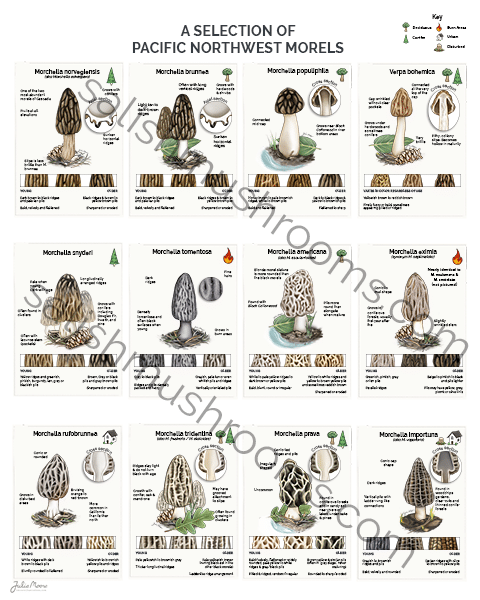
Morel Season Morels are a spring mushroom but spring can be loosely defined and it depends largely on where you’re looking. This post is written from a PNW perspective. Here are some of the ways one might estimate the right timing for morels Seasonality in your area Searching for “Morchella” or “morels” on iNaturalist then…
One aspect of mushroom identification is comparing an unknown mushroom to descriptions of a known mushroom. Here are some common cap shapes and representations of these through familiar mushrooms. All mushrooms exhibit a variety of shapes throughout their lifecycle so identification through cap shape is more art than science. Key Takeaways Cap shapes can be…