Edible Mushrooms of the Pacific Northwest A forager’s guide to Washington, Oregon & British Columbia
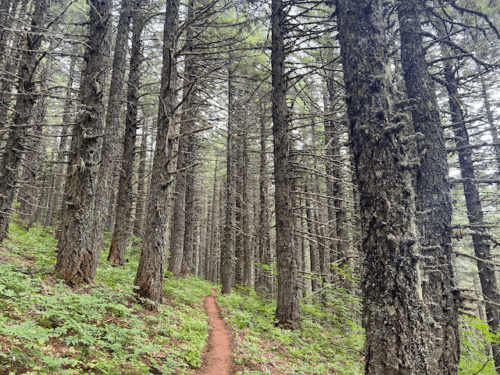
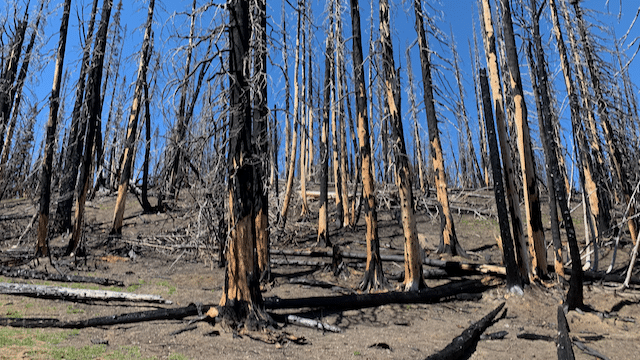
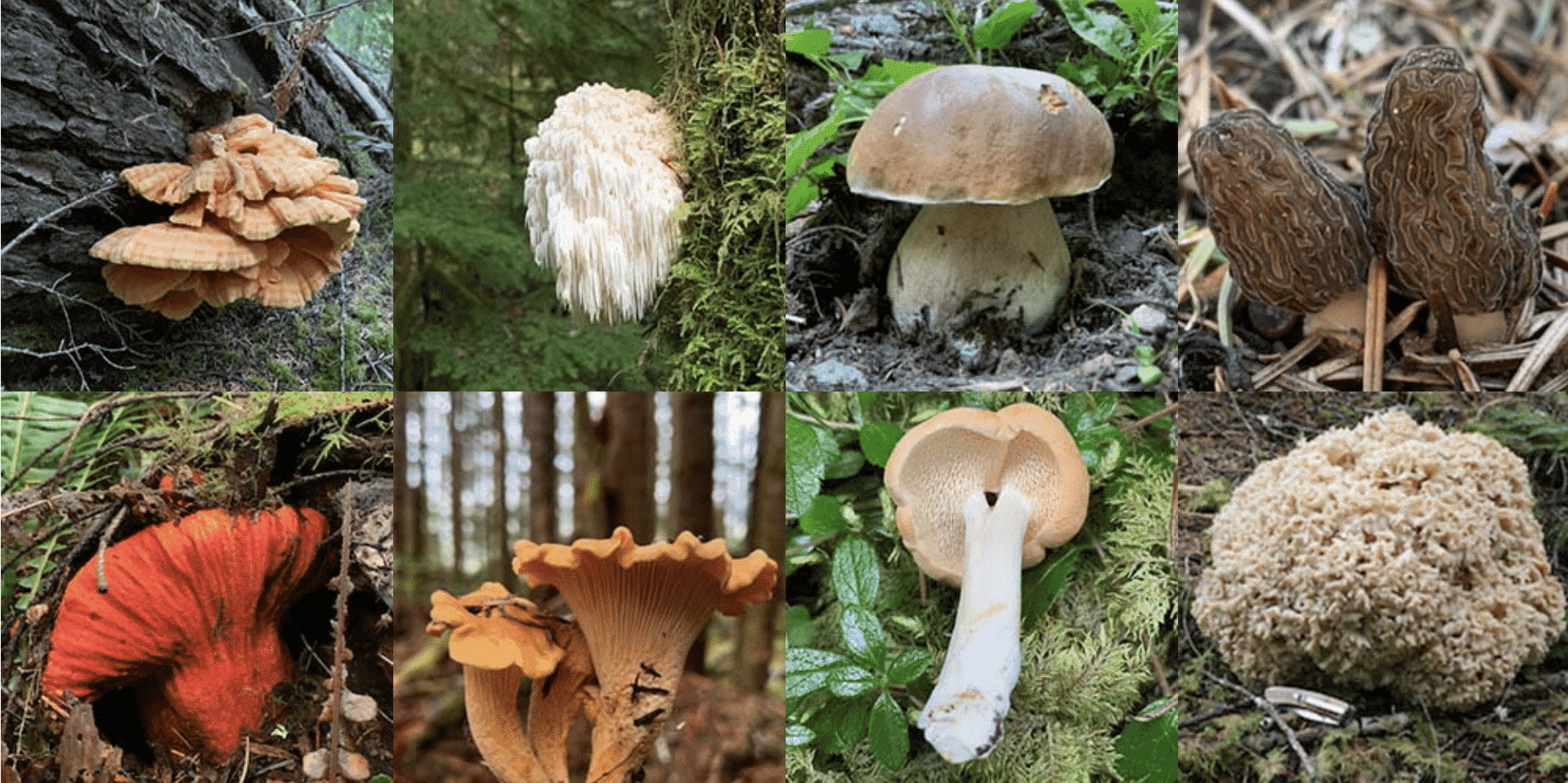
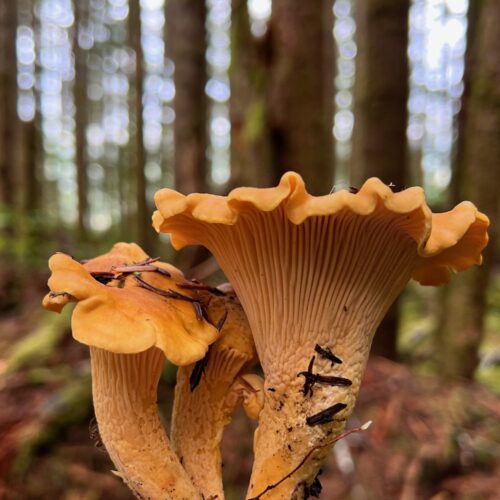
The Pacific Northwest offers excellent wild mushroom foraging. Wet falls, mild winters, and conifer forests where Douglas fir, western hemlock, and Sitka spruce are common create good conditions for dozens of edible species — from golden chanterelles in October to morels on spring burn sites.
This guide covers the species you’re most likely to find while foraging in Washington, Oregon, and British Columbia, with links to detailed identification pages, habitat notes, and seasonal timing.
Foraging in Oregon specifically? The Edible Mushrooms of Oregon guide covers the same species with Oregon-specific habitat, timing, and where to look — starting with the Pacific golden chanterelle, Oregon’s state mushroom.
Most edible mushrooms in this region fruit between September and December, triggered by the first heavy rains after summer drought. But spring brings its own rewards — morels appear from April through June, and a handful of species fruit through the summer in coastal forests. Knowing what to look for in each season is the key to productive foraging year-round.
How mushrooms work
A mushroom is the fruiting body of a much larger organism — the mycelium — which lives hidden in soil, wood, or leaf litter. When conditions are right (enough rain, the right temperature), the mycelium produces a mushroom to release spores and reproduce. Think of it like an apple on a tree.
Mycorrhizal species (chanterelles, boletes, matsutake) form partnerships with living tree roots, trading nutrients for sugars. Saprotrophic species (chicken of the woods, bear’s head) decompose dead wood and leaf litter. Understanding this distinction tells you where to look: mycorrhizal species grow near specific tree species, while saprotrophs grow on dead wood regardless of what’s nearby.
Find Mushroom Habitat on Forayz
Check soil temperature, moisture, precipitation, and ecoregion data to find productive foraging zones. Free with a Forayz account — recent burns and offline access with Pro.
Learn to Recognize PNW Edibles
ForayzU turns identification into swipeable flashcard decks — morels, king boletes, and spring urban edibles — each with photos and the key features that separate them from look-alikes. Free on iOS, no subscription.
Beginner-Friendly Edibles
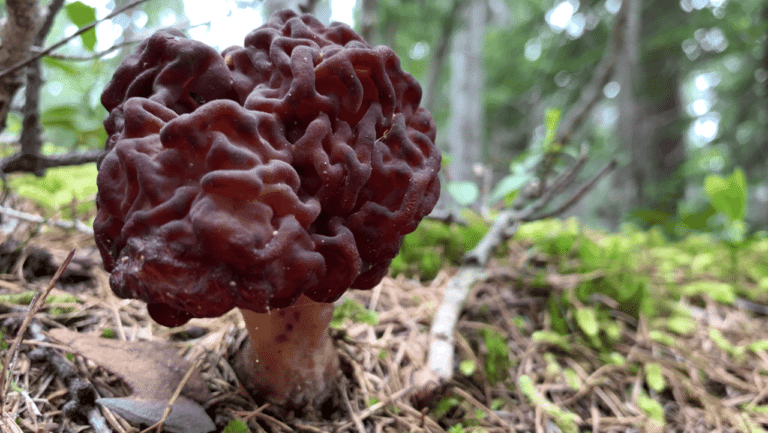
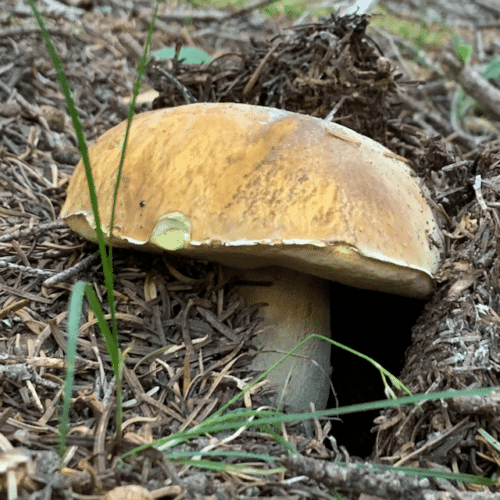
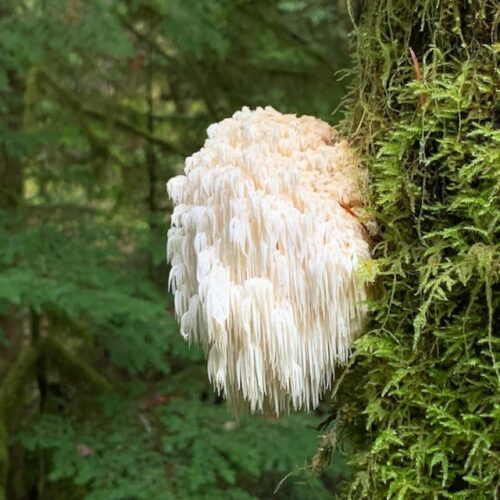
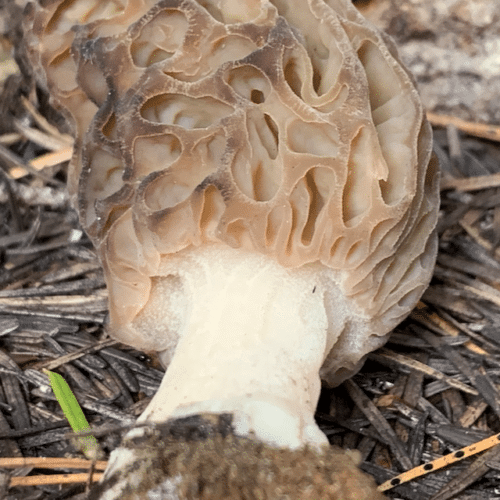
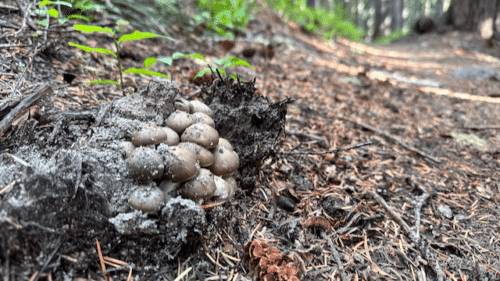
These four species are a good starting point for new foragers in the Pacific Northwest. They’re common, relatively easy to identify, and good to eat.
More Edible Species Worth Knowing
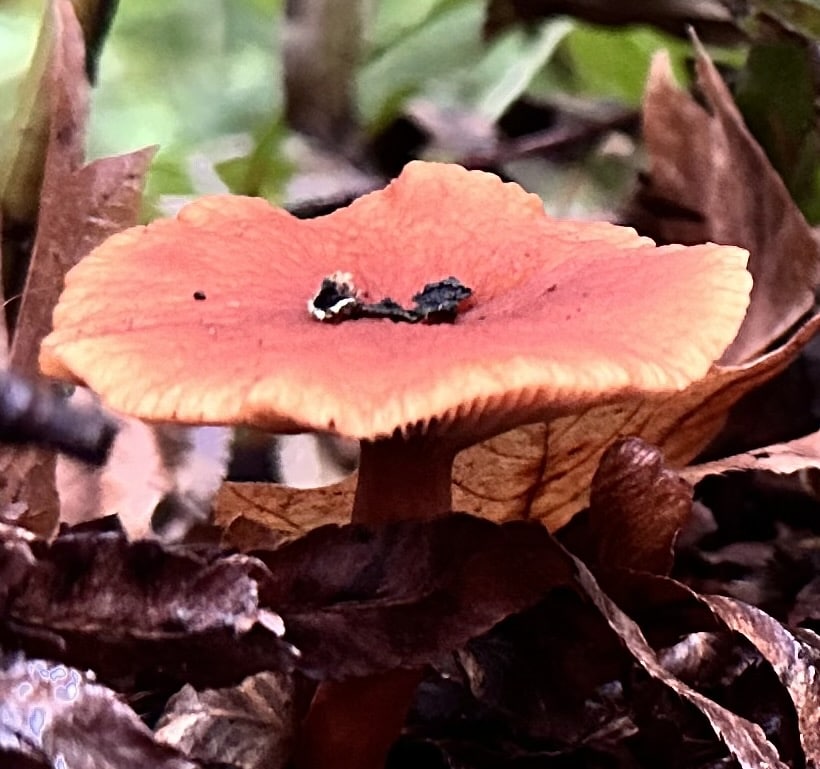
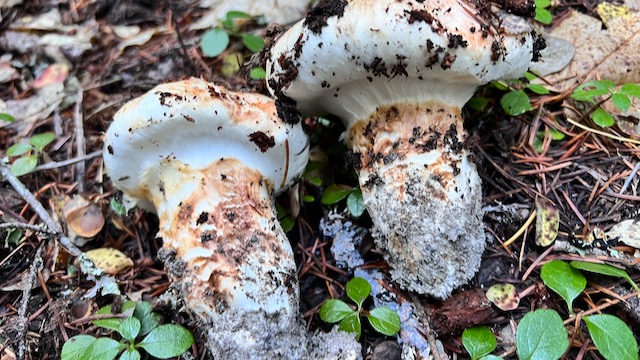
Once you’ve found your first chanterelles and boletes, these species will keep you foraging through every season. Some are common but overlooked; others are prized finds that take patience and the right habitat.
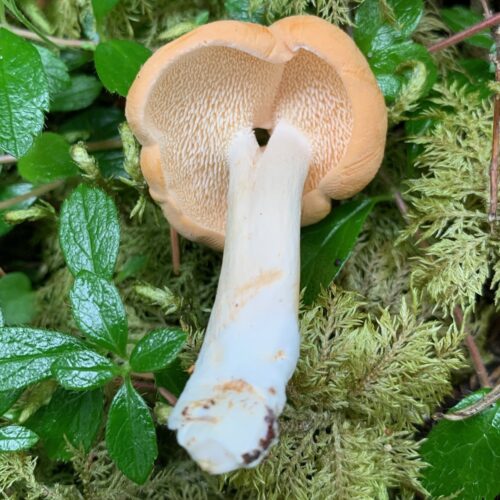
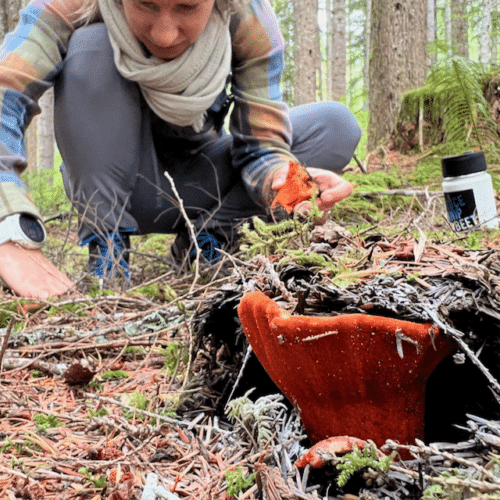
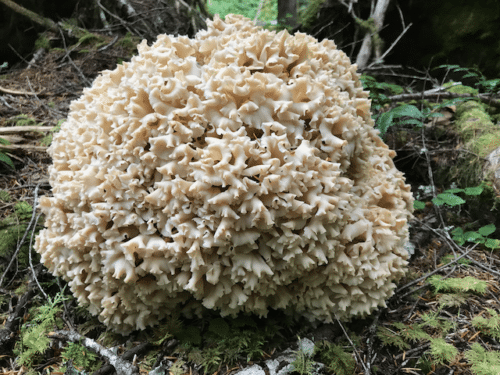
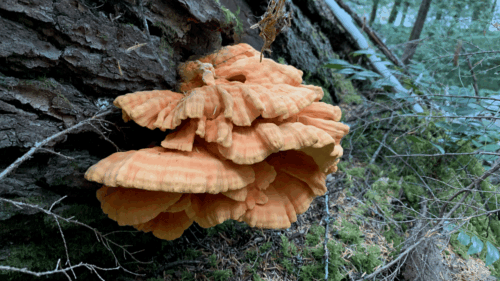

Track Morel Season with Forayz
Soil temperature, precipitation data, and burn maps updated for 2026. See what typically fruits when, town by town, across Washington and Oregon.
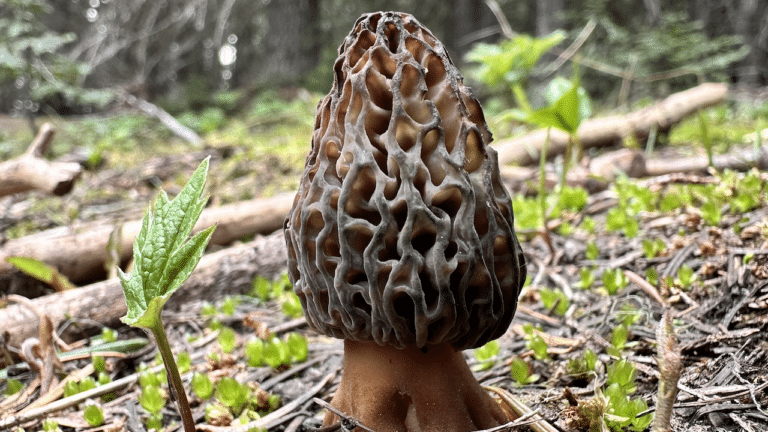
Is This a Morel?
66 photos — true morels vs. look-alikes. Test your ID skills before you hit the field.
When to Forage in the Pacific Northwest
Mushroom season in Washington and Oregon runs nearly year-round if you know what to look for. Here’s a rough calendar:
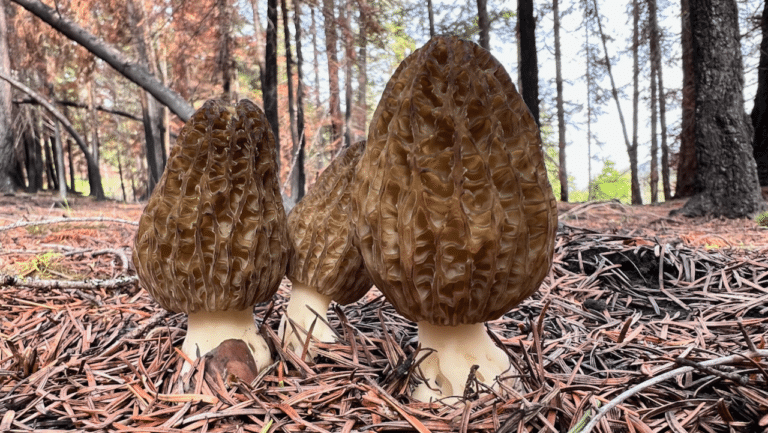
- Spring (March–July): Morels — landscape morels in gardens and parks starting in March, then burn morels at higher elevations as the snow melts into early summer. Morel hunting guide
- Summer (July–September): King boletes in the mountains, plus chicken of the woods and lobster mushrooms in lower conifer forests. Chanterelles start on the coast by late August.
- Fall (September–December): Peak season. Chanterelles, hedgehogs, matsutake, cauliflower, and dozens more. The best months are October and November.
- Winter (December–March): Wood blewits, velvet foot (Flammulina), and oyster mushrooms continue in mild winters. Coastal forests can produce into February.
Safety First
The Pacific Northwest is also home to several seriously toxic species, including death caps and destroying angels (Amanita). Never eat a mushroom you haven’t positively identified. When in doubt, leave it. A few ground rules:
- Learn from experienced foragers or take a mushroom identification class before eating anything wild
- Always cook wild mushrooms — many edible species cause stomach upset when raw
- Start with one species at a time and learn it well before moving on
- Carry a field guide and take spore prints when you’re unsure
Get the data serious foragers use to find more mushrooms
Free members get soil conditions, the past week of rain, snow, smoke and historical burns. Pro unlocks the layers that help you narrow down exactly where to look.
- Newest burn years, managed burns & burn severity
- Tree species maps (22 species) & timber harvests
- Town and mountain pass fruiting calendars with current conditions
- Offline map downloads in the iOS & Android apps
- 14- and 30-day rainfall windows
- Soil temperature & moisture at full zoom
Learn More
Sources: Mushrooms of Cascadia (Siegel & Schwarz, 2024); MycoMatch (© Ian Gibson), a compilation of published descriptions through which most other field-guide authors named here are quoted.