Identifying Cottonwood Trees How to find black cottonwood for early-season mushroom hunting in the PNW
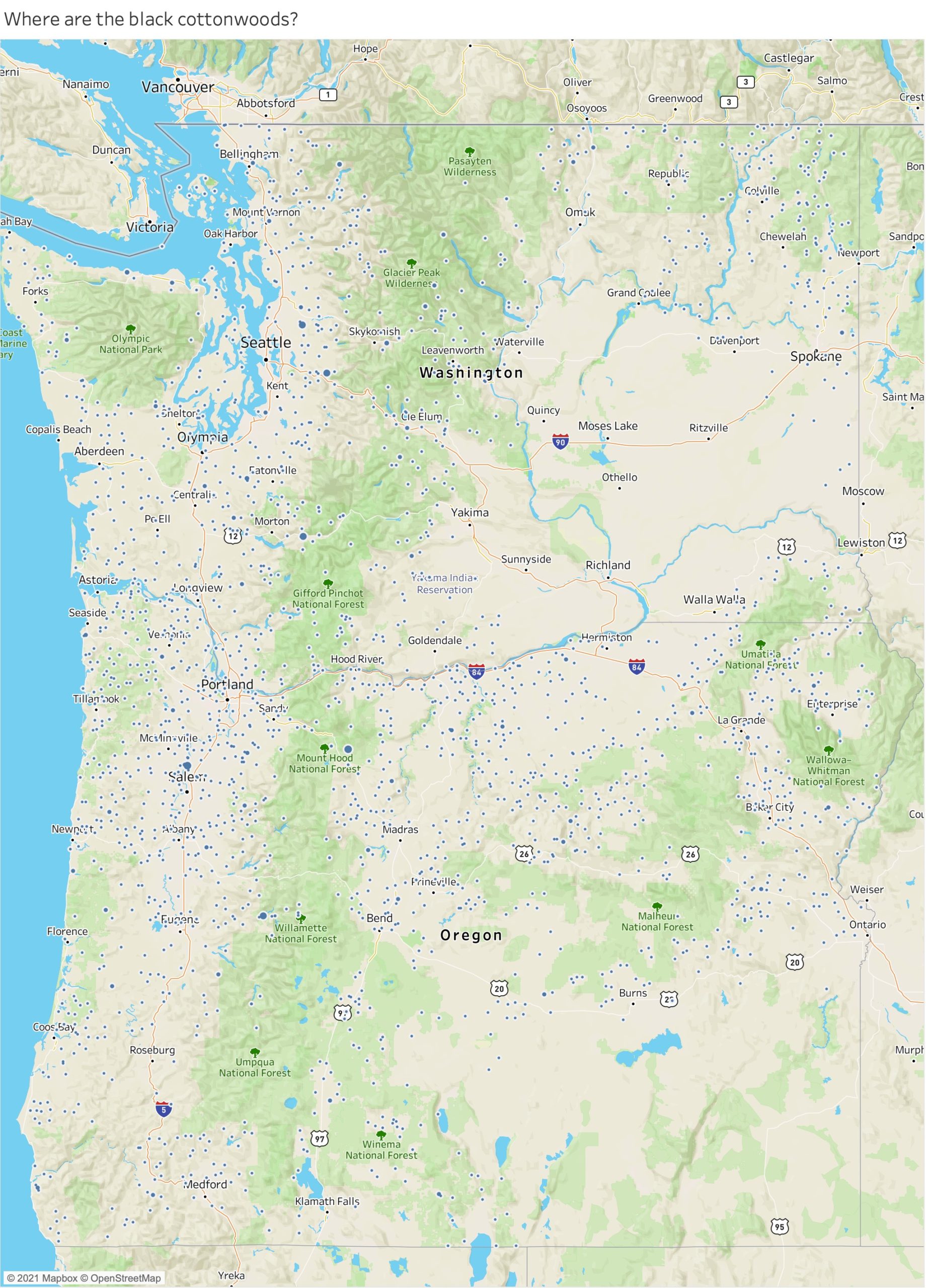
Black cottonwood (Populus trichocarpa) is one of the most important trees for early-season mushroom hunting in Western Washington. While our region is dominated by conifers, cottonwoods grow along rivers, streams, and lake margins — and they’re among the first trees to signal that spring mushroom season has arrived.
If you’re looking for morels, oyster mushrooms, or dryad’s saddle in March through May, learning to spot cottonwoods from a distance will save you hours in the field. The good news: Western Washington has fewer deciduous species than the East Coast, so identification is straightforward once you know what to look for.
Scout Cottonwood Habitat Before You Go
Use Forayz to explore river corridors, soil moisture data, and public land boundaries — find cottonwood-rich areas from your couch before heading out.
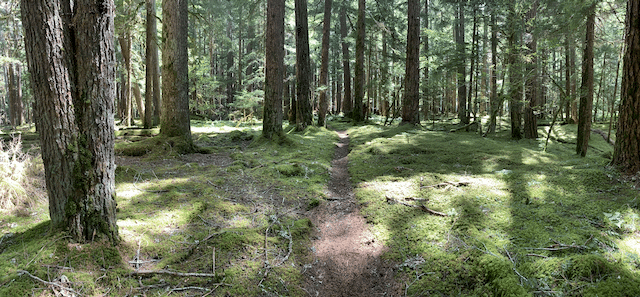
Where Cottonwoods Grow
Cottonwoods are riparian trees — they need water. In Western Washington, look for them along:
- River floodplains — especially the Skagit, Snoqualmie, Snohomish, Nisqually, and Chehalis river systems
- Stream banks and creek bottoms — even small seasonal creeks can support cottonwood stands
- Lake margins — the edges of lakes and reservoirs, particularly where soil stays moist
- Gravel bars and alluvial deposits — cottonwoods are pioneer species that colonize fresh sediment
They often grow in pure stands or mixed with red alder (Alnus rubra). In river valleys, you’ll frequently see a band of cottonwoods marking the floodplain edge — tall, broad-crowned trees that stand above the surrounding alder and willow.
Google Maps Trick
In satellite view during late October or early November, cottonwoods show up as bright yellow patches along rivers while surrounding conifers stay dark green. Mark these locations and return in spring for morel hunting. The full cottonwood page includes a video demonstrating this technique.
How to Identify Black Cottonwood
Three features make cottonwood identification reliable year-round: leaves, bark, and overall stature. Even one of these is usually enough.
Leaves
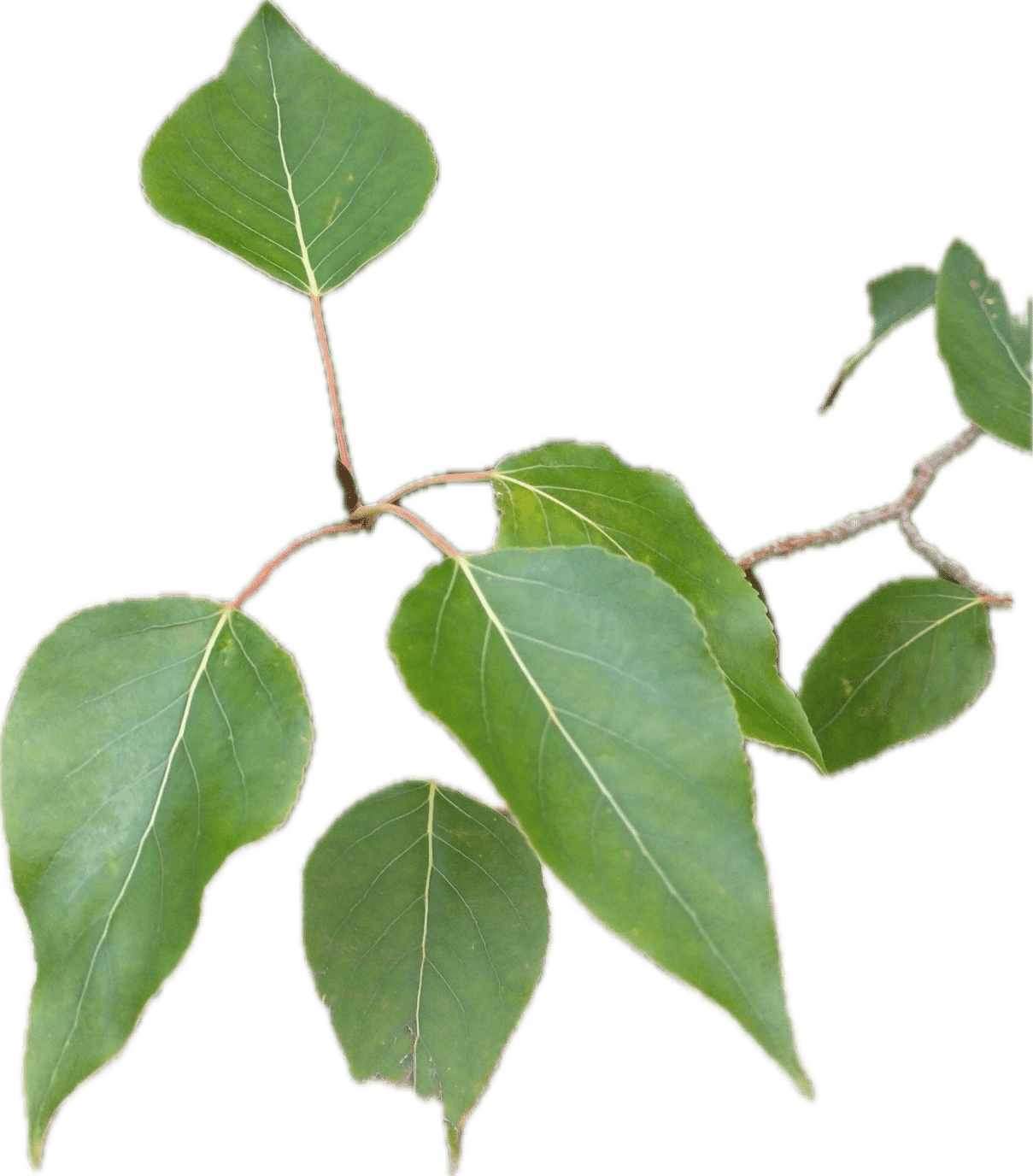
Heart-shaped to triangular, 3–6 inches long. Glossy dark green on top, pale silvery-green underneath. Smooth edges with fine teeth. Sticky resinous buds in spring have a distinctive sweet balsam smell.
Bark
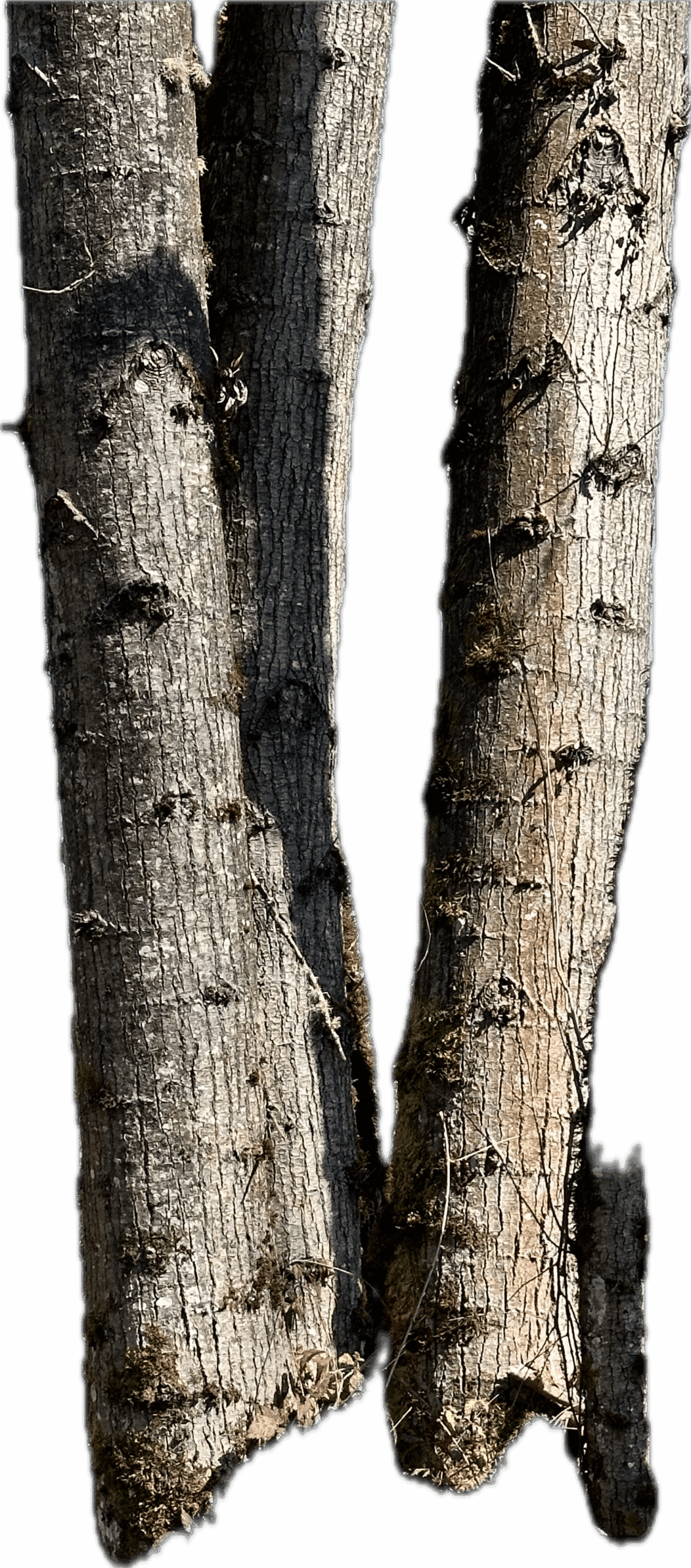
Young trees have smooth, yellowish-gray bark. Mature trees develop thick, deeply furrowed bark with flat-topped ridges. The bark gets darker and more rugged with age — distinctive even from a distance.
Stature
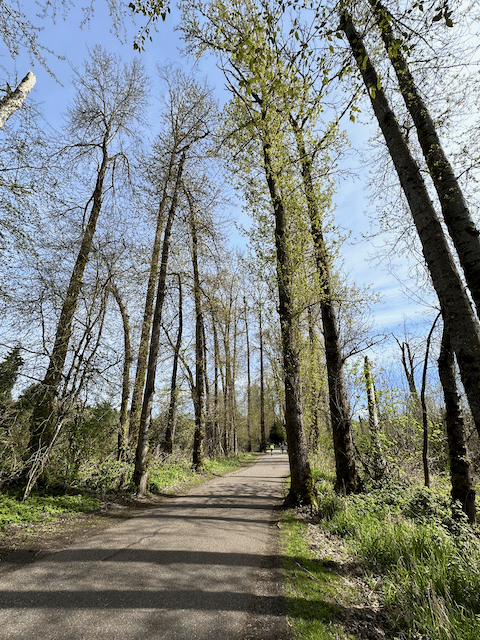
The largest deciduous tree in the PNW — up to 150 feet tall with a broad, open crown. In river bottoms, they tower over everything except old-growth conifers. Often the tallest deciduous tree in sight.
In winter and early spring before leaf-out, rely on bark texture and habitat. If you’re standing near a river looking at a tall, thick-barked deciduous tree with an open crown, it’s almost certainly a cottonwood. The resinous buds in late winter are another giveaway — break one open and smell the strong balsam fragrance.
Cottonwood vs. Similar Trees
In Western Washington, the main sources of confusion are:
- Red alder — Much smaller (40–60 ft), smooth gray-white bark with dark horizontal lenticels. Leaves are oval with serrated edges, not heart-shaped. Often grows alongside cottonwood.
- Bigleaf maple — Large but with deeply lobed (palm-shaped) leaves, completely different from cottonwood’s heart shape. Bark is brown and furrowed but less deeply than cottonwood.
- Oregon white oak — Found in drier prairies and south-facing slopes, not riparian habitat. Lobed leaves, gnarled form.
Once you’ve seen a mature cottonwood a few times, the combination of size, bark texture, and riparian habitat makes them unmistakable.
Mushrooms Associated with Cottonwood
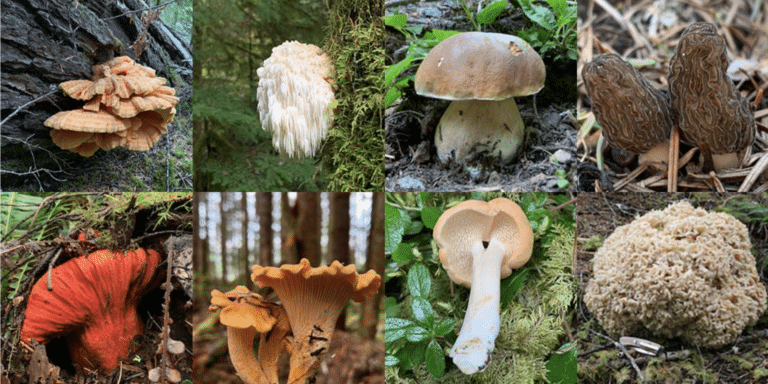
Cottonwood supports some of the most sought-after spring mushrooms in the PNW. These species fruit on or near cottonwoods and are a major reason foragers learn to identify these trees.
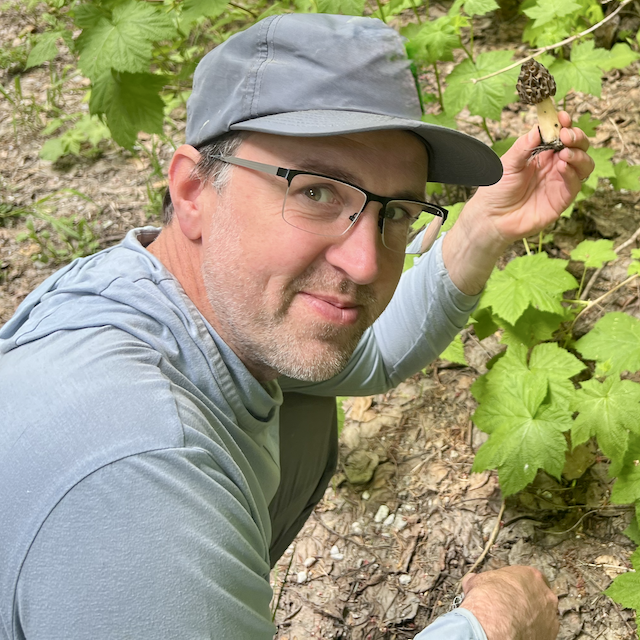

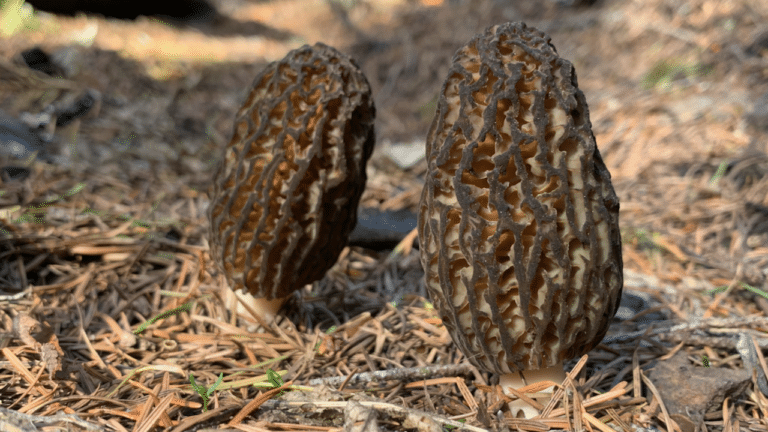
Verpa
Verpa bomemica
One of the earliest of the spring mushrooms. It’s ‘as edible’ as the true morels. Some forage for them while others simply enjoy finding and observing.
It’s complicated? Edible SpringTrack Soil Moisture & Temperature for Morel Timing
Forayz shows real-time soil moisture and soil temperature layers — the two key variables for predicting when cottonwood morels will fruit. Free for all members.
Is This a Morel?
66 photos — true morels vs. look-alikes. Test your ID skills before you hit the field.
When to Hunt Near Cottonwoods
In Western Washington, cottonwood-associated mushrooms follow a rough seasonal pattern:
- March–April: Dryad’s saddle appears first, often before full leaf-out. Early oyster mushrooms on dead wood.
- April–May: Peak morel season in cottonwood bottoms. Watch for soil temperatures reaching the mid-40s°F and sustained warm rain events.
- May–June: Late morels at higher elevations. Oyster mushrooms continue through summer.
- Fall: Oyster mushrooms and chicken of the woods on cottonwood logs and standing dead trees.
The spring bud-break on cottonwoods is itself a phenological signal. When you see cottonwood buds swelling and the balsam scent fills the air, morel season is approaching. When leaves are about half-sized, conditions are often prime.
Cottonwood & Burn Morels
Cottonwood stands that burned the previous summer are excellent burn morel habitat. The combination of disturbed soil, ash nutrients, and cottonwood root systems can produce heavy morel flushes the following spring. Check the Forayz past burns layer to find burned cottonwood areas on public land.
Distribution in Washington
Black cottonwood ranges from Alaska to Baja California, but it’s most abundant in the river valleys of Western Washington and Oregon. In our region, major populations follow the Skagit, Stillaguamish, Snoqualmie, Green, Puyallup, Nisqually, and Chehalis river systems. East of the Cascades, cottonwood grows along the Yakima, Wenatchee, and Columbia River tributaries.

Get the data serious foragers use to find more mushrooms
Free members get soil conditions, the past week of rain, snow, smoke and historical burns. Pro unlocks the layers that help you narrow down exactly where to look.
- Newest burn years, managed burns & burn severity
- Tree species maps (22 species) & timber harvests
- Town and mountain pass fruiting calendars with current conditions
- Offline map downloads in the iOS & Android apps
- 14- and 30-day rainfall windows
- Soil temperature & moisture at full zoom