
Ascomycota Sac fungi of the Pacific Northwest
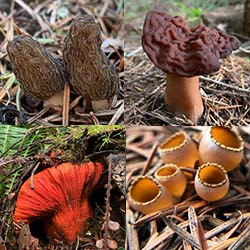
Ascomycota — the sac fungi — are one of the two major divisions of the fungal kingdom. They’re defined by a reproductive structure called an ascus, a microscopic sac that holds and ejects spores. The group includes some of the most recognizable spring fungi in the Pacific Northwest: morels, false morels, cup fungi, and the delicate swamp beacon.
Ascomycetes vary enormously in form. Some look like classic mushrooms, others like cups, clubs, or coral. A few are gelatinous. Lichens — the familiar crusty or leafy organisms on rocks and bark — are also fungi in this division, living in partnership with algae. This page is an index to the ascomycete groups you’re most likely to encounter here.
Track morel conditions on Forayz
Morels are the most sought-after ascomycetes in the region. Forayz shows real-time soil temperature, snowpack, and burn perimeters — the key variables for timing a morel hunt.
Groups in this family
Major ascomycete groups found in the Pacific Northwest, from edible spring species to ecologically unusual forms.
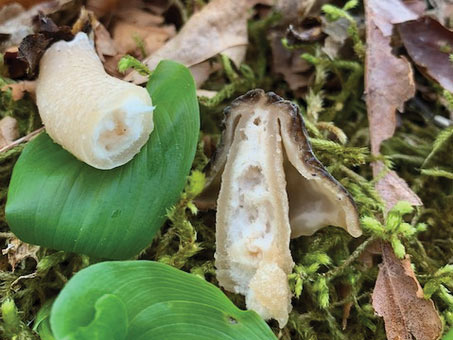
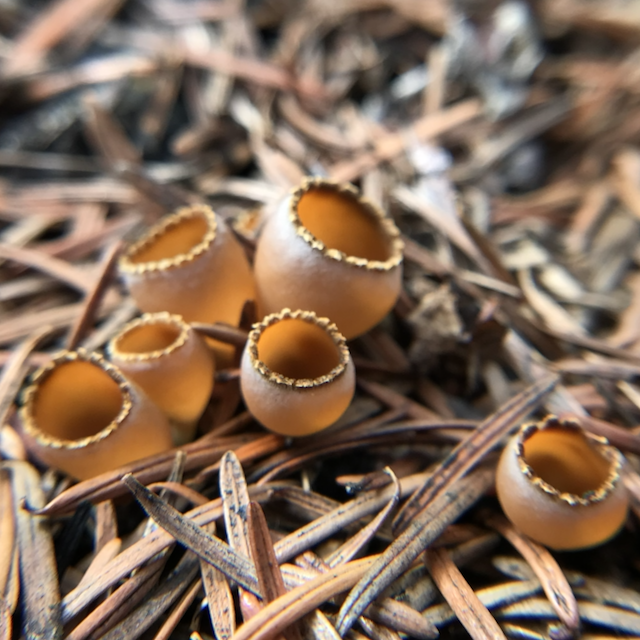
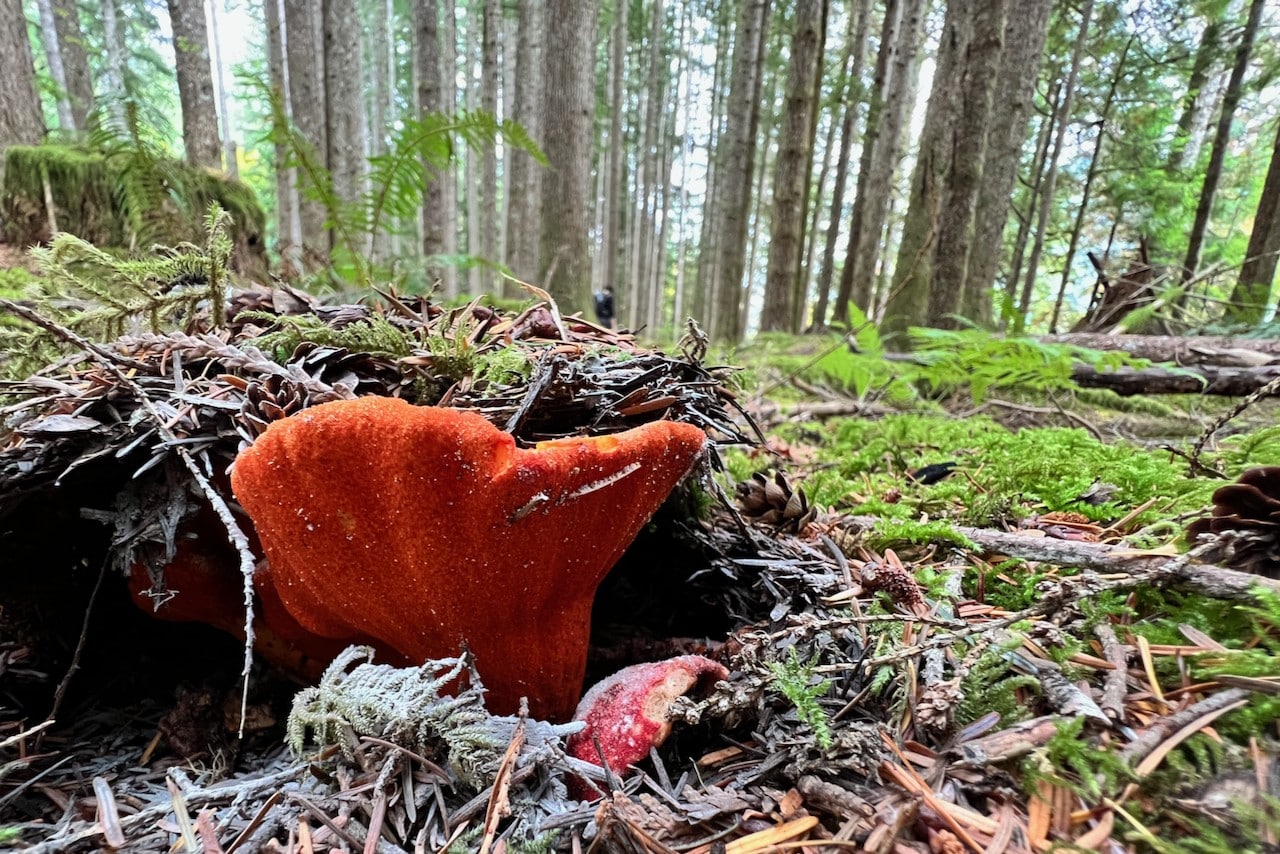
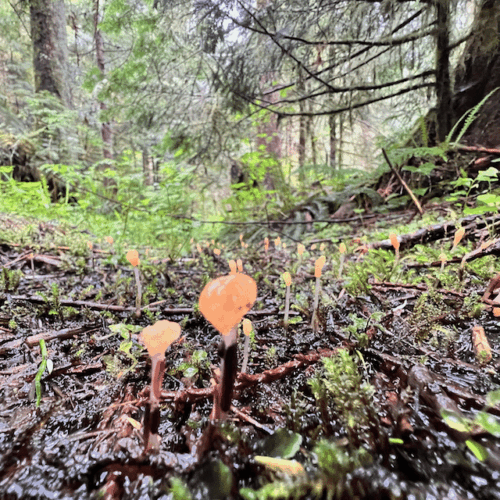
Swamp Beacon
Mitrula elegans
A small, distinctive species with a bright orange club-shaped head. Grows from decomposing plant debris submerged in streams and seeps, fruiting in spring and early summer.
Spring Saprotrophic
Lichen
Various genera
Lichens are a symbiotic union of a fungus — almost always an ascomycete — and photosynthetic algae or cyanobacteria. They colonize rock, bark, and soil across the region.
SymbioticWhat makes ascomycetes different
The defining feature of ascomycetes is the ascus — a microscopic, elongated cell that typically contains eight spores. When mature, the ascus ruptures or opens at the tip to forcibly discharge its spores. This is why cup fungi seem to “puff” when disturbed: thousands of asci releasing simultaneously.
Most ascomycetes in the PNW are saprotrophic, breaking down leaf litter, woody debris, and submerged plant material. Morel ecology is different and still not fully resolved: research points to a complex life cycle that may include a period associated with living tree roots, rather than pure decomposition.
Find Morel Habitat with Burn & Snow Data
Track past burn perimeters, snowpack melt, and soil temperature to time your morel hunts across the Pacific Northwest.
Sources: Mushrooms of Cascadia (Siegel & Schwarz, 2024); MycoMatch (© Ian Gibson), a compilation of published descriptions through which most other field-guide authors named here are quoted.