
Jelly Mushrooms Gelatinous fungi of the Pacific Northwest — rubbery, translucent, and surprisingly common
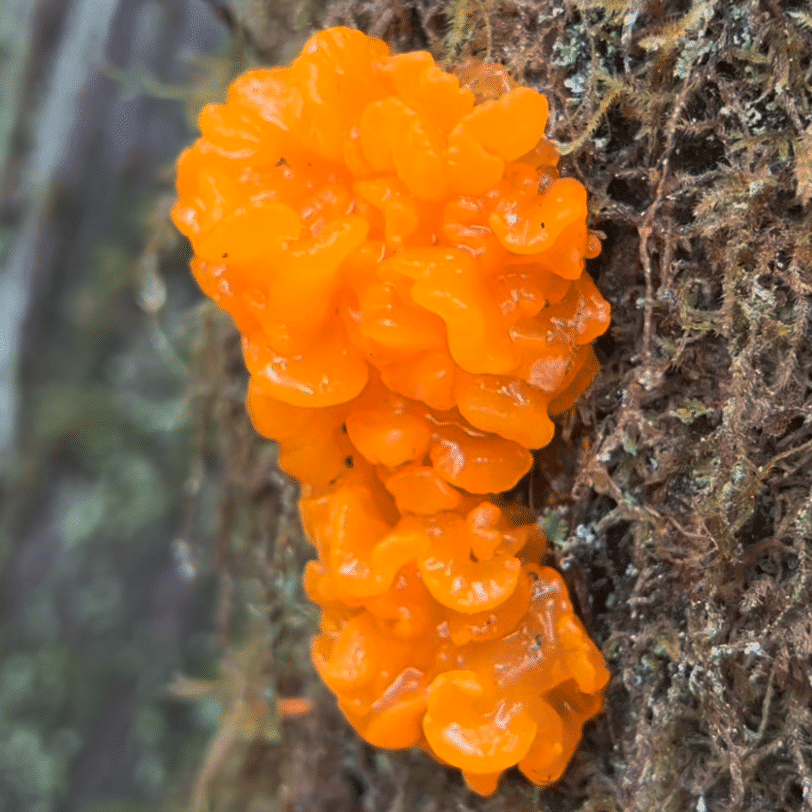
Jelly mushrooms are defined by texture rather than taxonomy. They share a gelatinous or rubbery consistency that sets them apart from all other fungi — squeeze one and it bounces back. Most produce spores on their outer surfaces rather than gills or pores. The group spans multiple unrelated lineages that independently evolved the same body plan.
These are common, year-round fungi in western Cascadia. You’ve probably walked past hundreds without noticing. Witch’s butter, orange jelly, wood ears, and toothed jellies are all widespread on dead wood in PNW forests and parks. Most are harmless. A few are edible. None are dangerously toxic.
Explore Forest Habitat on Forayz
Jelly fungi are common in moist conifer and hardwood forests. Use ecoregion data and public land overlays to find wet forest areas near you. Environmental layers are free for all users.
Notable PNW Species
Witch’s Butter — Tremella mesenterica
Bright yellow-orange, lobed, brain-like blobs 0.5–4 cm across on dead hardwood branches, especially red alder. Not actually a decomposer — it’s a parasite on the crust fungus Peniophora, which is the actual wood rotter. Locally common in western Cascadia. Fruits in fall, persisting through winter in lower elevations. When dry it shrinks to a hard, orange crust and rehydrates with rain. Edible but flavorless — more curiosity than food.
Orange Jelly — Dacrymyces chrysospermus
Irregular, brain-like, bright orange blobs 1–6 cm across on dead conifer logs and branches. One of the most common fungi in PNW forests — you’ll find it on virtually any rotting conifer log during the wet season. Fruits year-round in mild areas. Technically edible but unappealing — soft, gelatinous, flavorless. Not worth collecting except for teaching purposes.
Wood Ear — Auricularia americana
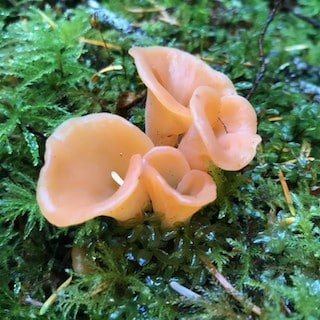
Ear-shaped, thin, rubbery, 2–8 cm across. Brown to vinaceous-brown with fine hairs on the upper surface and a smooth underside. Found on dead conifer logs and branches, especially Douglas-fir and true fir. Far more common in drier east-side forests. Primarily a spring fruiter but can appear during wet periods year-round. Edible and good — keeps its crunch when cooked. Related to the wood ear widely used in Asian cuisine (A. auricula-judae).
Cat’s Tongue / Toothed Jelly — Pseudohydnum gelatinosum
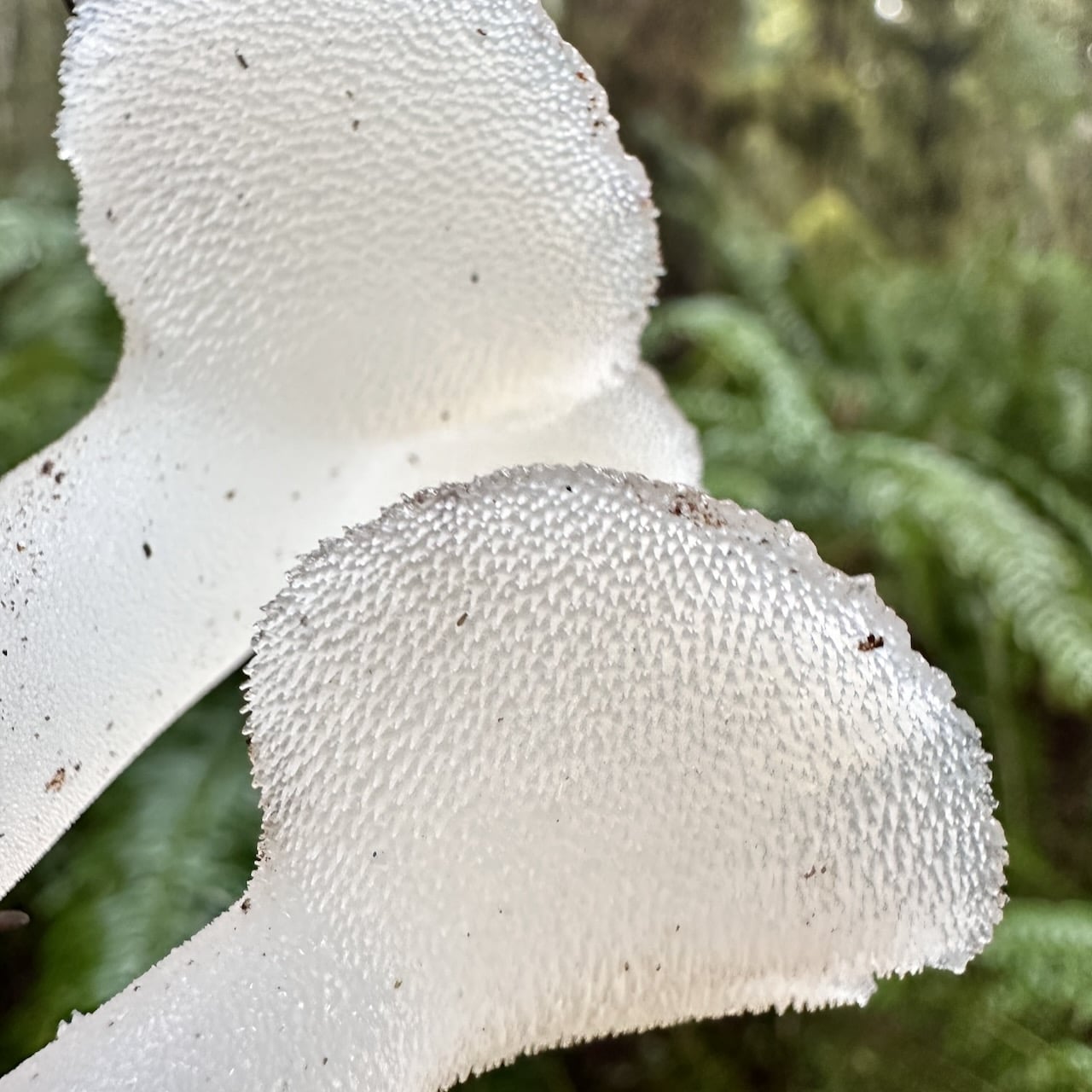
Translucent whitish to gray-brown, semicircular, 2–6 cm across, with a distinctive toothed underside (tiny jelly spines instead of smooth). The spines give it the “toothed” name and make it easy to identify. Grows on well-decayed conifer logs and stumps. Common in western Cascadia. Edible — mild and gelatinous, sometimes candied as a novelty. One of the few jelly fungi worth collecting for food.
Amber Jelly — Exidia recisa
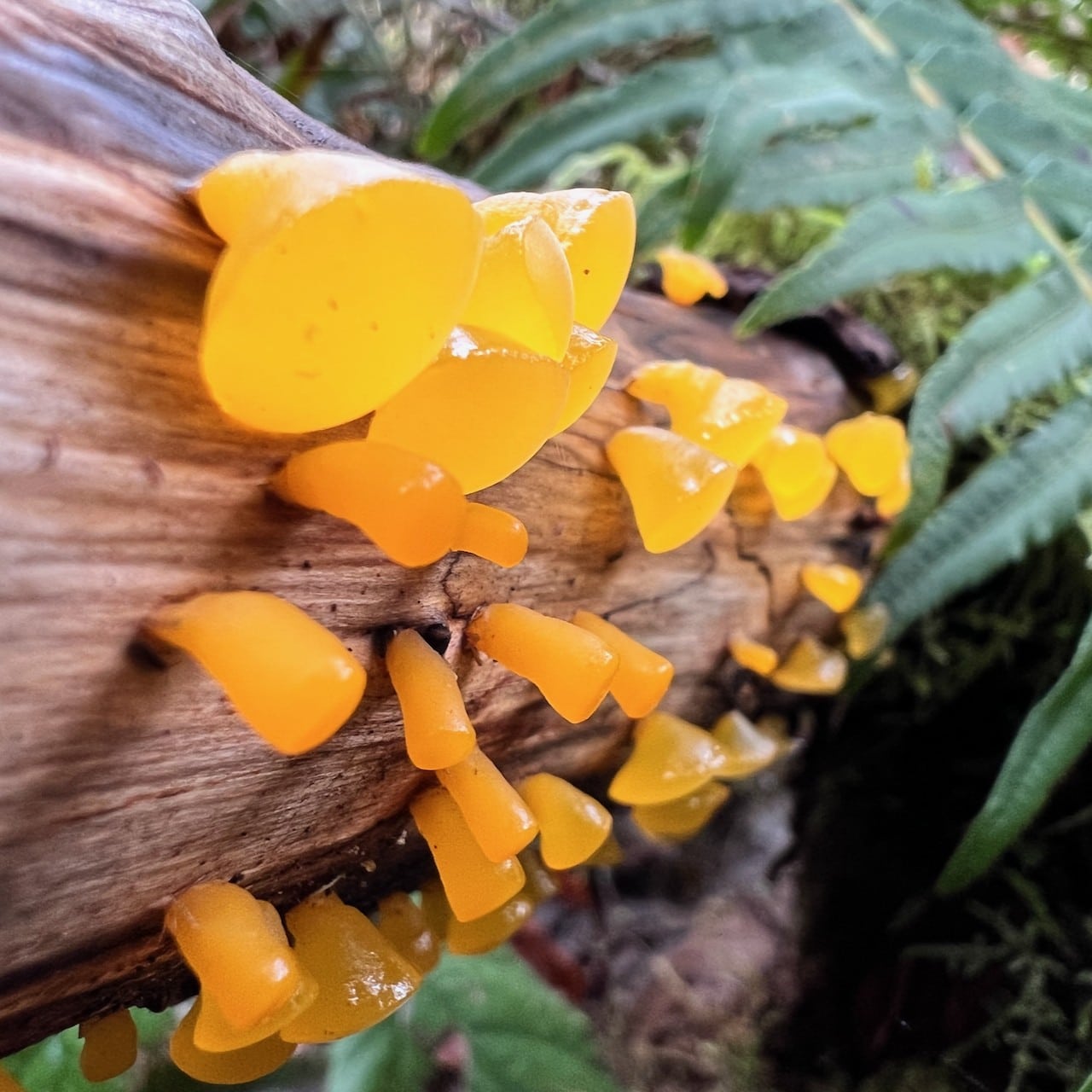
Brown to amber, disc-shaped to irregularly lobed, 1–3 cm across, smooth to slightly wrinkled. Rubbery when wet, hard and dark when dry. Found on dead hardwood branches, particularly alder and willow. Common in wet forests. Not edible.
Yellow Staghorn — Calocera viscosa
Bright yellow-orange, repeatedly branching, 3–8 cm tall — looks like a small, rubbery coral fungus. Found on conifer stumps and buried roots. Distinguished from true coral fungi by the rubbery, gelatinous texture (coral fungi are brittle). A second species, C. cornea, is smaller and unbranched, growing in clusters on dead wood. Neither is edible.
The Bounce Test
Jelly fungi are defined by texture. If you squeeze it and it rebounds like rubber, it’s likely a jelly fungus. True gilled or polypore mushrooms are brittle, fibrous, or fleshy — they don’t have that elastic snap-back quality. This is the simplest field test for the group.
Habitat & Season
Jelly mushrooms are primarily saprobic — they grow on dead wood. Most prefer moist habitats and are most abundant in the wet forests of western Cascadia. Several species (Tremella, Dacrymyces, Exidia) fruit throughout the wet season and can persist year-round, shrinking when dry and rehydrating with rain. They’re especially common on red alder branches (Tremella), conifer logs (Dacrymyces, Pseudohydnum, Calocera), and Douglas-fir stumps. Look for them on any dead wood during wet weather — they’re easy to overlook but extremely common once you start noticing them.
Track Wet Season Conditions
Jelly fungi need sustained moisture. Use the 14-day precipitation and soil moisture layers on Forayz to find wet areas and time your forays to moist conditions. Environmental layers are free for all users.