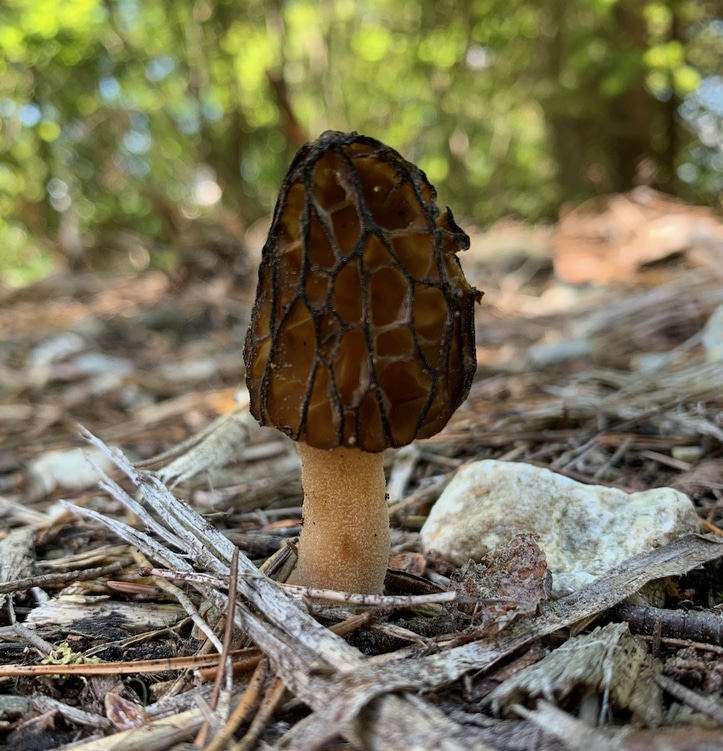
’Tis the season for morels, so with a keen eye and a little patience, you may find yourself walking out of a burn area with a delicious ingredient to use in your next meal or snack. Check out our 2020 Morel Burn Map Index to find out where you might be most likely to find morels in the PNW, and don’t forget to also read A Morel Superpost for lots of great information about finding identifying morels. When you find morels, remember to cut them by the stems, to ensure that you don’t remove the mycelia needed for more morels to grow. Before eating, make sure to give your morels a soak in water and a gentle rinse to get rid of any dirt or little insects that may be hiding in the crevices. Most importantly of all, do not eat any mushroom you find if you are not absolutely confident about the identity of that mushroom.
Dehydrating and Rehydrating Morels
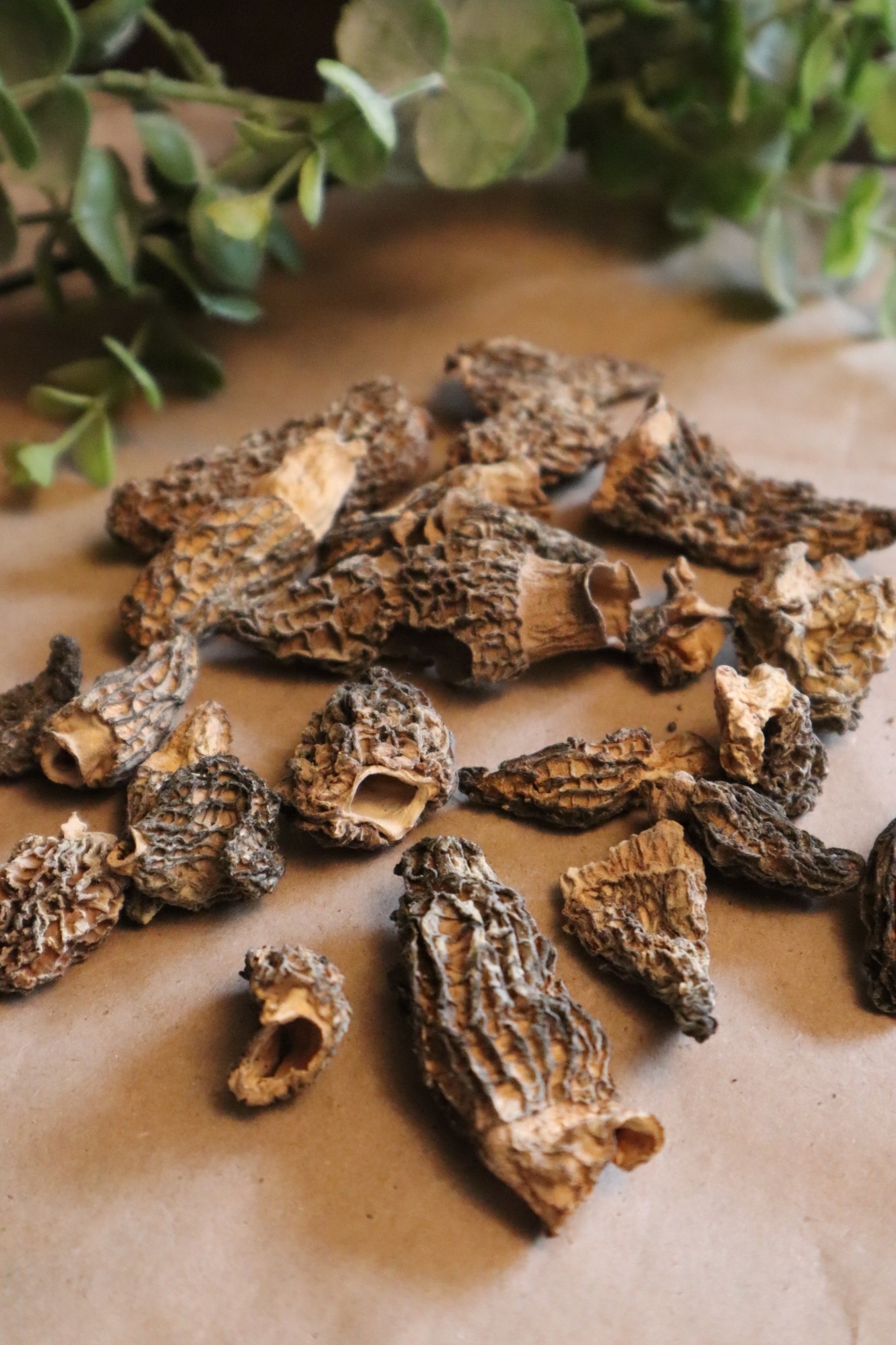
My favorite way to ensure that my findings and favorite foods don’t go to waste is by dehydrating. It is a super easy and useful skill to keep in your back pocket so that you can enjoy the fruits of your labor long after your mushroom hunting trips have passed.
After washing, and drying morels on a clean cloth, slice any large pieces in half for even and timely dehydration.
You don’t need a dehydrator to get great results, but I can’t say the investment isn’t worth it! The biggest benefit to using a dehydrator that I’ve found is being able to set the timer (if you’re an expert at estimating how much time you need without burning your mushrooms) and be able to go about your day without having to watch too closely.
Whether using an oven or dehydrator, you will need to place your morels on a baking tray evenly spaced, making sure no pieces overlap or touch.
Set your dehydrator or oven to its lowest setting, usually between 125°F and 175°F. Drying time will be dependent on size, and type of morel. Small pieces can range from about 4-6 hours, while larger pieces can take up to 8. If you are still becoming familiar with the abilities of your dehydrator or oven, keep an eye on your morels, checking them about every half hour to turn or rearrange them as needed.
Once cooled, put your morels into a glass jar, and seal the lid on tight. They will last just about indefinitely if kept in a cool, dark place.
To rehydrate your mushrooms for use, bring water to a boil, and pour over the dehydrated morels in a bowl. Let them rest for around 20 minutes, until soft. They will taste just about as good as the day you harvested them. You can use the liquid that the morels were soaked in for sauces and soup stocks, such as in our Wild Rice and Morel Soup. Pour the liquid into a glass jar, except for any sediment at the bottom of your dish, and tighten the lid to store.
Dehydrated Morel Mushrooms
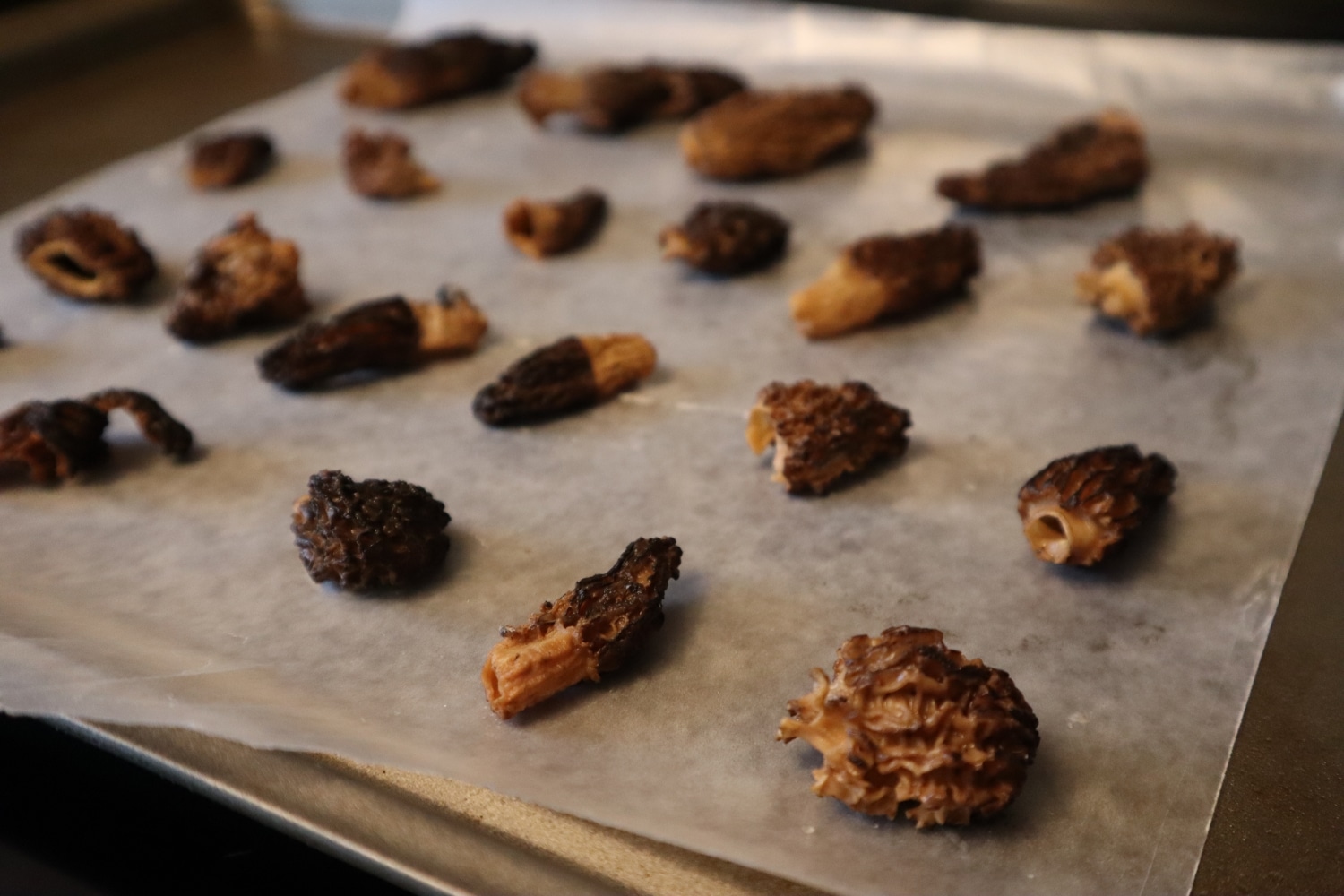
Ingredients
•Morels
Instructions
- If using a dehydrator, preheat to 125°F. If using an oven, preheat to lowest setting. (Mine was 275°F)
- Place your freshly picked morels into a bowl of cool water, shaking them around to remove any dirt, debris, or bugs hidden in the crevasses.
- Pat dry with a paper towel.
- Place evenly on a dehydrator or baking sheet.
- Check every half hour, turning the morels over as needed until dry
- After cooled, place dehydrated morels into a glass jar, and seal tightly. Store somewhere cool, dry, and away from light.
Rehydrated Morel Mushrooms
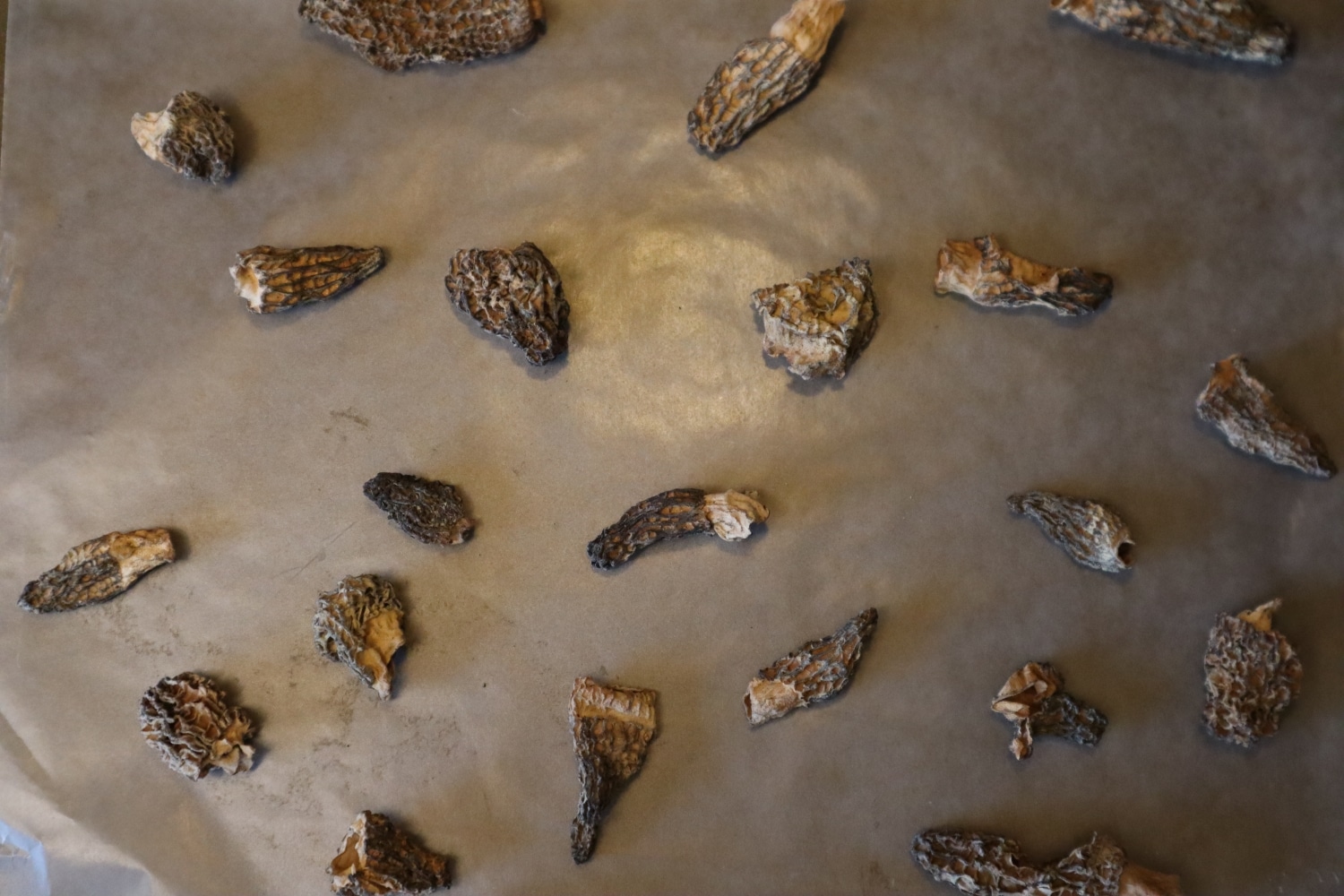
Ingredients
- Morels
- Water – enough to submerge morels in a bowl
- Bring water to a boil.
- Pour water over morels in a bowl
- Let sit for around 20 minutes, until soft.
- Pat gently with cloth or paper towel to dry.
- Use as you would fresh morels.
Birdi Nagy – May 21st 2021
Get the data serious foragers use to find more mushrooms
Free members get soil temps, precipitation, and ecoregion data. Pro unlocks the layers that help you narrow down exactly where to look.
- Historical burn perimeters — find morel habitat fast
- Tree species maps & timber harvest boundaries
- Foraging areas with fruiting calendars & conditions
- Offline maps in the iOS & Android apps