Fungi produce a wide range of chemicals for activities like digestion and protection from other microorganisms like mold and bacteria. Fungi like truffles even create distinctive scents to attract animals which will dig them up and disperse the spores.
According to this article in Nature, humans can detect 1 trillion unique odors. With some practice we can learn to detect some of these chemicals releasted by mushrooms which might smell like green corn, geraniums, coal tar, cucumber, almond, anise, or sperm. These scents can play an important role in identification of an edible or toxic mushroom as well.
Edible species of Agaricus mushrooms like the tasty Agaricus augustus (The Prince), can in some instances be differentiated from toxic species like the yellow-staining Agaricus xanthodermus through a difference in scent. Sweet-almond scented Agaricus mushrooms are more likely to be edible than the coal-tar, or phenolic scented species.
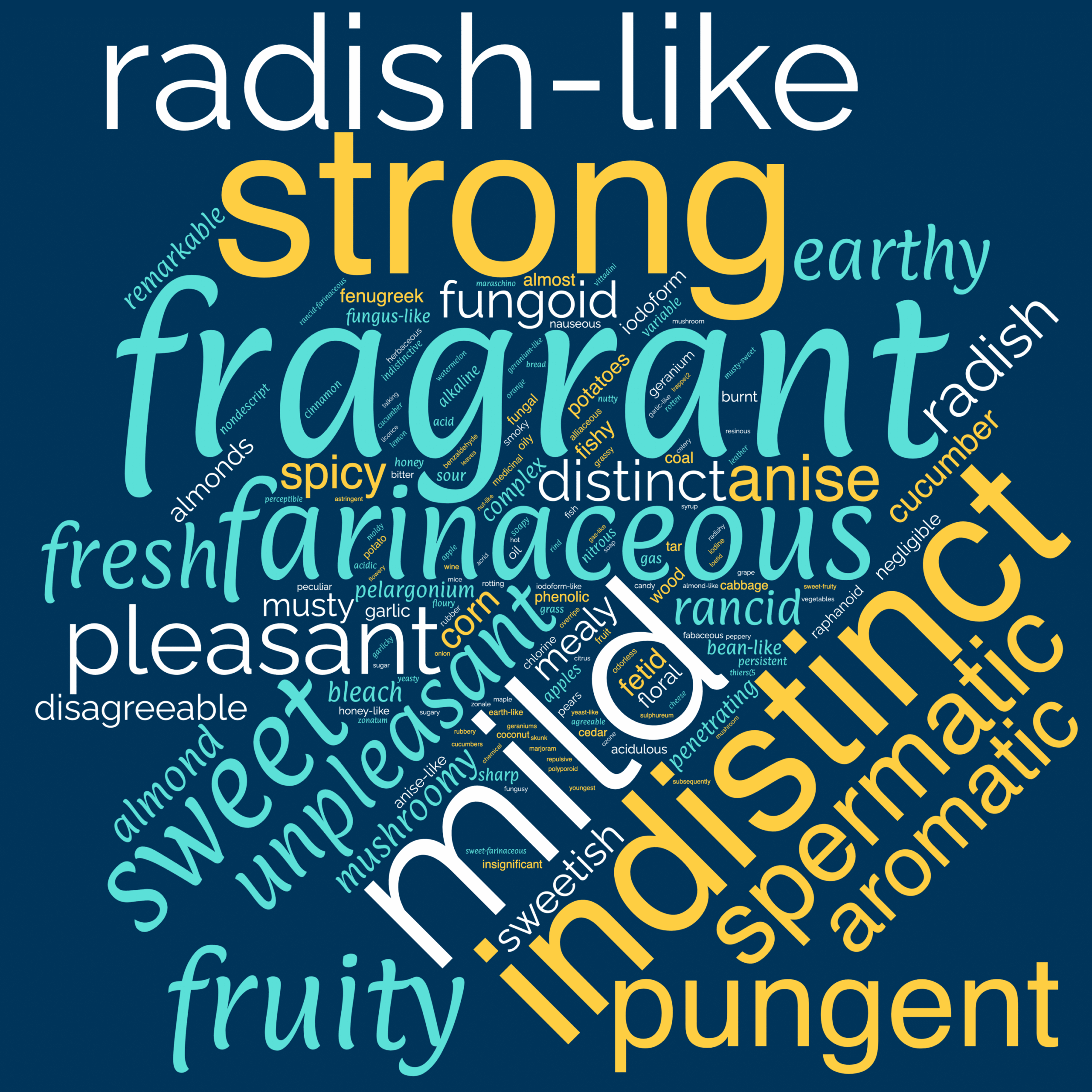
This chart lists many of the words mycologists use to describe the scent of mushrooms. Larger words are used more frequently.
Get the data serious foragers use to find more mushrooms
Free members get soil conditions, the past week of rain, snow, smoke and historical burns. Pro unlocks the layers that help you narrow down exactly where to look.
- Newest burn years, managed burns & burn severity
- Tree species maps (22 species) & timber harvests
- Town & pass fruiting calendars with current conditions
- Offline map downloads in the iOS & Android apps
- 14- and 30-day rainfall windows
- Soil temperature & moisture at full zoom