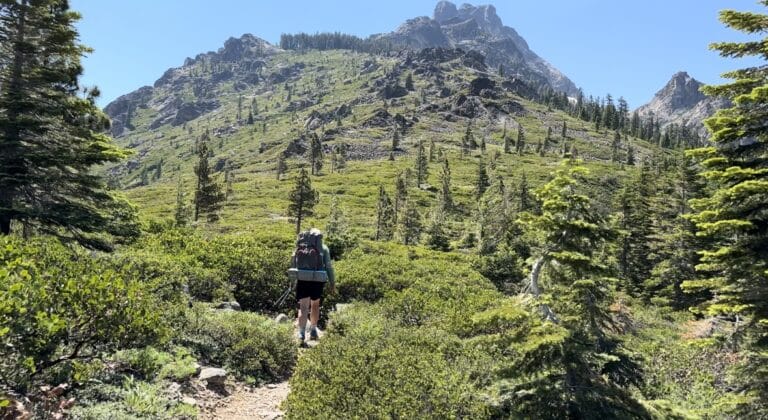
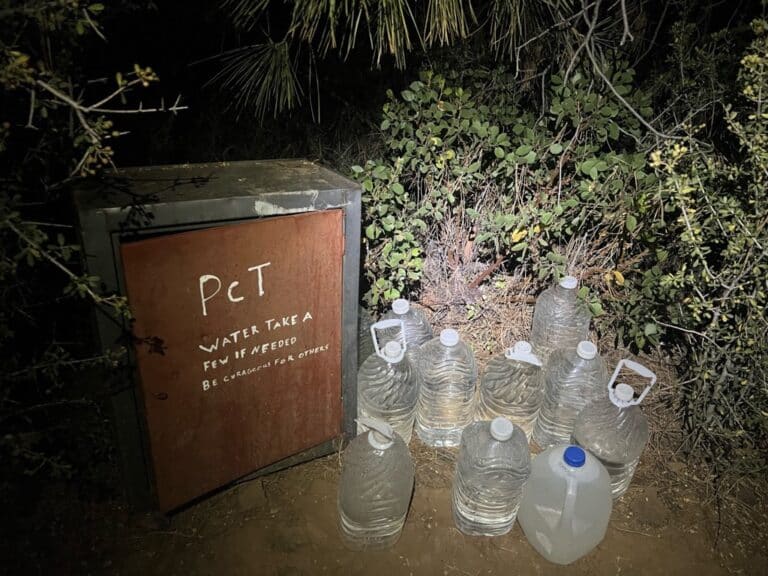
Since we spend so much of our time walking and thinking about food, it’s quite the treat when the trail provides us with a little snack. There’s usually not a lot of calories to be found from foraging (especially when foraging in a sustainable way), but today (August 22) we feasted on huckleberries. For almost five miles the trail was lined on both sides with huckleberry bushes stuffed with ripe, delicious berries. We left plenty for the bears, but also slowed our pace by more than half while we snacked our way north.
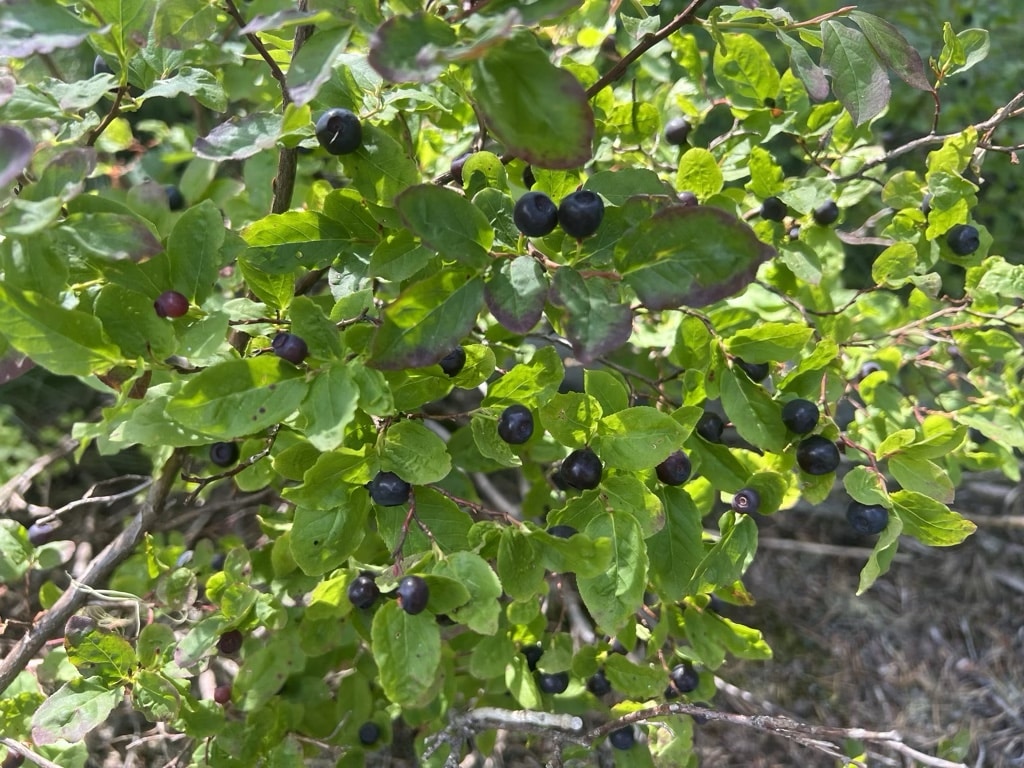
There are a handful of huckleberry species that grow in the Pacific Northwest, typically in subalpine areas. Interestingly, attempts to grow huckleberry plants from seed rarely work, likely given its sensitivity to soil chemistry. This makes huckleberries all the more rare a treat.
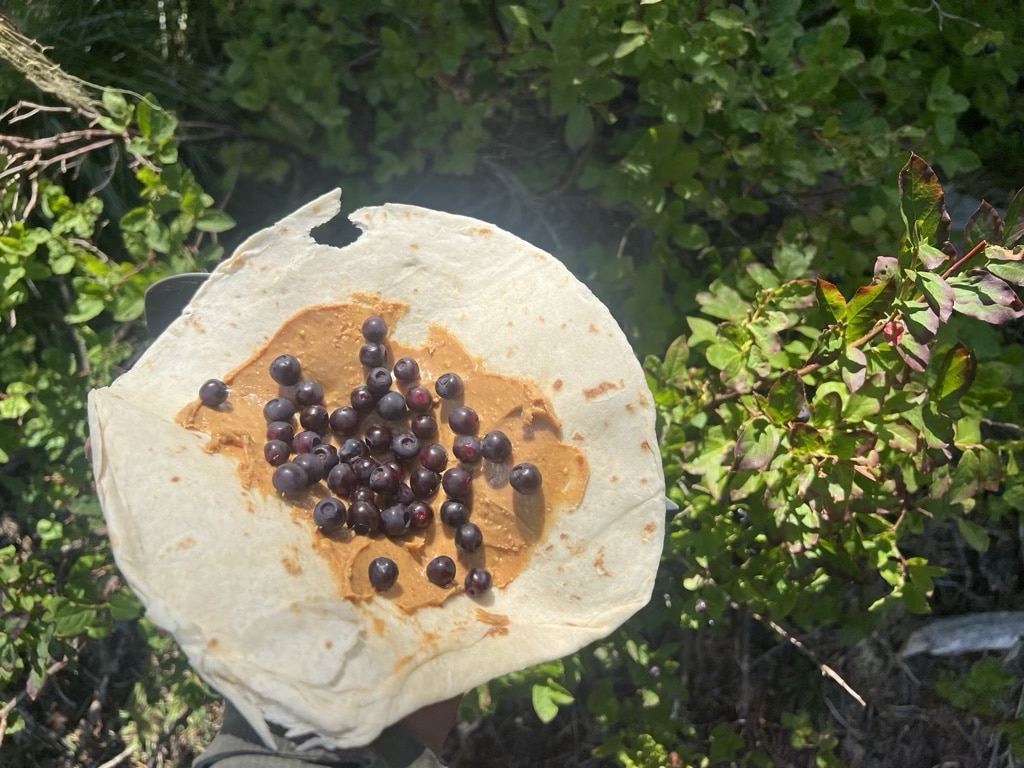
A few other things we’ve encountered on the trail that can be eaten include:
Miners lettuce – a small leafy plant that we first saw in Southern California and has been pretty common since then.
Mushrooms – we’ve recently found both morels and boletes, but as these need to be cooked and taste best with butter and garlic, we haven’t picked many.
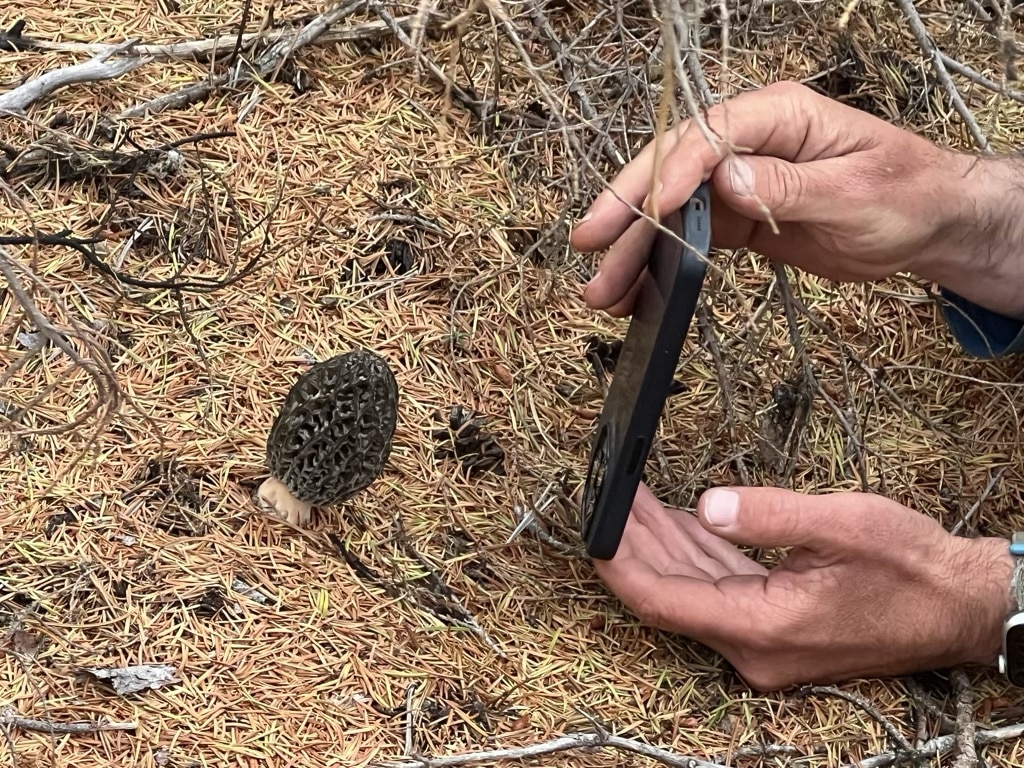
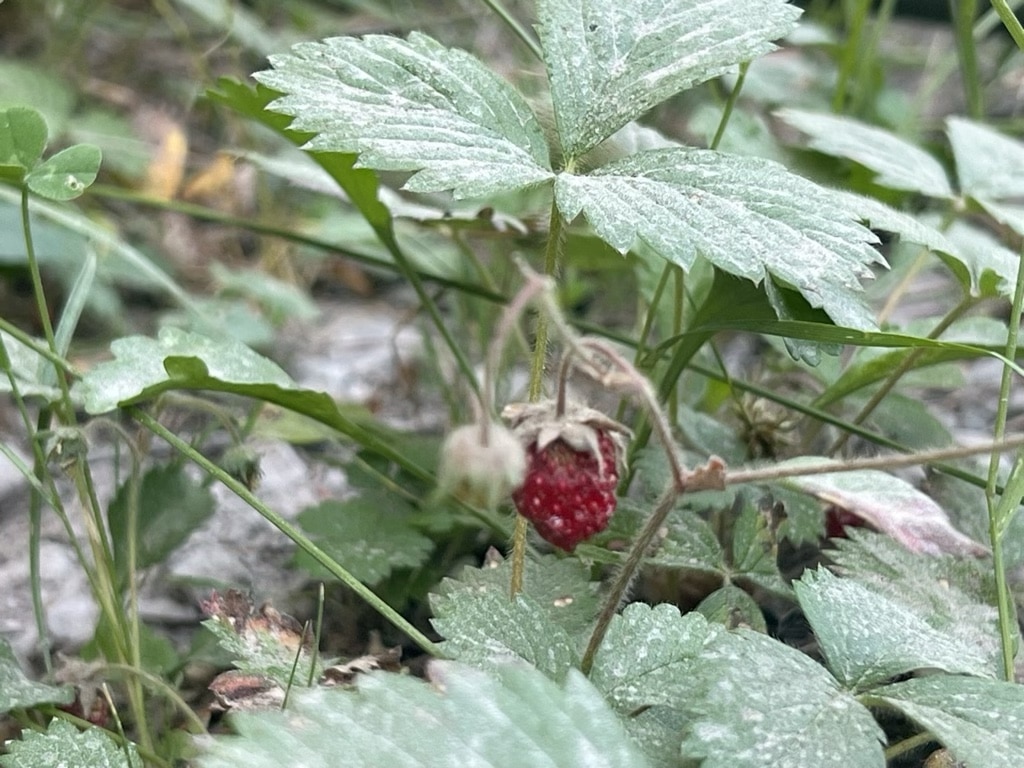
Berries – in addition to huckleberries we’ve seen, and tasted, thimbleberries, wild strawberries, blackberries, cascade oval-leafed blueberries, and white bark raspberries.
Evergreen tips – while not the tastiest treat when eaten raw, fir and spruce tips are a good source of vitamin C.

Get the data serious foragers use to find more mushrooms
Free members get soil conditions, the past week of rain, snow, smoke and historical burns. Pro unlocks the layers that help you narrow down exactly where to look.
- Newest burn years, managed burns & burn severity
- Tree species maps (22 species) & timber harvests
- Town & pass fruiting calendars with current conditions
- Offline map downloads in the iOS & Android apps
- 14- and 30-day rainfall windows
- Soil temperature & moisture at full zoom