
Cauliflower Mushroom Sparassis radicata — Identification & Foraging in the Pacific Northwest
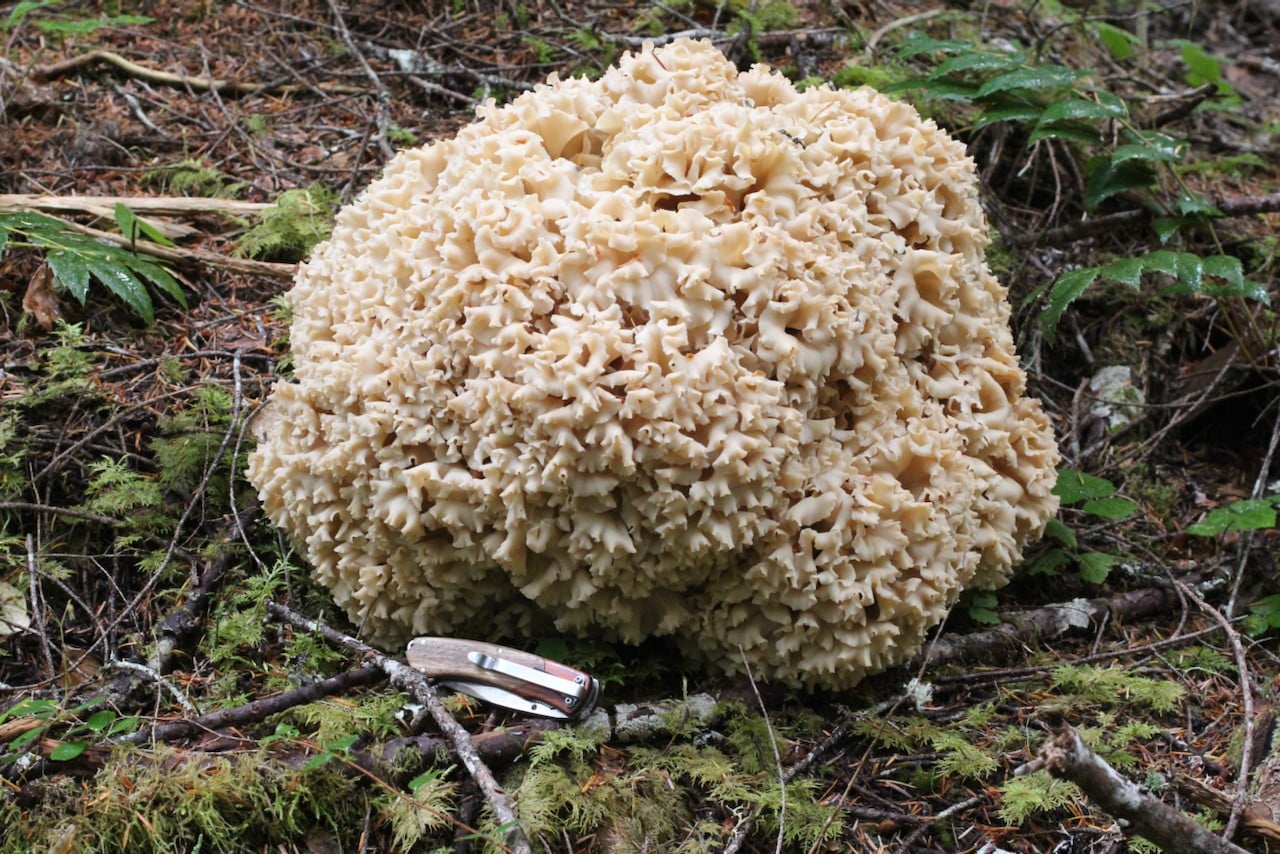
The cauliflower mushroom is one of the most distinctive fungi in Pacific Northwest forests: a rounded mass of ruffled, cream-colored lobes, like a head of cauliflower or a pile of egg noodles, at the base of a conifer. Specimens can be very large, occasionally over 50 pounds (Trudell).
The western species is Sparassis radicata. Older field guides may call it S. crispa, a European species. It fruits from late summer through fall, most often with Douglas-fir and spruce. The fungus lives in the roots and fruits each year from a tough, perennial stem, so a productive tree is worth marking.
Track Cauliflower Mushroom Season on Forayz
Use soil temperature and precipitation layers to time your fall foraging. Free with a Forayz account.
Identification
- Fruiting body: Large, globular mass of flattened, wavy lobes or “petals” arising from a rooting base; 10–50 cm across; occasionally over 50 pounds (Trudell)
- Color: Creamy white to creamy pink at first, becoming pale creamy yellow and often yellowish ocher in age
- Texture: Thin, crisp to slightly rubbery flesh
- Lobes: Flattened, leafy, with wavy, ruffled edges, smooth on both sides (no pores or gills)
- Stipe: 5–15 cm long and 3–5 cm thick, tough and perennial, often rooting and attached to conifer roots; often buried in duff
- Spore print: Whitish to creamy yellow
- Odor and taste: Spicy-fragrant when young (Arora), becoming savory-cheesy or disagreeable in age; taste sweet
- Substrate: On the ground at or near the base of conifers and old stumps, usually within about 2 m of the trunk, most often Douglas-fir and spruce, also pine
- Season: Late summer through fall
The size, ruffled lobes and growth at the base of conifers make this species easy to recognize. The cabbage-head fungus (Daleomyces phillipsii) is the closest look-alike: less leafy, with more brittle flesh, usually partly buried in duff in spring, often in recently burned forest. It is edible. Ramaria corals can be similarly colored but are made of upright branches, not ruffled lobes.
Photo: Jeremy Collison / CC BY-NC
No Dangerous Look-alikes — but Cook It Well
No toxic species resembles a cauliflower mushroom, which makes it a good beginner species. It is not risk-free, though: some people have severe allergic reactions to it, so cook it thoroughly and eat a small amount the first time.
Ecology & Tree Associations
Sparassis radicata fruits each year from a tough, perennial stem attached to conifer roots. It causes a brown cubical rot in the roots and base of the trunk, and is found around living trees as well as dead standing trees and old stumps. Although it has a smooth surface without pores, it is related to the polypores.
It is most common with Douglas-fir (Pseudotsuga menziesii) and spruce, and is also recorded with pine.
Brown Butt Rot
The rot starts in the roots and works up into the base of the trunk. Because the fungus lives in the root system, the same tree can fruit in more than one year.
Leave the base when you collect it so the tree can fruit again (Ammirati). A productive tree is worth marking on your Forayz map.
Season & Timing
Cauliflower mushrooms fruit from late summer through fall in the Pacific Northwest, overlapping with chanterelles, hedgehogs, yellowfoot and matsutake.
| Month | What to Expect |
|---|---|
| September | First specimens. Early finds are often small, so recheck in a week or two. |
| October | Main fruiting. Check known trees and scout new ones along trail edges and forest roads. |
| November | Still productive. Late specimens may be darker and wetter from rain. |
Same Tree, Same Spot, Every Year
The fungus lives in the root system and fruits from a perennial stem, so it tends to reappear in roughly the same spot at the same tree. If you find a productive tree, mark it.
Where to Look
Finding cauliflower mushrooms is less about reading the landscape and more about finding the right individual trees. Here’s where to focus your search:
- Base of Douglas-fir and spruce: Walk around the trunk and check all sides. The fruiting body usually grows within about 2 m of the trunk, where roots spread out, sometimes partly buried in duff or moss.
- Trail edges and forest roads: Cauliflower mushrooms are often visible from maintained trails because the disturbed edges give you a clear view of tree bases. Walk slowly and scan both sides.
- Dead standing trees and old stumps: Cauliflower mushrooms are often found around dead standing conifers and old stumps.
- Previously productive spots: Once you find a tree that produces, check it every fall. The success rate for repeat finds is high.
Cauliflower mushrooms can be partially hidden by sword fern, salal, or accumulated duff at the tree base. Don’t just glance — push aside ground cover and look carefully around the root flare. The creamy-white color stands out once you spot it, but a 10-pound specimen can hide surprisingly well under a layer of fir needles.
Scout Douglas Fir Habitat on Forayz
Pro members can overlay ecoregion data, public land boundaries, and elevation layers to find productive conifer forest for cauliflower mushroom hunting.
Harvesting & Cleaning
Harvesting is straightforward — cut the fruiting body at the base with a large knife, leaving the rooting stipe attached to the tree. Leaving the base lets it fruit again (Ammirati). But cleaning is where the real work begins.
- Field cleaning: Shake out loose debris, insects, and fir needles before putting it in your bag. A surprising amount of dirt hides in the folds. Trim off any dark, soggy, or discolored lobes in the field.
- Sectioning: Slice the mass into manageable sections (fist-sized or smaller) at home. This exposes the interior folds where dirt, slugs, and bugs accumulate.
- Soaking: A soak in cold water helps dislodge trapped grit and insects. Agitate the sections gently.
- Drying: Pat sections dry with towels or spin in a salad spinner. Excess water dilutes flavor during cooking.
Budget Extra Time for Cleaning
Cleaning is the main downside of this mushroom: the ruffled structure is often dirty inside, trapping grit, conifer needles and small invertebrates deep in the folds. Budget the time; gritty cauliflower mushroom is not good eating.
Cooking & Edibility
Cauliflower mushroom is an excellent edible, with a crunchy texture and distinctive flavor. It needs thorough cooking to become tender, such as gentle sautéing, or parboiling followed by baking or stewing (Arora).
- Sautéing: Tear or slice into bite-sized pieces and cook gently in butter until tender. Add garlic, shallots or thyme toward the end.
- Soups and stews: The firm texture holds its shape in liquid, and stewing is a good way to make it tender.
- Pasta: The noodle-like lobes are natural in pasta dishes. Saute first, then toss with pasta, brown butter, and Parmesan.
- Roasting: Tear into large pieces, toss with olive oil and salt, and roast until the edges brown. Parboiling first helps tenderize it (Arora).
- Drying: Cauliflower mushroom dries well and rehydrates with good texture. Tear into thin pieces for even drying. Useful for preserving the inevitable surplus from a 15-pound find.
- Freezing: Sauté first, then freeze in portions.
Always cook cauliflower mushrooms thoroughly, and eat a small amount the first time: some people have severe allergic reactions to this species.
Other Fall Edibles to Look For
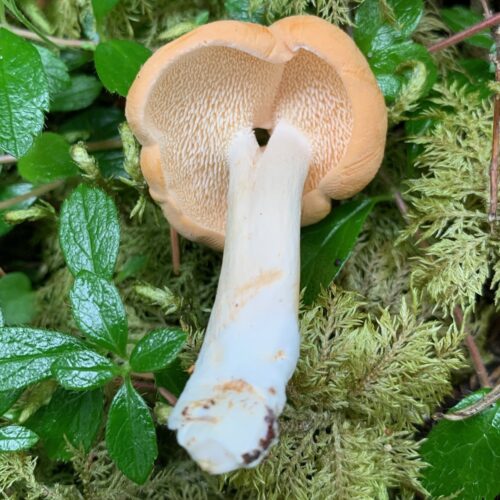
Cauliflower mushroom season overlaps with some of the best fall foraging in the Pacific Northwest. While you’re out checking Douglas fir bases, keep an eye out for these species in the same forests.
Sources: Mushrooms of Cascadia (Siegel & Schwarz, 2024); MycoMatch (© Ian Gibson), a compilation of published descriptions through which most other field-guide authors named here are quoted.
Related Reading
Explore more species guides, foraging resources, and tools for mushroom hunting in the Pacific Northwest.