
Jelly Mushrooms Gelatinous fungi of the Pacific Northwest — rubbery, translucent, and surprisingly common
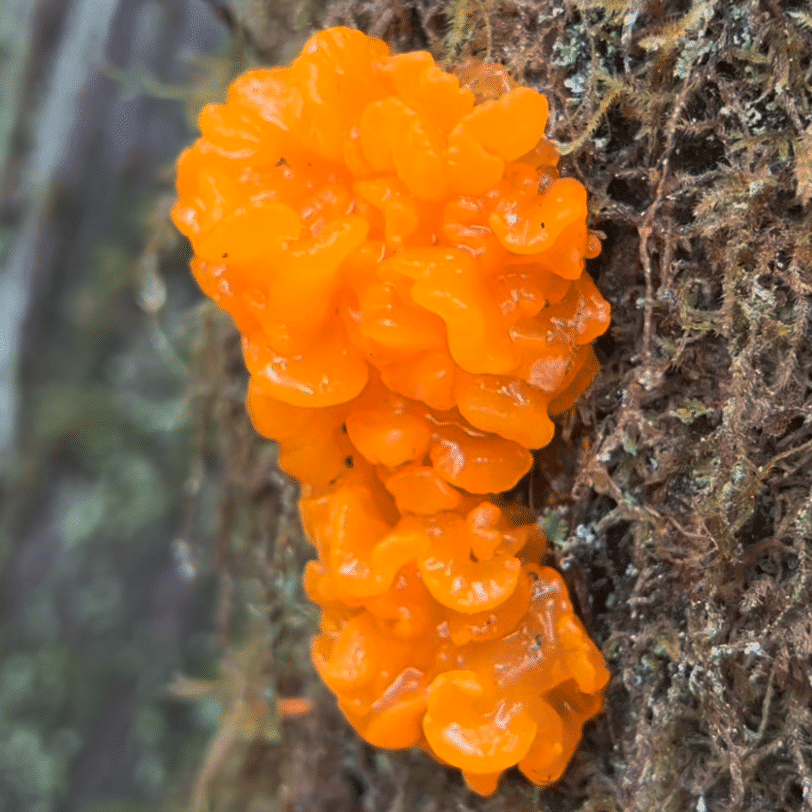
Jelly mushrooms are defined by texture rather than taxonomy. They share a gelatinous or rubbery consistency — squeeze one and it bounces back. Most produce spores on their outer surfaces rather than on gills or in pores. The group spans several lineages that are not closely related.
They are common through the wet months in western Cascadia, mostly on dead wood, and easy to walk past. Witch’s butter, orange jelly spot, and the toothed jelly fungus are widespread in PNW forests and parks. None of the species here is known to be toxic, and a few are edible.
Explore Forest Habitat on Forayz
Jelly fungi are common in moist conifer and hardwood forests. Use ecoregion data and public land overlays to find wet forest areas near you. Free with a Forayz account.
Notable PNW Species
Witch’s Butter — Tremella mesenterica
Yellow to yellow-orange clusters of leafy, jelly-like lobes, 0.5–4 cm across, only occasionally brain-like, on fallen hardwood twigs, branches and small logs, most often red alder. It isn’t the wood rotter: it parasitizes the crust fungus Peniophora growing in the wood. Locally common west of the Cascades. Appears in fall and lasts through winter at low elevations, often with a new crop in spring. Dry, it shrinks to a hard crust and swells again with rain. Edible but flavorless. The brighter, more brain-like Naematelia aurantia also grows on hardwoods, next to the crust fungus Stereum (Siegel & Schwarz, Mushrooms of Cascadia).
Orange Jelly Spot — Dacrymyces chrysospermus
Bright orange, lobed to fan-shaped or brain-like masses 1–6 cm across, with a whitish spot where they attach, on dead conifer logs, trees, and branches, rarely on hardwoods. Very common across Cascadia through the wet months. Edible and harmless, but soft and flavorless — not worth collecting except to show people. Witch’s butter and Naematelia aurantia look similar but grow on hardwoods.
Jelly Tree Ear — Auricularia americana
A thin, rubbery ear, 2–8 cm across, brown with a dull, finely hairy top and a shiny underside. Grows on dead conifer logs and branches, especially Douglas-fir and true fir. Found across Cascadia but much more common in the drier forests east of the Cascades. Mostly a spring species, though it can turn up in any wet spell. Edible and good; it stays crunchy when cooked.
Toothed Jelly Fungus — Pseudohydnum gelatinosum
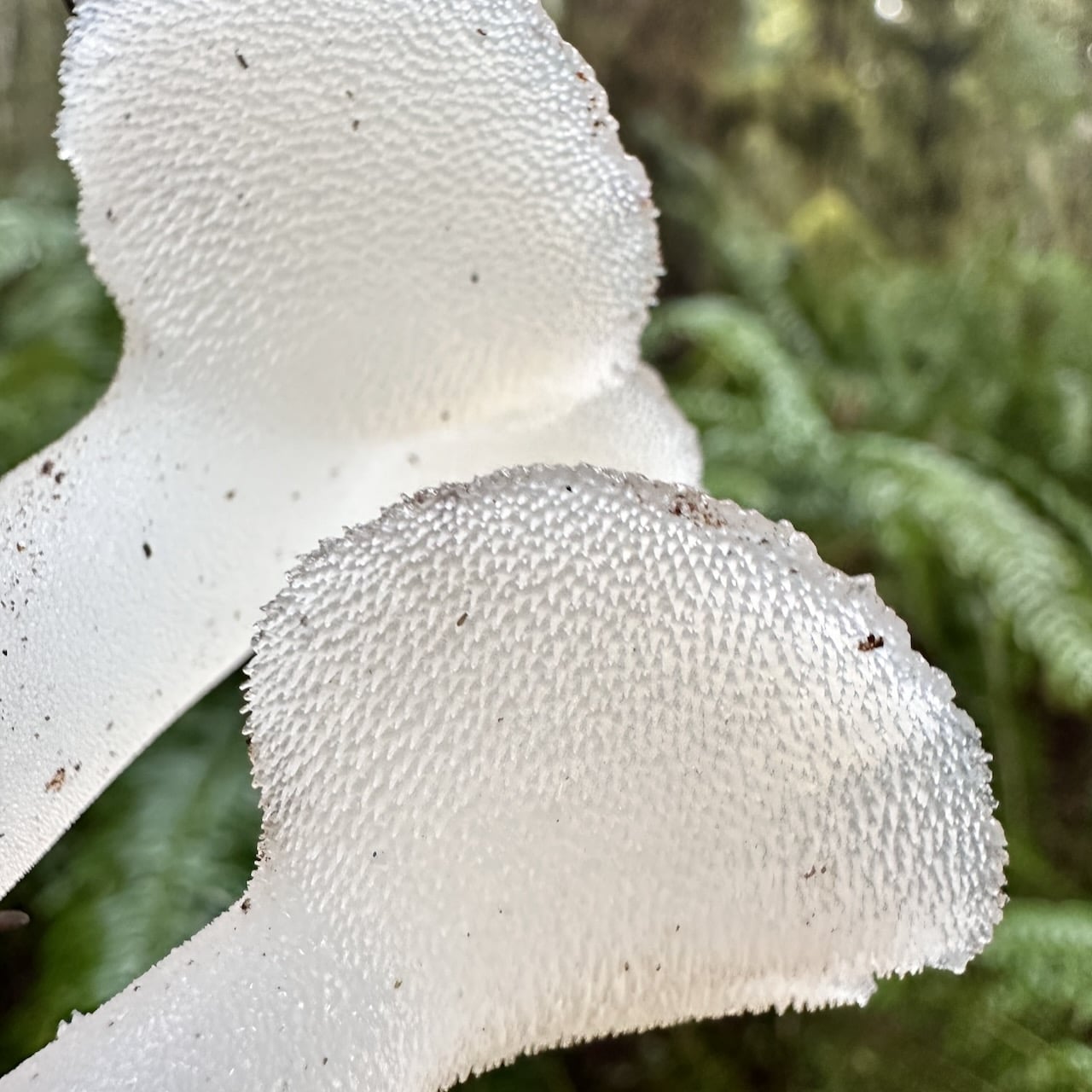
Translucent white, sometimes grayish or brownish, semicircular, 2–6 cm across, with a distinctive toothed underside (tiny jelly spines instead of smooth). The spines give it the “toothed” name and make it easy to identify. Grows on well-decayed conifer logs and stumps. Common in western Cascadia. Edible — mild and gelatinous, sometimes candied as a novelty. One of the few jelly fungi worth collecting for food.
Amber Jelly — Exidia recisa complex
Simple lobed jelly, amber to reddish brown or dark brown, 1–3 cm across, with a dull, smooth top and a shiny underside. Rubbery when wet, hard and dark when dry. On dead hardwood branches, usually in loose groups. The jelly tree ear is similar in color but ear-shaped, with a finely hairy top, and grows on conifers. The name E. recisa has long been used here, but a molecular study found the North American species is E. crenata; the European E. recisa has also been confirmed from Oregon, so both may occur (MycoMatch). Edibility not established.
Jelly-antler — Calocera viscosa
Bright golden-yellow, forked or antler-like branches 1–7 cm tall — it looks like a small coral fungus, but it is rubbery rather than brittle. On rotting conifer wood, sometimes buried; common, especially west of the Cascades, from early fall into spring. The much smaller C. cornea forms tiny unbranched clubs in troops, mostly on hardwood branches. Edibility of both is unknown.
The Bounce Test
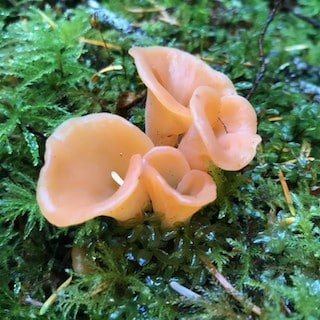
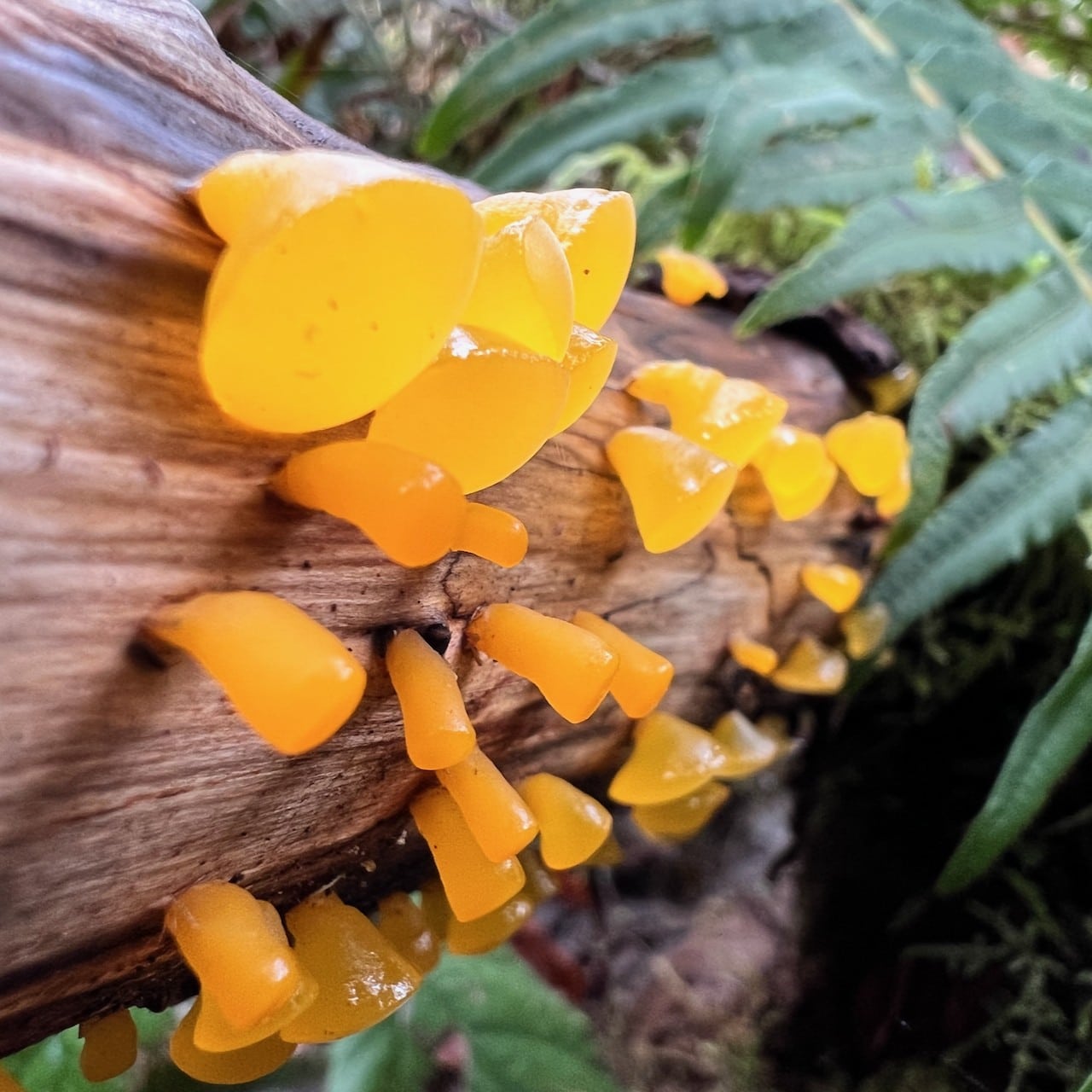
Jelly fungi are defined by texture. If you squeeze it and it rebounds like rubber, it’s likely a jelly fungus. Most gilled mushrooms and polypores are brittle, fibrous, or fleshy instead. A few others are rubbery too, such as the black cup Urnula (see cup fungi), so use texture together with shape.
Habitat & Season
Most jelly mushrooms grow on dead wood, though Tremella species are parasites of other fungi living in that wood. Most prefer moist habitats and are most abundant in the wet forests of western Cascadia; the jelly tree ear is the exception, more common east of the Cascades. Several species (Tremella, Dacrymyces, Exidia) fruit through the wet months, shrinking when dry and swelling again with rain. Look on red alder branches (Tremella), conifer logs (Dacrymyces, Pseudohydnum, Calocera), and Douglas-fir and true fir logs (Auricularia) during wet weather.
Track Wet Season Conditions
Jelly fungi need sustained moisture. Use the rainfall and soil moisture layers on Forayz to find wet areas and time your forays to moist conditions. Free with a Forayz account.
Sources: Mushrooms of Cascadia (Siegel & Schwarz, 2024); MycoMatch (© Ian Gibson), a compilation of published descriptions through which most other field-guide authors named here are quoted.