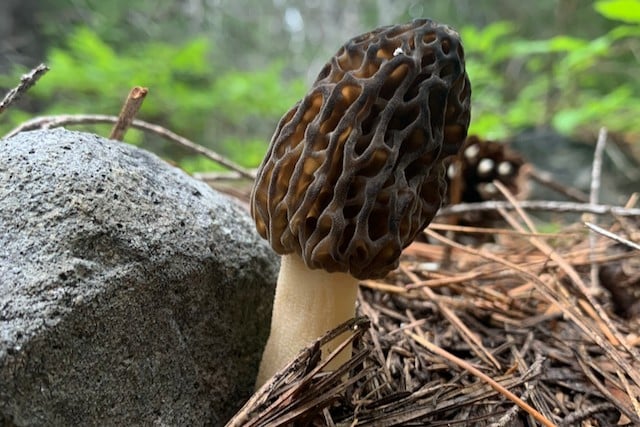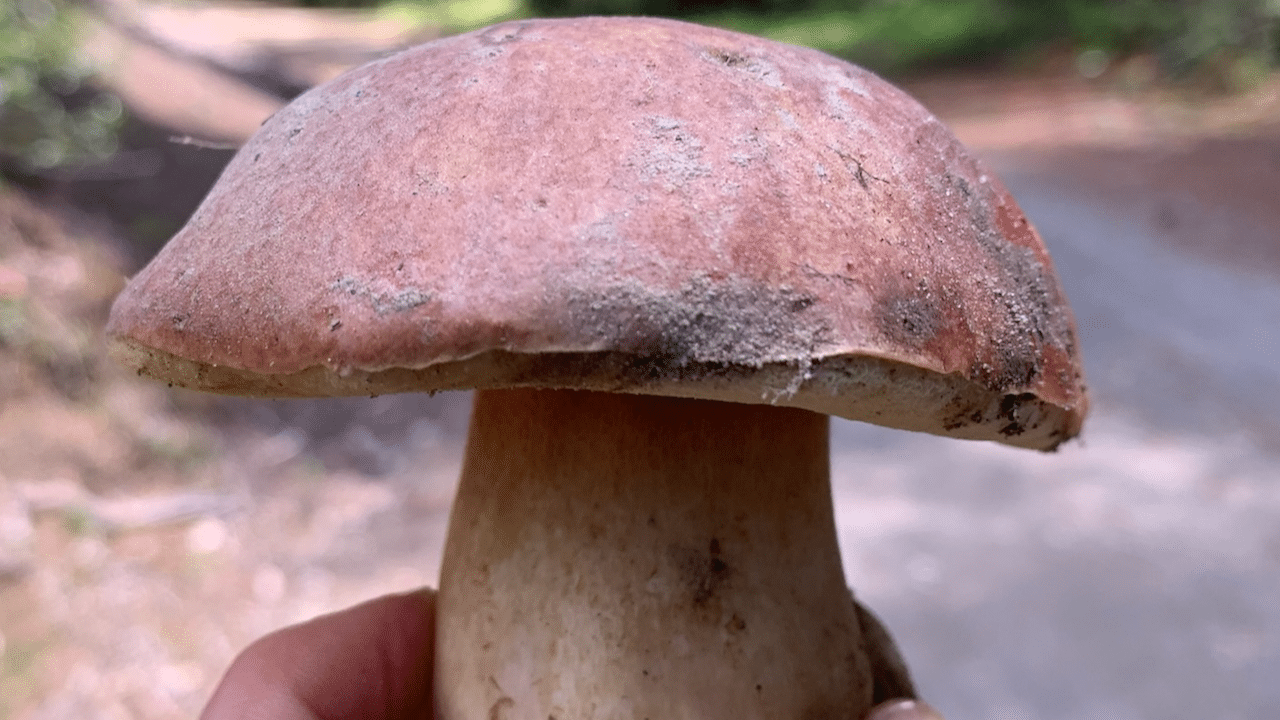
A group of us met up in the Lake Wenatchee area on Saturday to look for spring kings (Boletus rex-veris). Both morels and spring kings are found predominently in the eastern Cascades. Morels are the first to show up in early May and boletes later in the month and into June or even July at higher elevation.
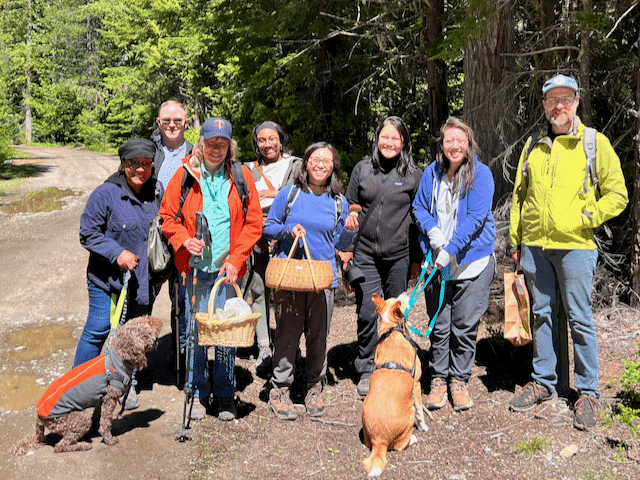
Trip Summary
We stuck to low-elevation areas. Initially we followed a trail which took us into the forest and only found a few boletes in one small patch. We had much better luck along roads. Most of the boletes we found were in really nice condition with a small number over, or under-mature.
The mosquitoes were difficult. Most of us wore sleeves to limit our exposed skin. I had a bug net which helped me ignore the ones in my face. This is pretty typical for spring king habitat so it’s important to dress/pack appropriately to make foraging more comfortable.

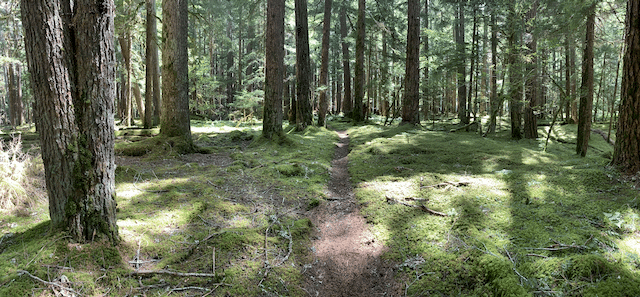
We stopped in 3 different areas and found boletes within eyesight of the cars each time. Open forests were far better than dense forests. Given the number of young specimens we found, I would guess that low elevation areas will still be good for another week or two with higher elevation spots starting to fruit soon after.
Kristi and I spent the night west of Lake Wenatchee and we found significantly less fungal activity. It seemed like trees, mushrooms, and wildflowers were all a couple weeks behind the areas closer to the lake.
Identifying Spring Kings
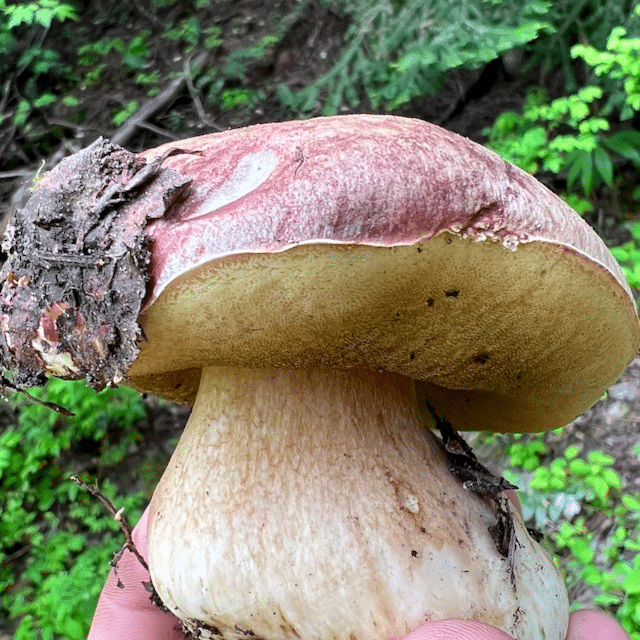
Spring kings have basically the same characteristics as the more common summer/fall king bolete species Boletus edulis.
Cap – reddish brown but sometimes nearly white when young. Not sticky or covered in fibrils like suillus species
Pores – light cream-colored when young. Turning yellow with age
Stem – Robust with a fishnet, or cantaloupe texture near the top of the stem. These reticulations are an important identifying characteristic for the Boletus genus. Other species will also have this too. The stem is often club-shaped or wider at the base.
Taste – mild, not bitter. Some mychologists suggest that it is safe to taste and spit any mushroom. With boletes I believe this is generally safe however I would avoid trying this with red-pored boletes
Species found near spring king boletes
Sarcosphaera coronaria

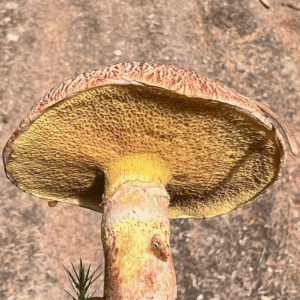
Suillus lakei
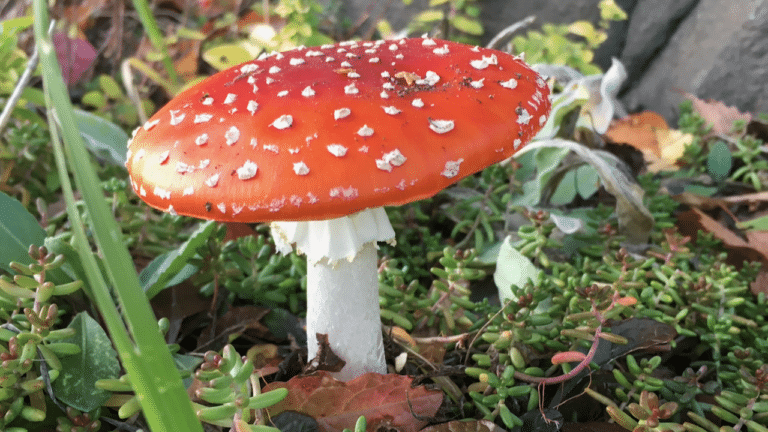
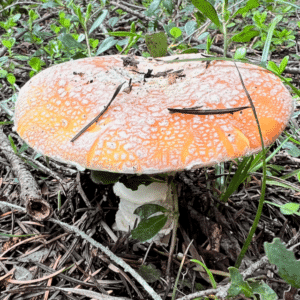
Amanita
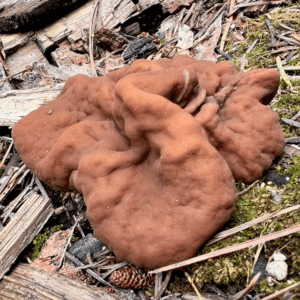
Gyromitra (disc)
Gyromitra esculenta
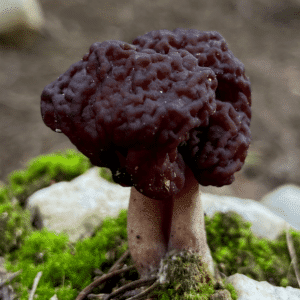
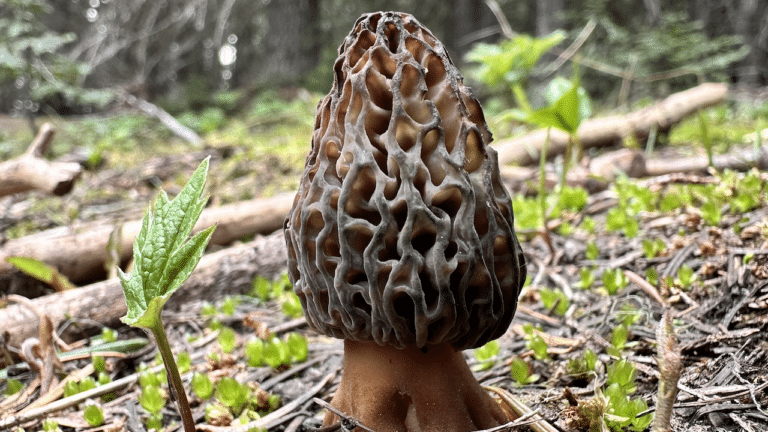
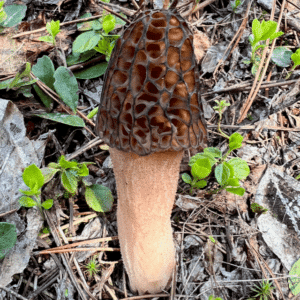
Morels
Get the data serious foragers use to find more mushrooms
Free members get soil conditions, the past week of rain, snow, smoke and historical burns. Pro unlocks the layers that help you narrow down exactly where to look.
- Newest burn years, managed burns & burn severity
- Tree species maps (22 species) & timber harvests
- Town and mountain pass fruiting calendars with current conditions
- Offline map downloads in the iOS & Android apps
- 14- and 30-day rainfall windows
- Soil temperature & moisture at full zoom