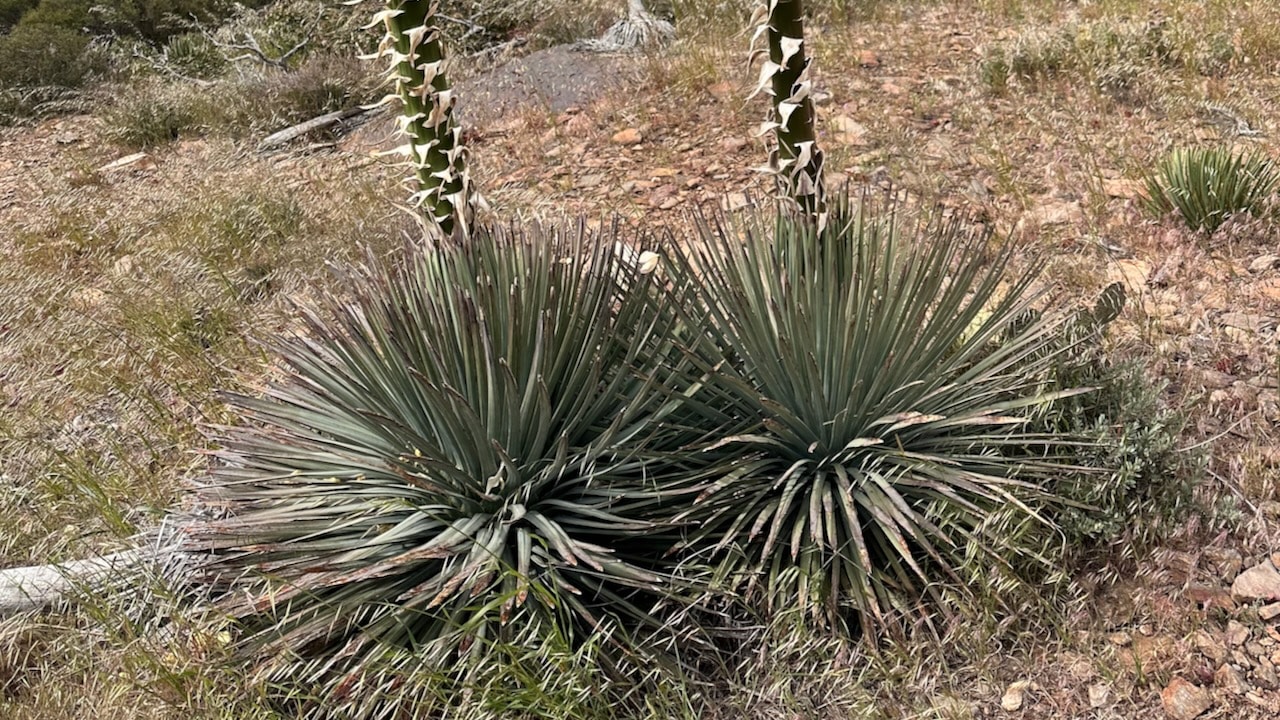
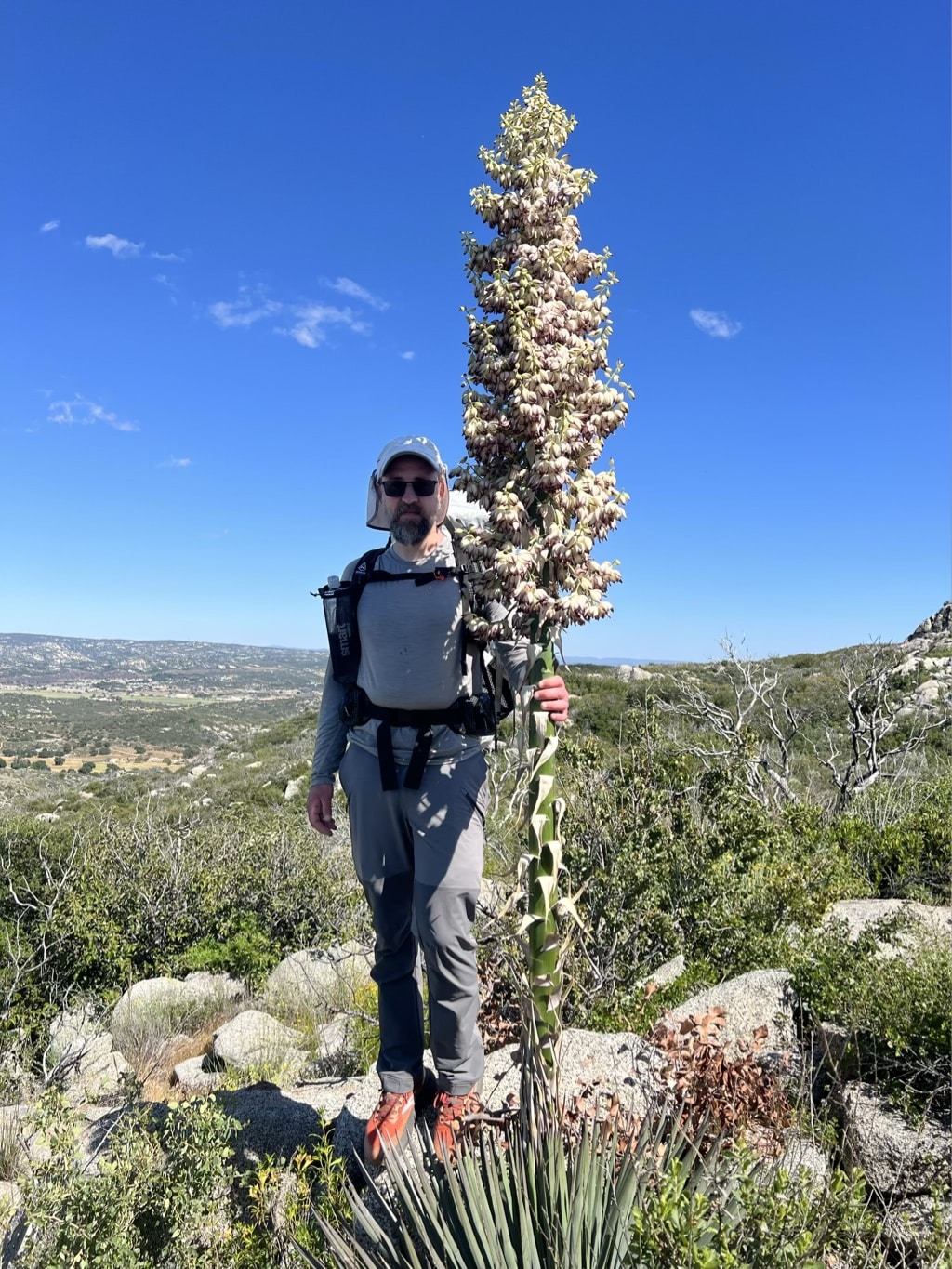
Yucca blooms, like candlesticks set in the hillside. Holding vigil for their final days, offering tribute to the desert.
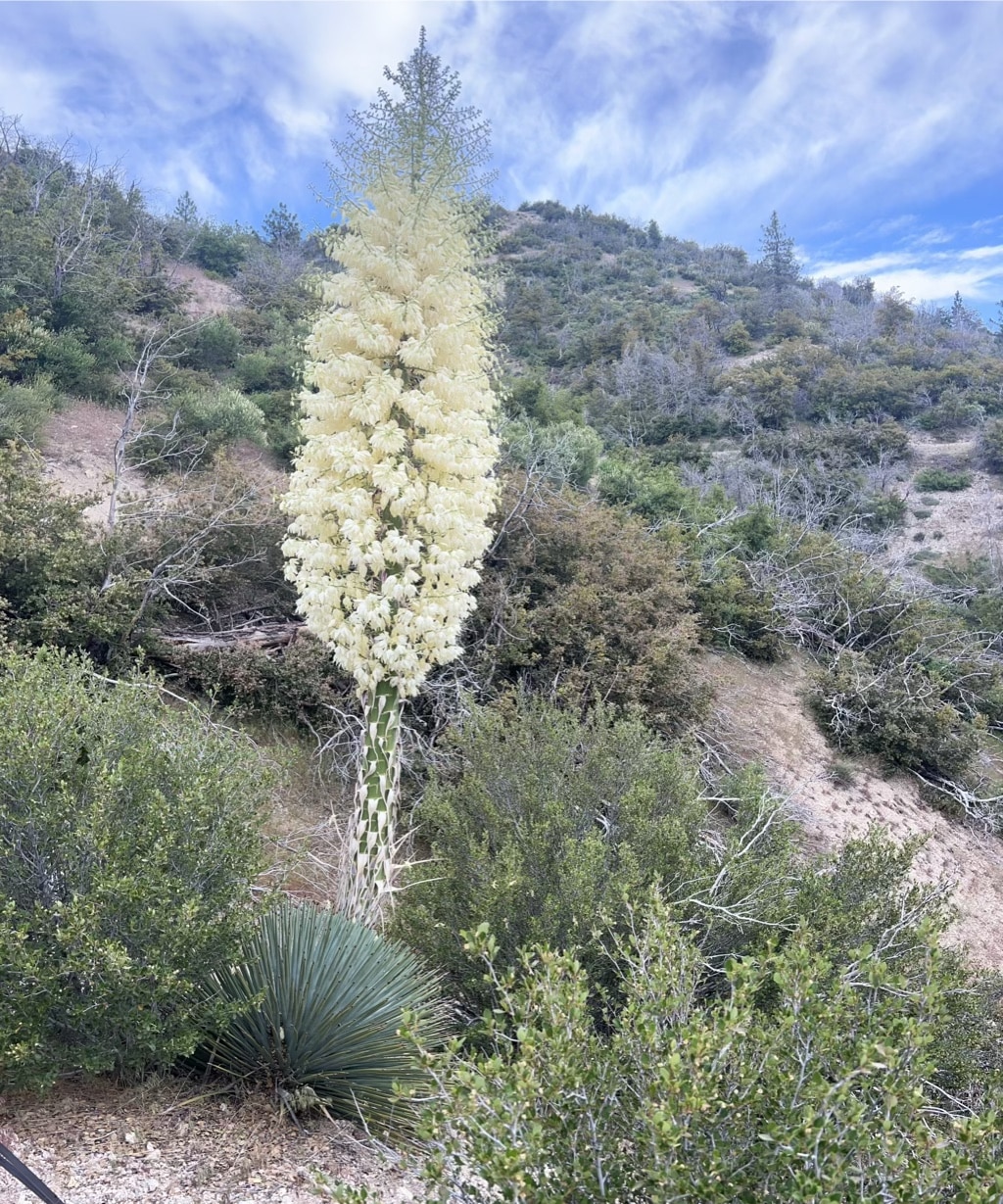
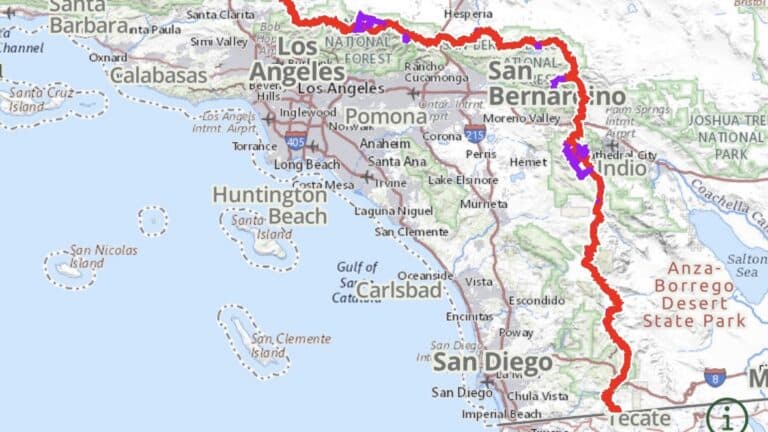
From our first day on the PCT we have been captivated by the giant blooming stalks of the chaparral yucca. This is one of the few plants that has been a regular companion for the past 400+ miles – some days seeing only one or two and other times looking out on a hillside of dozens standing taller than the manzanita, white thorn, gooseberry, and California flannel bushes that cover the region.
With the help of ChatGPT, here’s a little information on these incredible plants. Enjoy!
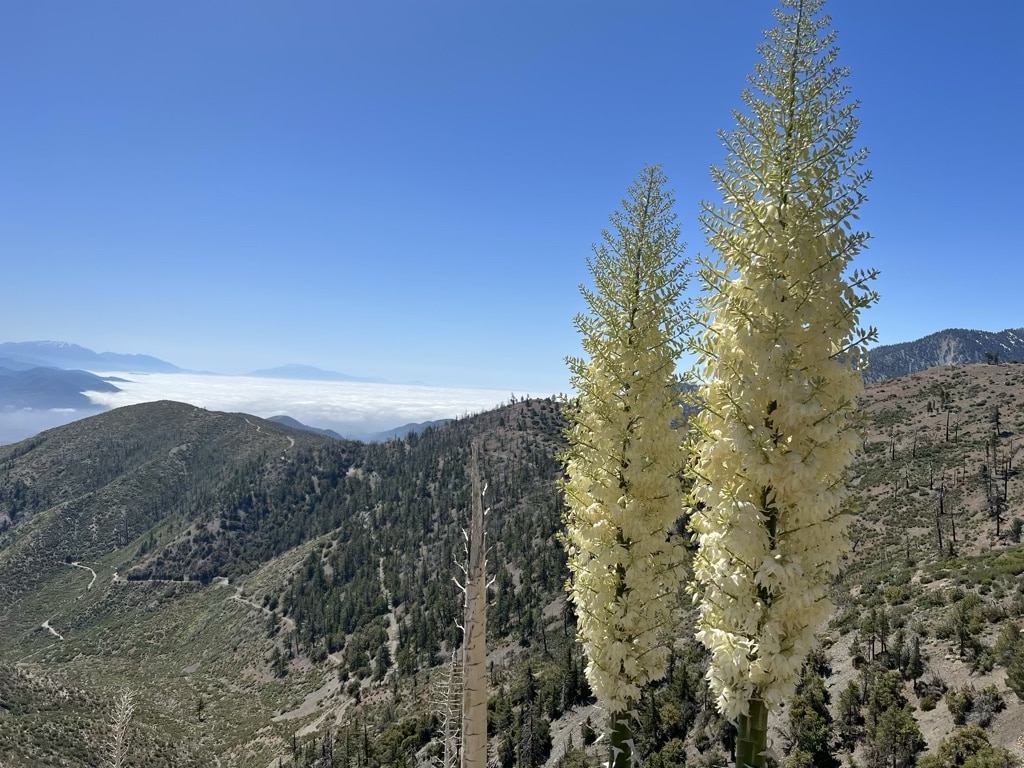
Nestled within the arid landscapes of Southern California, the chaparral yucca (Yucca whipplei) stands as a testament to nature’s resilience. This remarkable plant, with its distinctive appearance and blooming cycle, thrives in the unique conditions of the region. Join us as we delve into the captivating world of the chaparral yucca and unravel the secrets of its magnificent blooms.
A Resilient Succulent:
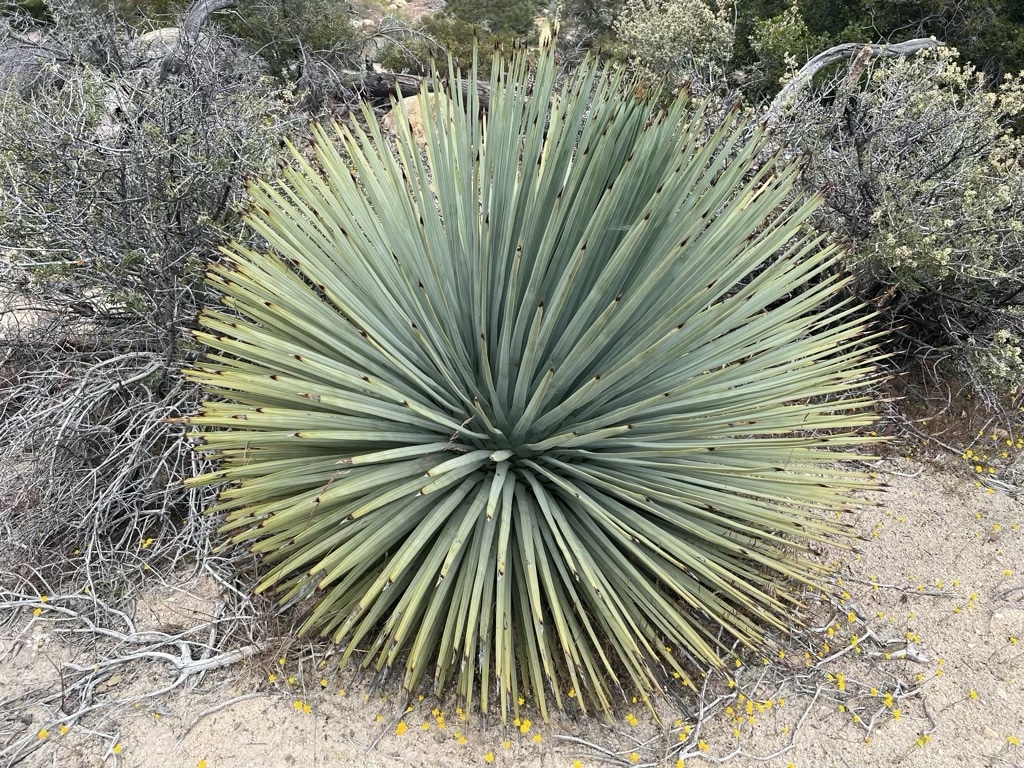
The chaparral yucca is a member of the Agavaceae family and is commonly found in the chaparral, coastal sage scrub, and foothill woodlands of Southern California. This striking succulent boasts a striking rosette of long, rigid leaves that can reach up to four feet in length. These leaves, armed with sharp spines along the edges, enable the plant to conserve water in the arid climate it calls home.
Blooming Splendor:
One of the most fascinating aspects of the chaparral yucca is its impressive blooming cycle. Typically, this plant exhibits a monocarpic behavior, meaning it flowers only once in its lifetime, which can span several years. This blooming event, known as an “inflorescence,” is truly a sight to behold.
The chaparral yucca’s towering flower stalk, which can reach heights of up to ten feet, emerges from the center of the rosette. Adorned with numerous creamy-white, bell-shaped flowers, the inflorescence emits a captivating fragrance, enticing pollinators from far and wide.
The Pollination Dance:
The blooming cycle of the chaparral yucca is intricately linked to the symbiotic relationship it shares with the California yucca moth (Tegeticula maculata). These moths play a vital role in the yucca’s pollination process.
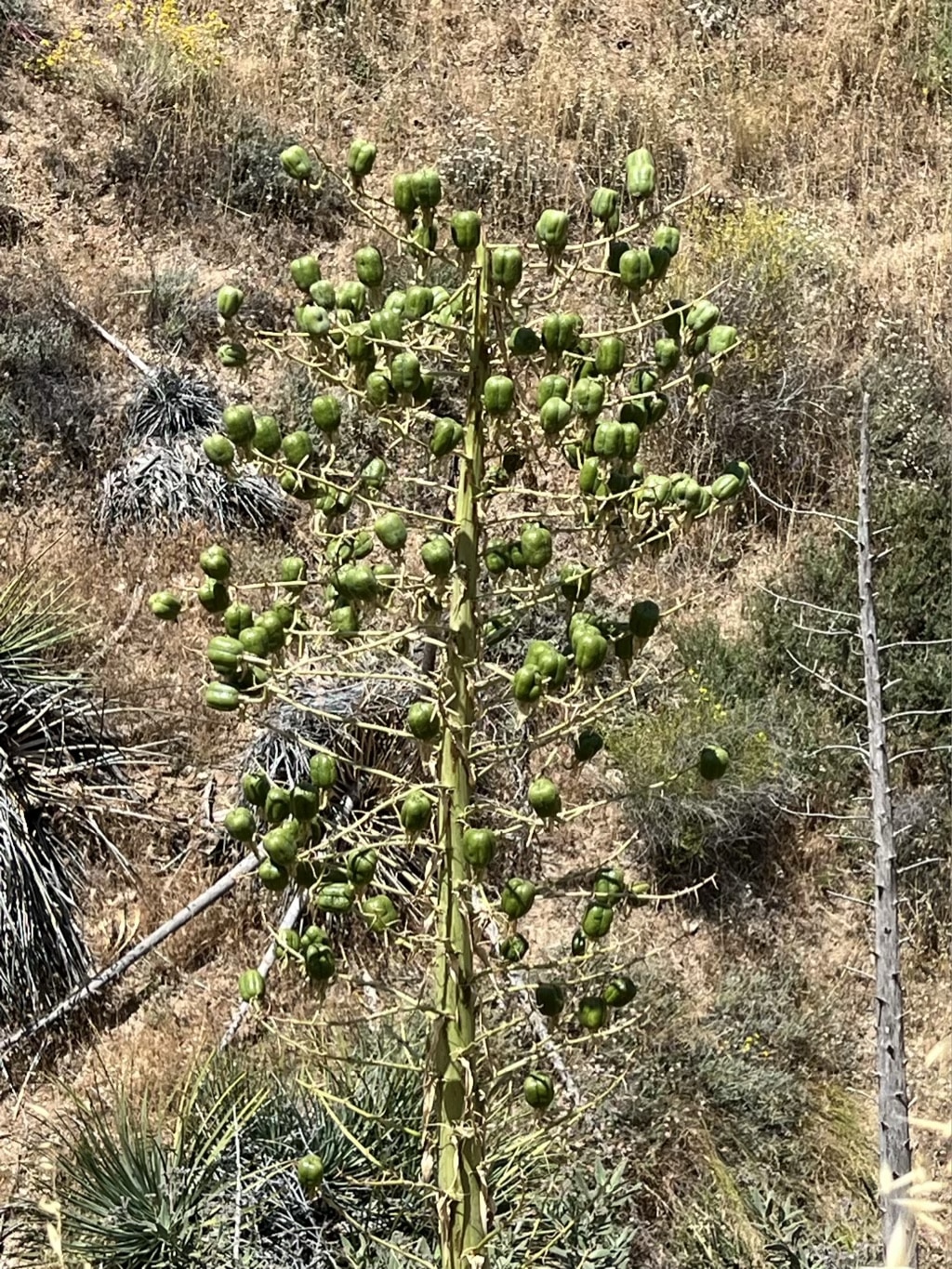
Female yucca moths collect pollen from the stamens of the chaparral yucca’s flowers and shape it into a sticky mass called a “pollinarium.” They then visit another yucca plant to lay their eggs in the developing seed capsules. As the moth inserts the eggs, it simultaneously transfers the pollinarium, ensuring cross-pollination between yucca plants.
After the larvae hatch, they feed on some of the developing seeds, ensuring a food source for their survival. This fascinating mutualistic relationship highlights the intricate balance between the chaparral yucca and the yucca moth.
Conclusion:
The chaparral yucca, with its distinctive appearance and blooming cycle, stands as a testament to nature’s ingenuity in adapting to harsh environments. Its striking inflorescence, attracting pollinators through a mutualistic relationship with yucca moths, is a captivating natural spectacle.
Witnessing this remarkable plant during its blooming cycle is a reminder of the resilience and interconnectedness found in the natural world around us.
Get the data serious foragers use to find more mushrooms
Free members get soil conditions, the past week of rain, snow, smoke and historical burns. Pro unlocks the layers that help you narrow down exactly where to look.
- Newest burn years, managed burns & burn severity
- Tree species maps (22 species) & timber harvests
- Town & pass fruiting calendars with current conditions
- Offline map downloads in the iOS & Android apps
- 14- and 30-day rainfall windows
- Soil temperature & moisture at full zoom