
Sitka Spruce Picea sitchensis

Sitka spruce is a tree of the coastal fog belt, growing in a narrow strip along the Pacific coast from northern California to Alaska. It is the largest of the spruces. Several of the mushrooms below are tied to these coastal spruce forests.
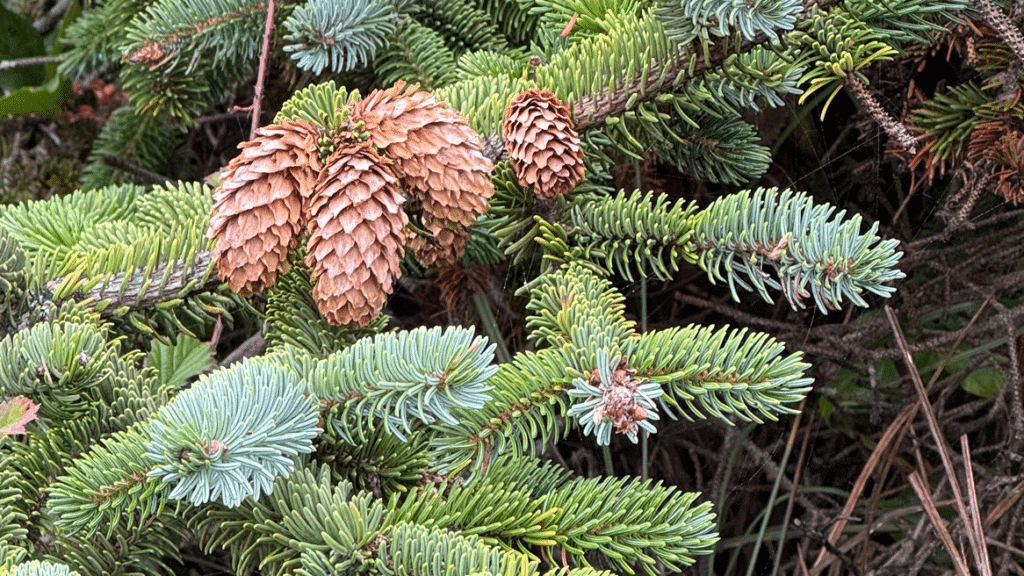
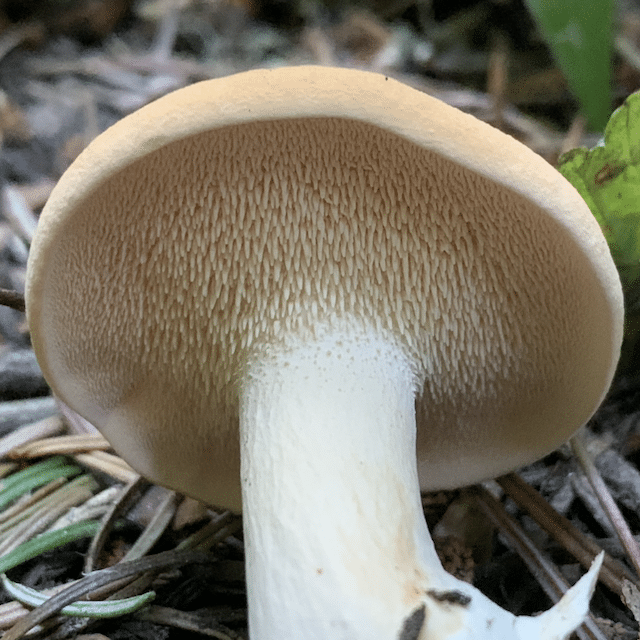
Identify it by the needles: stiff, flat, and so sharp they’re genuinely uncomfortable to grab — the quickest way to tell it from the soft-needled western hemlock it often grows beside. The bark is thin and scaly. Sitka spruce is ectomycorrhizal, and its fungal partners include many Russula and Lactarius species, Washington hedgehog (Hydnum washingtonianum), and rainbow chanterelle (Cantharellus roseocanus) (Siegel & Schwarz, Mushrooms of Cascadia).
Sitka spruce follows the coastal fog belt, in cool, moist maritime conditions. In Washington and Oregon it grows on the outer Olympic Peninsula and along the coast, usually mixed with western hemlock and red alder.
Several coastal mushrooms keep fruiting into winter. Golden chanterelles continue into early winter on the coast, Washington hedgehogs can fruit into spring in wet years, and yellowfoot (Craterellus tubaeformis) fruits through winter, peaking in late fall and early winter (Siegel & Schwarz). Coastal Sitka spruce is also one of two equal habitats for the king bolete (Boletus edulis); the other is higher-elevation conifer forest in the Cascades.
Associated Mushrooms
Mushrooms found in Sitka spruce forests, from partners the field guides name to generalists that grow with many trees.
Fly Agaric
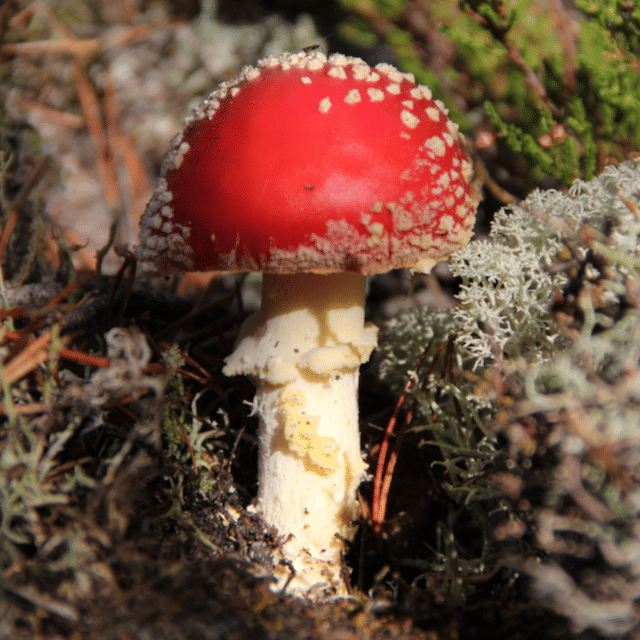
Amanita muscaria
Red cap with white veil patches. It partners with nearly any ectomycorrhizal tree, and the white-veiled form is probably most of what grows in coastal spruce forests. Toxic if eaten without special preparation.
Mycorrhizal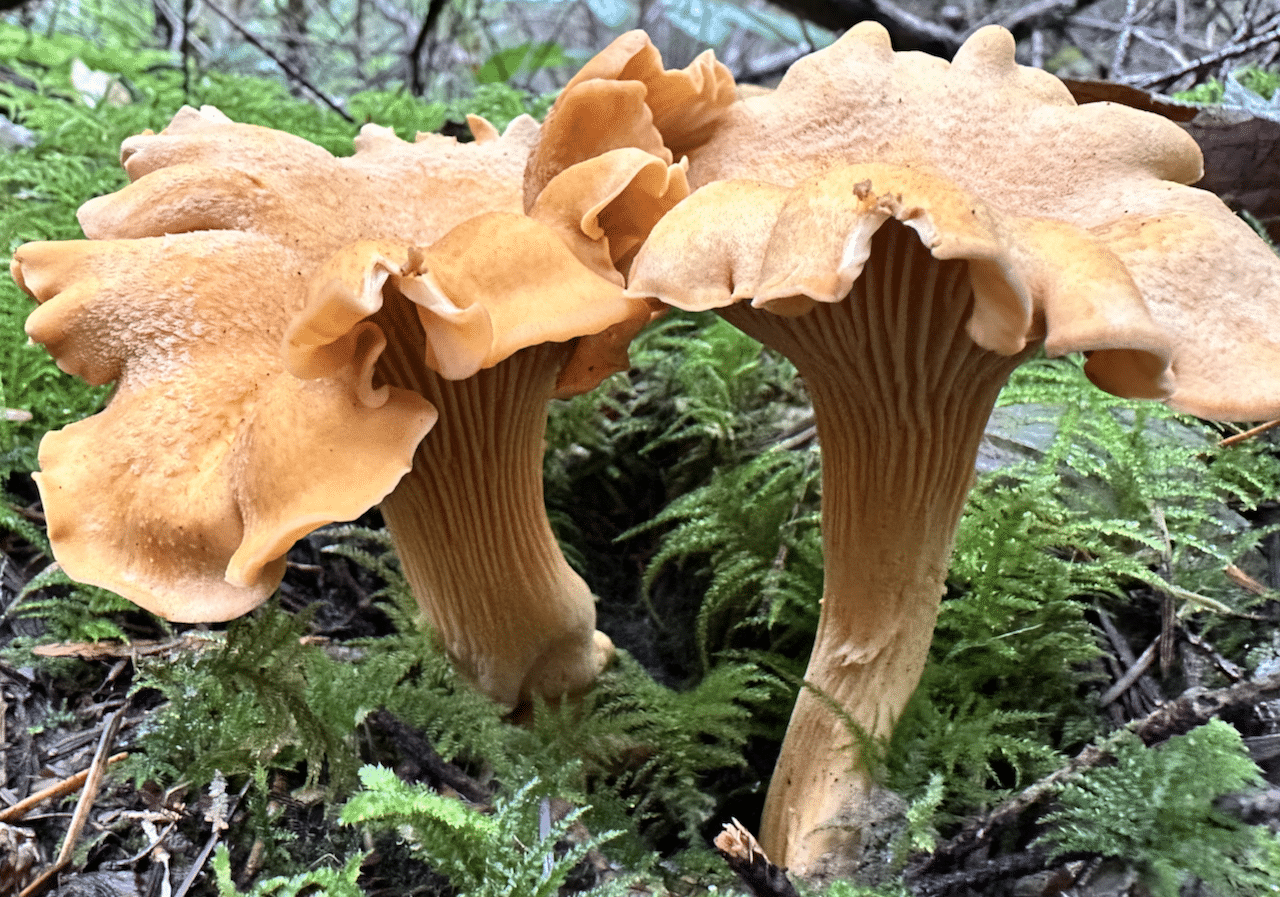
Find Sitka Spruce Forests on Forayz
Explore ecoregions, soil conditions, and precipitation data to find productive coastal foraging zones. Free environmental layers included.
Also on iOS: ForayzU
Practice identifying Pacific Northwest trees and mushrooms with spaced-repetition flashcards — including a dedicated tree identification deck.
Distribution in Washington & Oregon
Photos: Porcini — © Alan Rockefeller, CC BY.
Sources: Mushrooms of Cascadia (Siegel & Schwarz, 2024); MycoMatch (© Ian Gibson), a compilation of published descriptions through which most other field-guide authors named here are quoted.