
Sitka Spruce Picea sitchensis
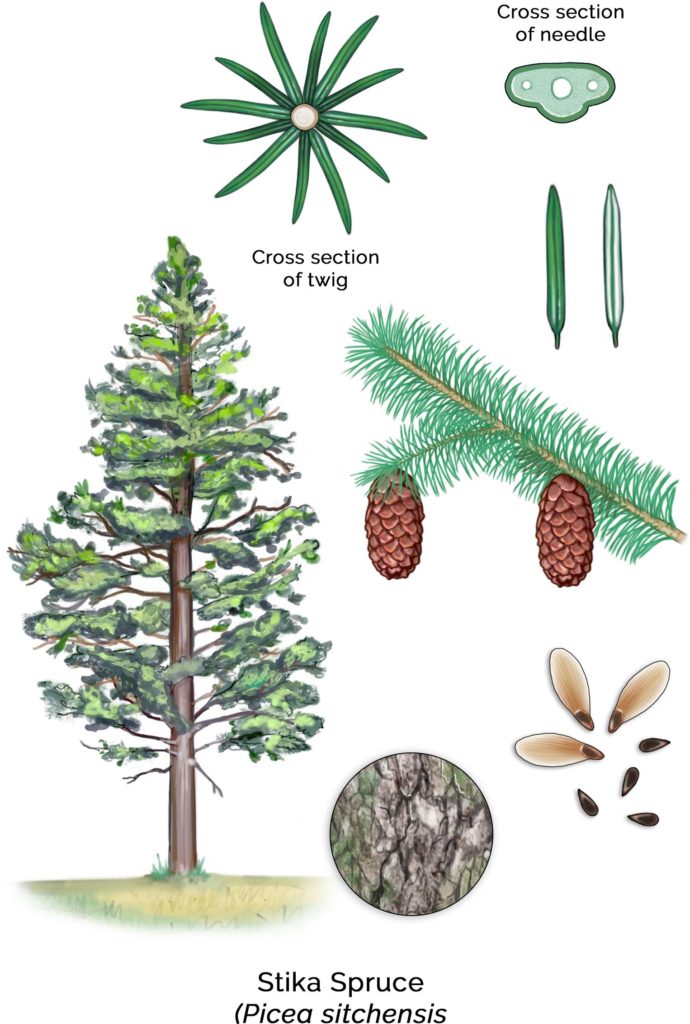
Sitka spruce is the great tree of the coastal fog belt — it grows in a narrow band rarely more than a few miles from the ocean, from northern California to Alaska. It’s the largest spruce in the world, topping 200 feet in the drenched forests of the Olympic Peninsula and the outer coast. For foragers, Sitka spruce marks a distinct coastal mushroom zone you won’t find inland.
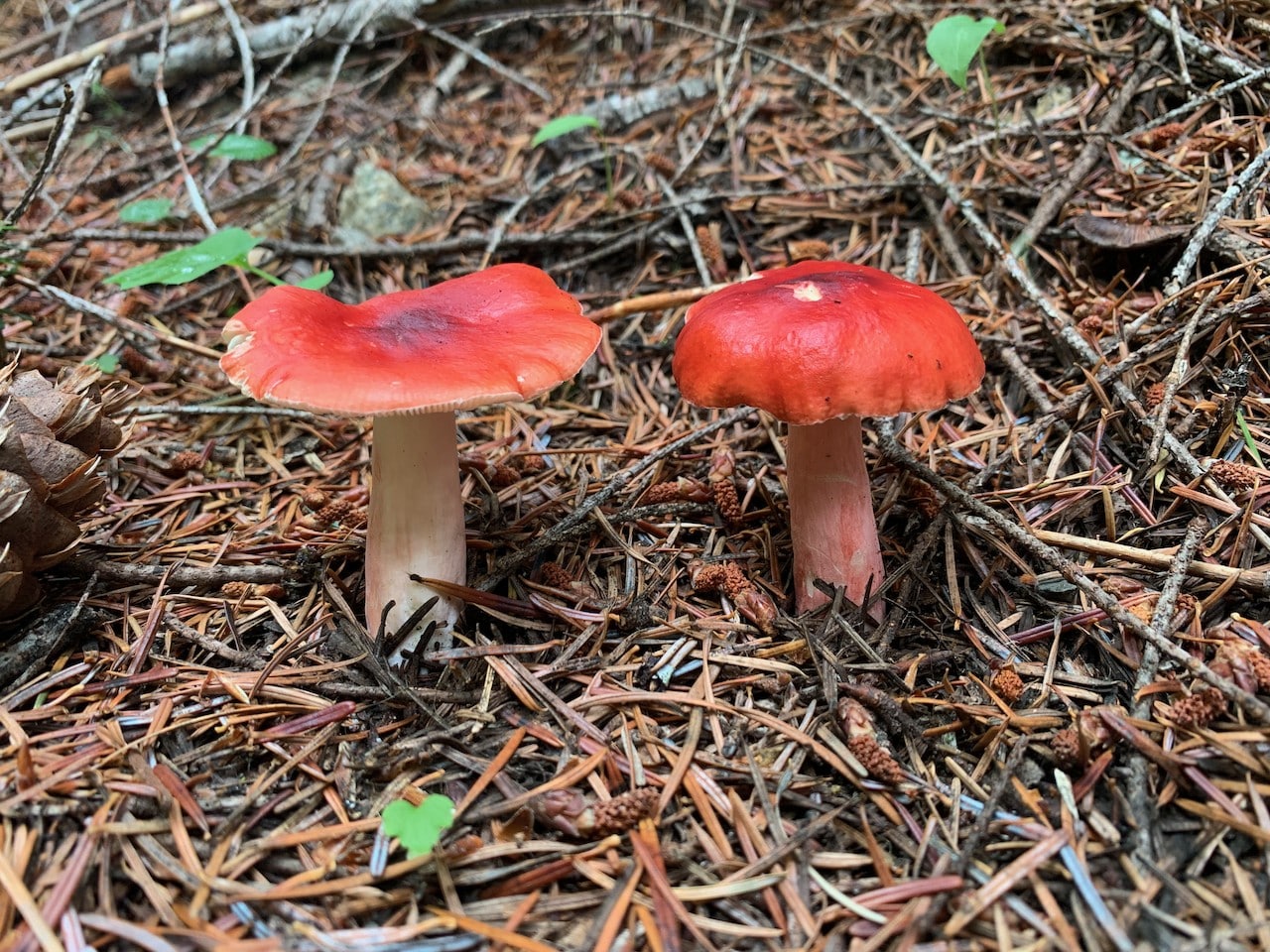
Identify it by the needles: stiff, flat, and so sharp they’re genuinely uncomfortable to grab — the quickest way to tell it from the soft-needled western hemlock it often grows beside. The bark is thin and scaly, breaking into loose purplish-gray plates. Like all spruces, Sitka forms ectomycorrhizal partnerships — here with Russula, Lactarius, and Amanita, plus the chanterelles and hedgehogs that foragers actually come for.
Sitka spruce follows the coastal fog belt almost exactly, thriving in cool, moist, well-drained soils where summer fog drip makes up for the dry season. It dominates the outer Olympic Peninsula, the Washington and Oregon coast, and the spruce fringe along river mouths and headlands, usually mixed with western hemlock and red alder. If you’re foraging within sight or sound of the surf, you’re in Sitka spruce country.
Those coastal spruce-hemlock forests are some of the most reliable foraging ground on the coast. The deep moss and steady moisture keep mushrooms fruiting later into the season than inland, and a single productive headland can hold chanterelles, hedgehogs, porcini, and a dozen kinds of Russula. When the inland season winds down, the fog belt under Sitka spruce is often still producing.
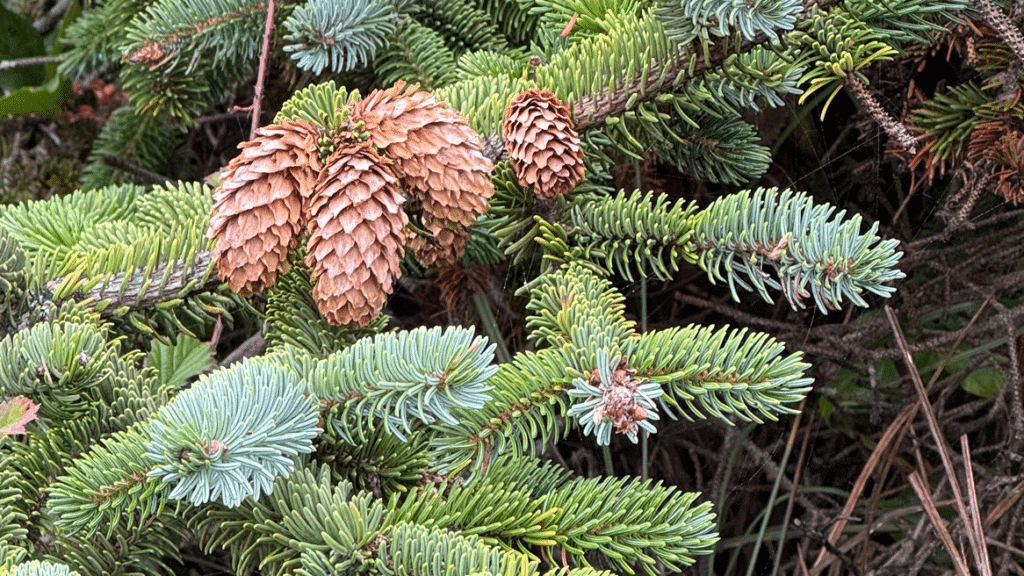
Associated Mushrooms
Sitka spruce supports a rich community of fungi through mycorrhizal partnerships and as a substrate for saprotrophic species. Here are some of the most notable associations found in Pacific Northwest coastal forests.
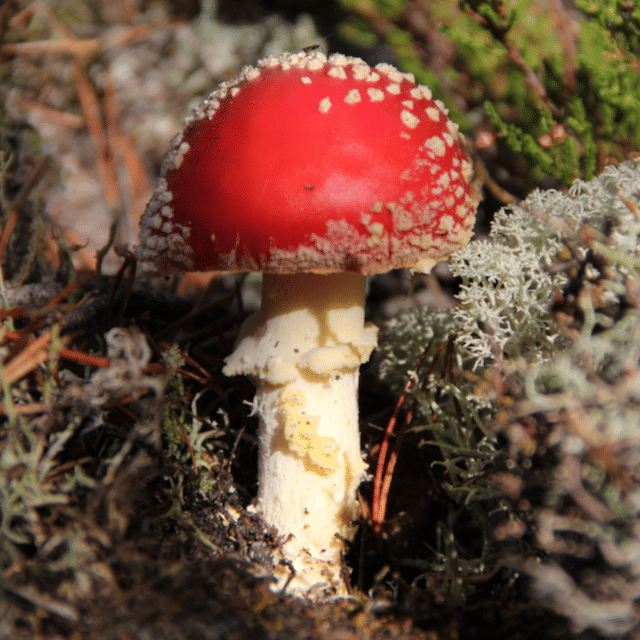
Fly Agaric
Amanita muscaria
The iconic red-and-white toadstool. A common mycorrhizal partner of Sitka spruce, especially along forest edges and in younger stands.
Mycorrhizal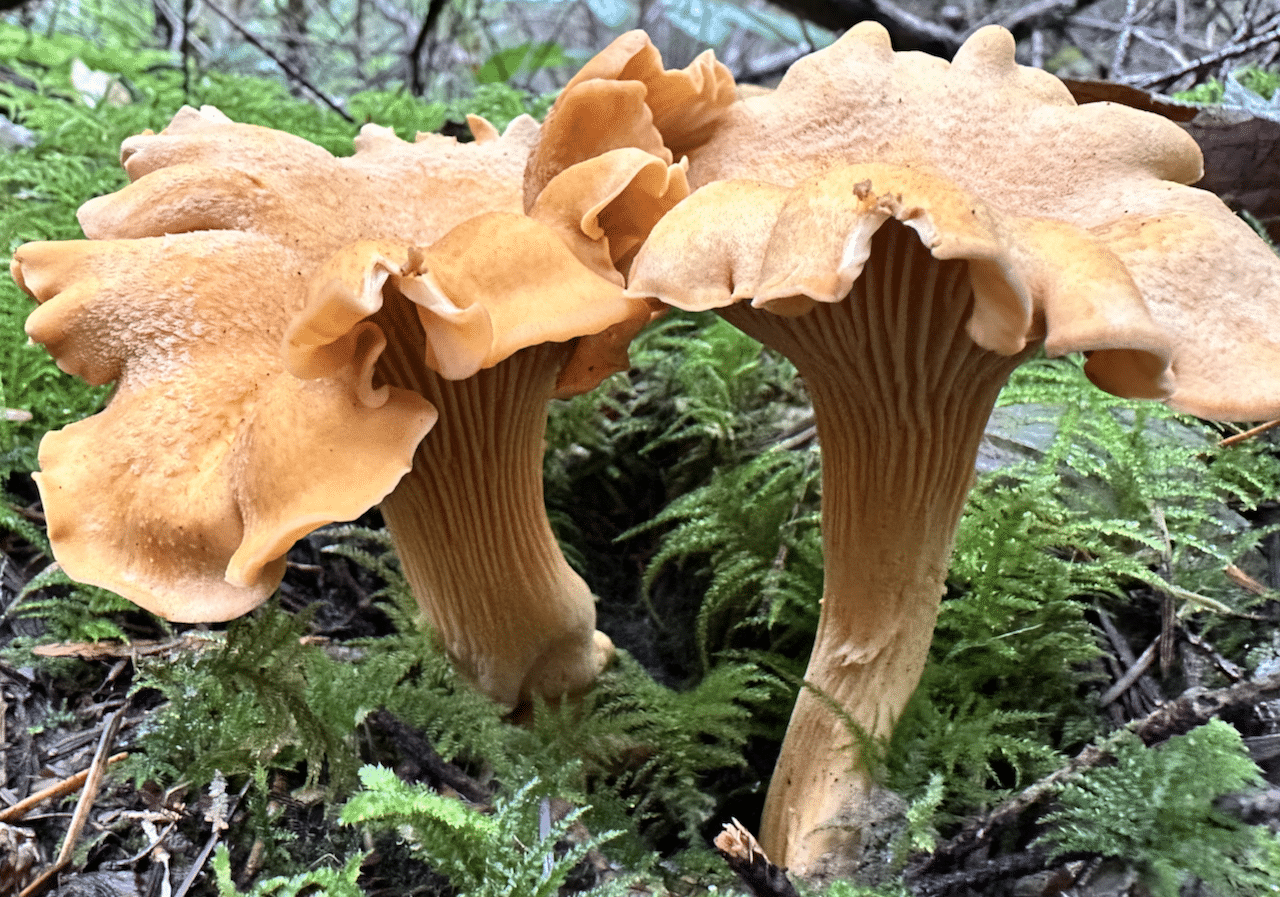
Find Sitka Spruce Forests on Forayz
Explore ecoregions, soil conditions, and precipitation data to find productive coastal foraging zones. Free environmental layers included.
Also on iOS: ForayzU
Practice identifying Pacific Northwest trees and mushrooms with spaced-repetition flashcards — including a dedicated tree identification deck.
Distribution in Washington & Oregon
Photos: Porcini — © Alan Rockefeller, CC BY.