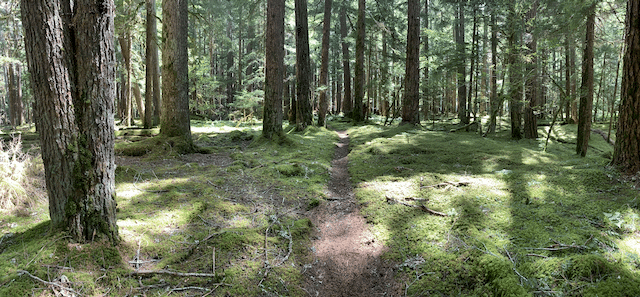
The following is a selection of mushrooms found in our region in January. Some have very specific habitats and might only be found in a small part of the region.
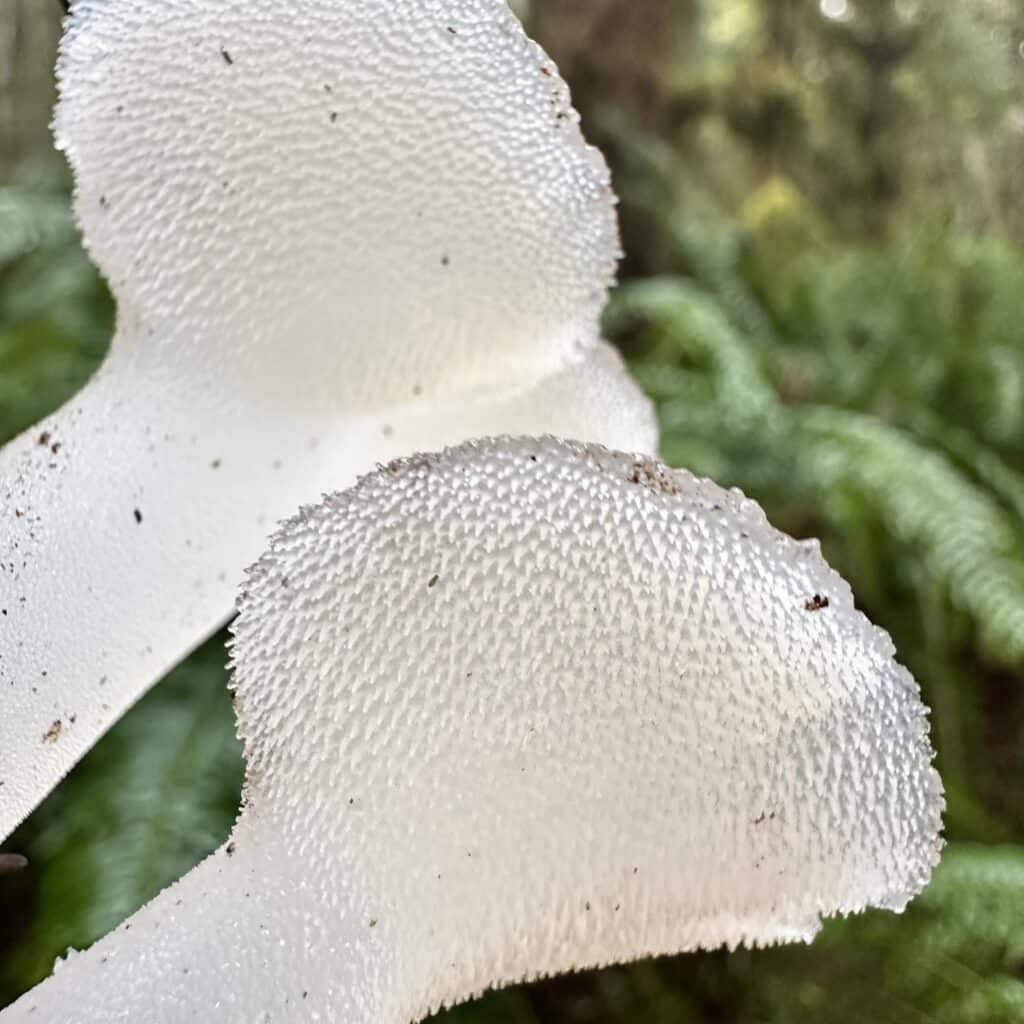
Cat’s Tongue
Pseudohydnum gelatinosum
Considered a species ‘complex’, which includes multiple closely related species that can be difficult to separate visually.
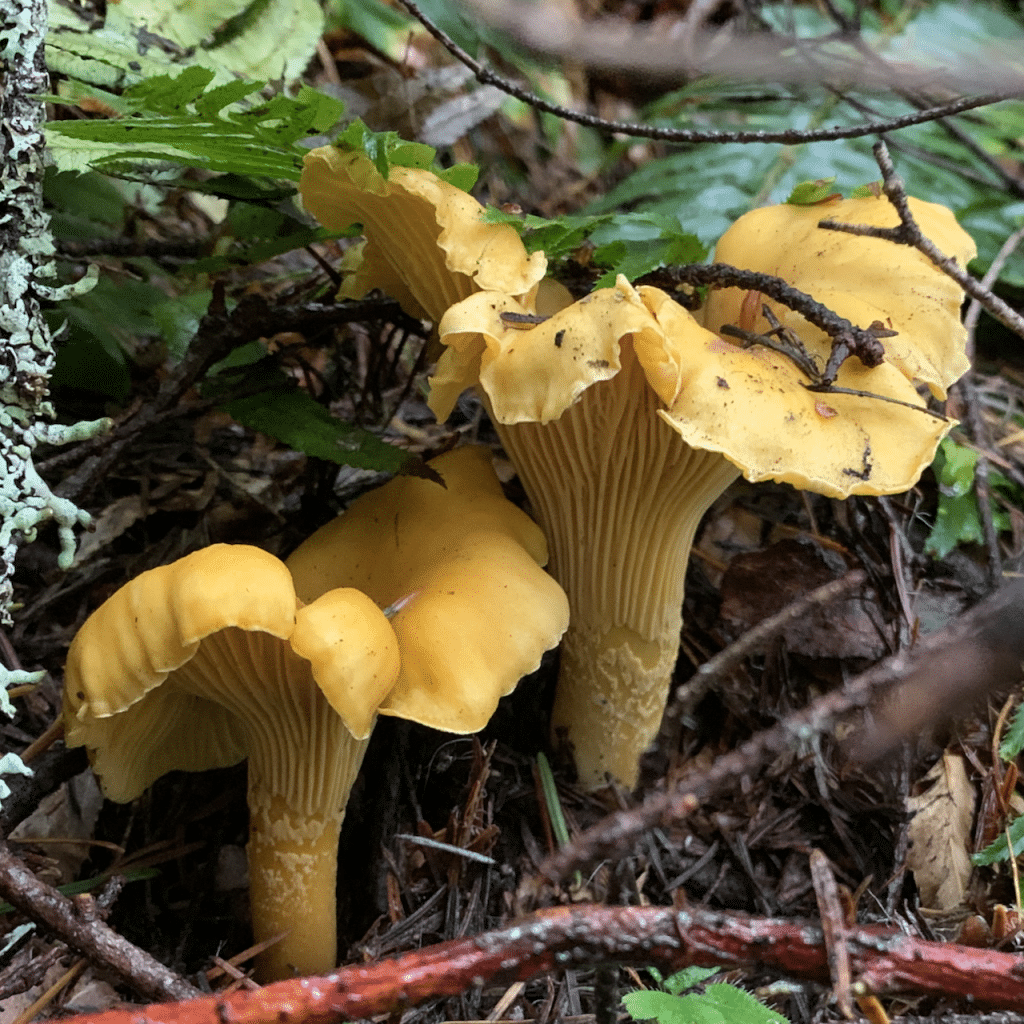
Chanterelle
Cantharellus
Chanterelles can be found somewhere in our region nearly every month of the year.
Hair Ice
Exidiopsis effusa
What you’re seeing is not actually a mushroom or any part of the fungus. This is just ice created by a metabolic process of the fungus living inside of the wood. It’s believed that the fungus excretes water in a manner that allows it to create these fine filaments of ice on the surface.

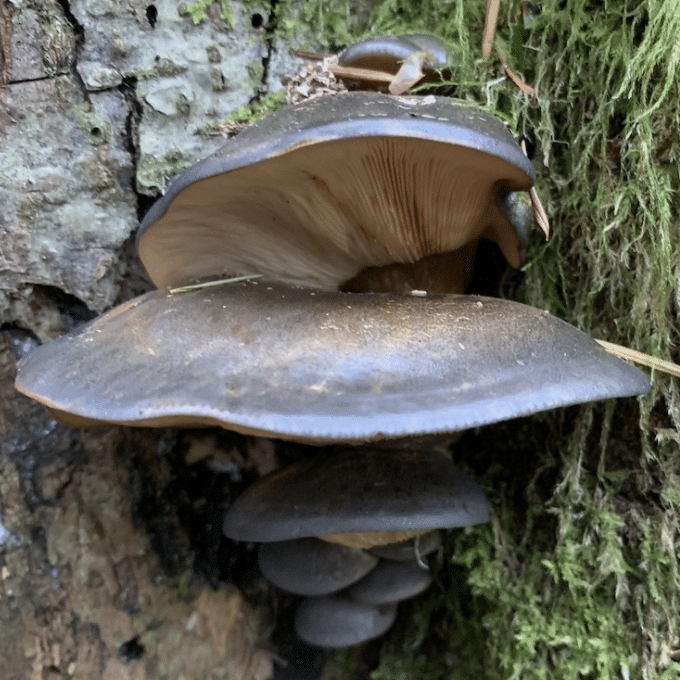
Late Oyster
Sarcomyxa serotina
Edible, but not rated highly by many. Most easily recognized by the winter fruiting, and the unique texture of the stem
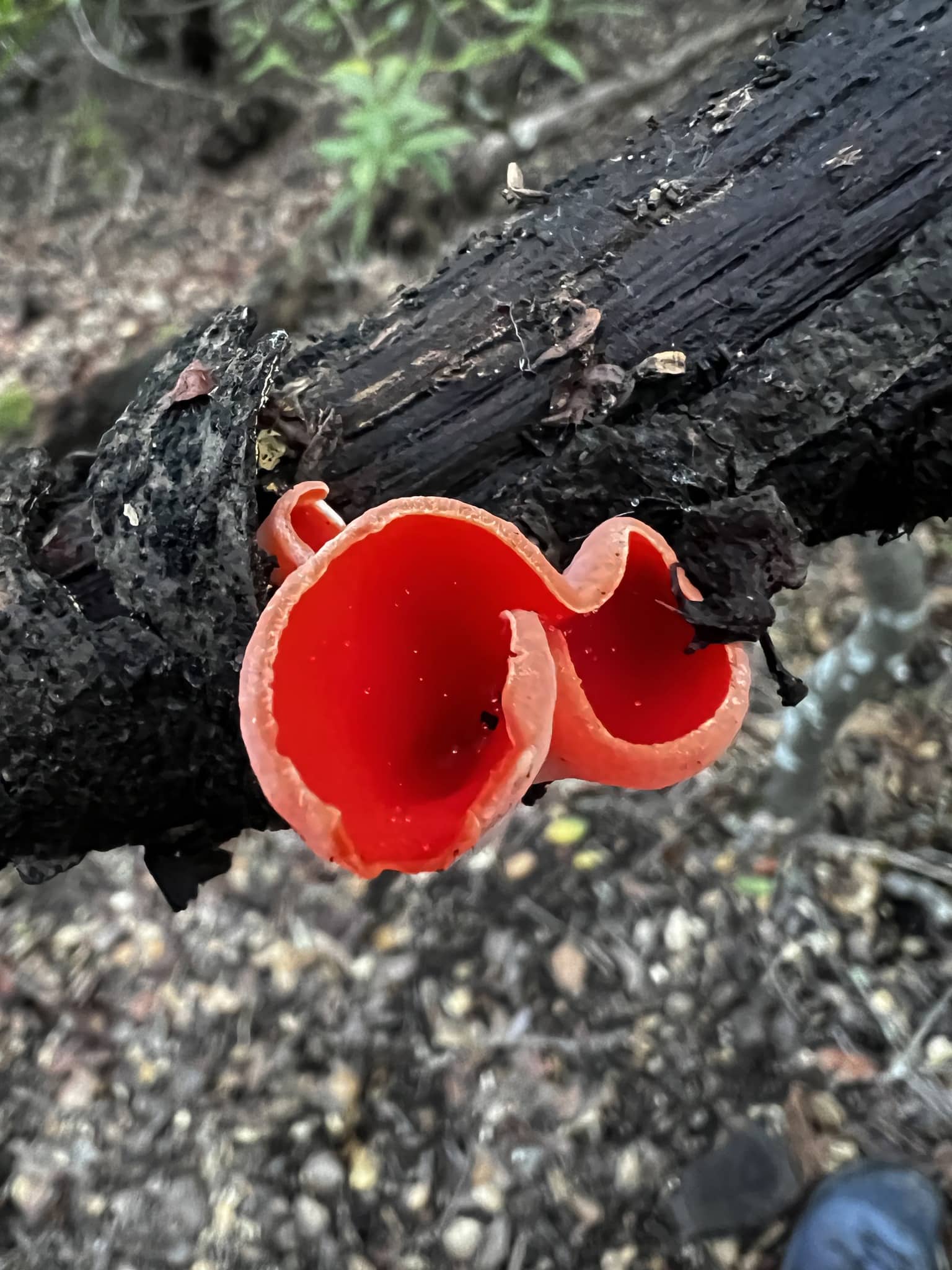
Scarlet Cup
Sarcoscypha coccinea
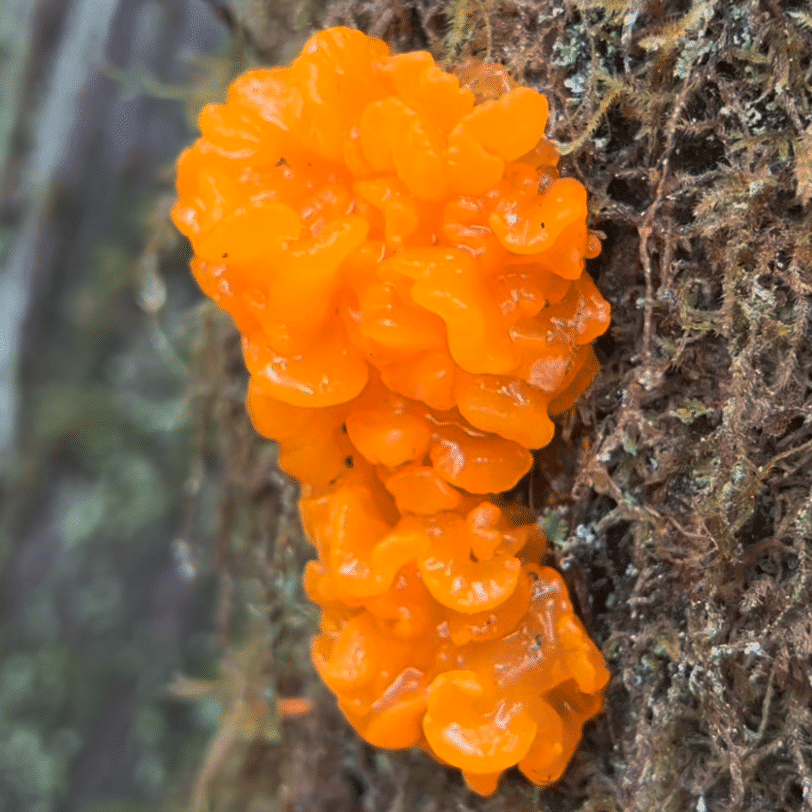
Witch’s Butter (and similar)
Tremella mesenterica / Dacrymyces chrysospermus / Naematelia aurantia
Globular, orange jellies growing on wood
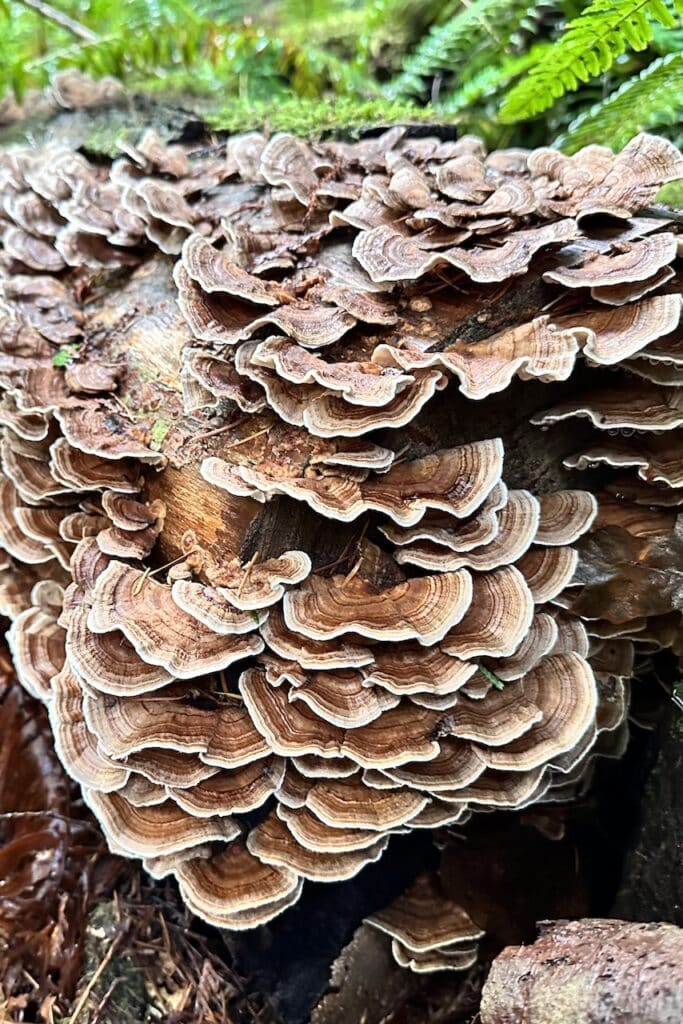
Turkey Tail
A very common polypore that has been popularized by suggestions of its medicinal properties. Pick them while they’re still fresh and steep in water for tea. In my experience, the tea tastes like hot water
Yellowfoot Chanterelles
Craterellus tubaeformis
One of the most abundant ‘choice’ edibles at this point in the season

Black Trumpet
Craterellus calicornucopioides
More common as you move south. Can be found in Washington but more common in central to southern Oregon and especially Northern California

Wax Caps
Genus Hygrocybe
Often brightly colored in varying shades of red, orange, and yellow.
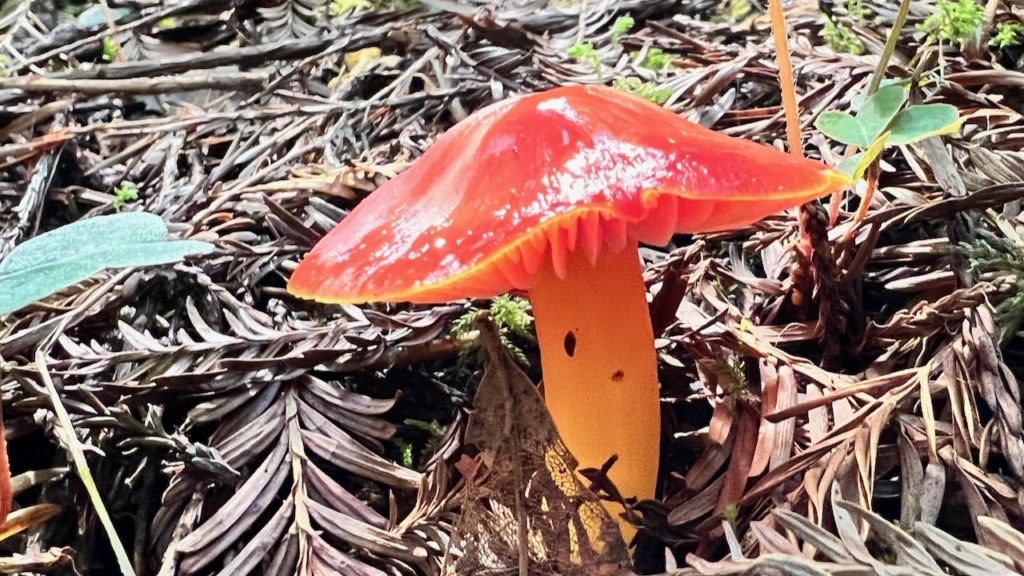
Parrot Mushroom
Gliophorus psittacinus
A beautiful color-changing mushroom often with red, green, and yellow coloration.

Sulphur Tuft / Conifer Tuft
Hypholoma genus
Hypholoma fasculare is bitter with greenish tint to the gills when young. Poisonous

Rosy Oystering
Scytinotus longinquus

Get the data serious foragers use to find more mushrooms
Free members get soil conditions, the past week of rain, snow, smoke and historical burns. Pro unlocks the layers that help you narrow down exactly where to look.
- Newest burn years, managed burns & burn severity
- Tree species maps (22 species) & timber harvests
- Town and mountain pass fruiting calendars with current conditions
- Offline map downloads in the iOS & Android apps
- 14- and 30-day rainfall windows
- Soil temperature & moisture at full zoom