“There are two standing rules in this outfit. One, take care of your feet.” – Lieutenant Dan, Forrest Gump
Update: As of Day 47 I’ve gone 400 miles blister free!
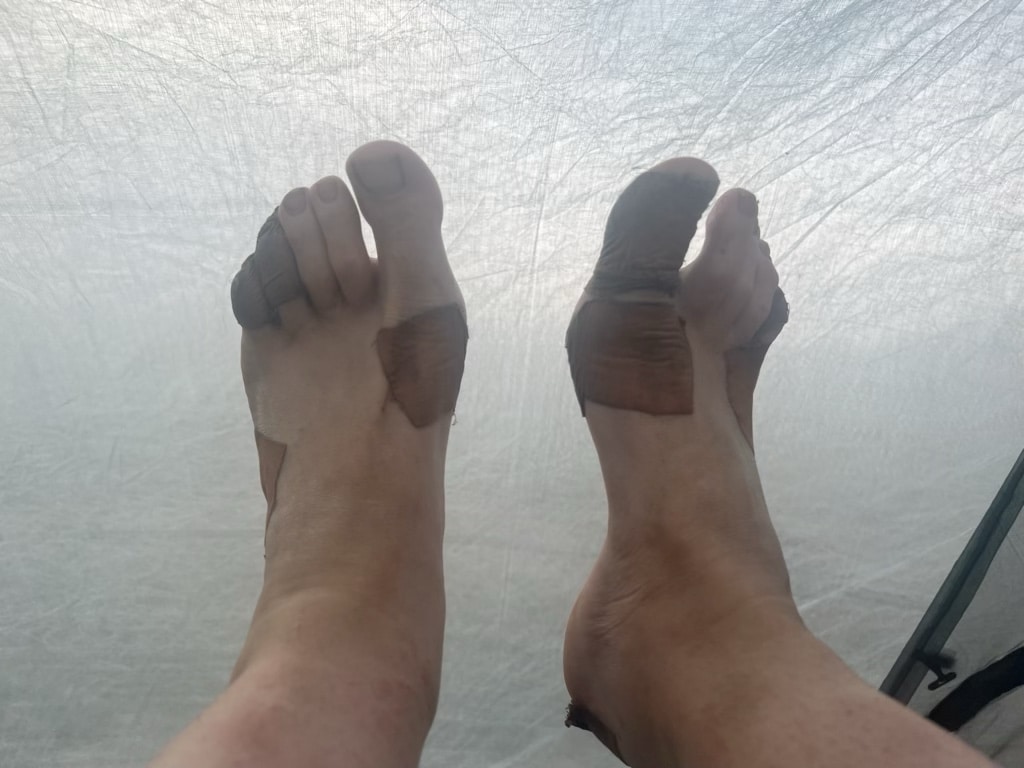
By day two of the PCT, one of the most common topics among hikers is blisters. How many you have, where they are, and what you’re doing to help them heal and manage the pain of continuing to walk 15+ miles a day.
I naively thought I’d be immune to these woes given the hours I had spent thinking about and testing and researching the topic: which shoes, which insoles, which socks? Do I have enough moleskin? What about tape?
After dozens of test hikes I started the PCT with the Hoka Speedgoat 5 Wides, with Darn Tough socks and Superfeet trail running insoles.
Day 1 my feet felt like a dream and I was regularly congratulating myself – the effort had paid off, I was prepared, and would be one of those rare hikers who don’t get any blisters on the PCT. Go me.
Then came day 2. As we were about 12 miles into our day I started feeling a funny sensation like my sock was bunched up on the underside of a toe on my right foot. I made a note to check it when we stopped for the night and continued on. About a mile later I pushed off that foot and had a rush of pain as my first PCT blister popped.
By day 3 both pinky toes were blistered as well, and by day four I also had blisters on the big toe and heel of my right foot.
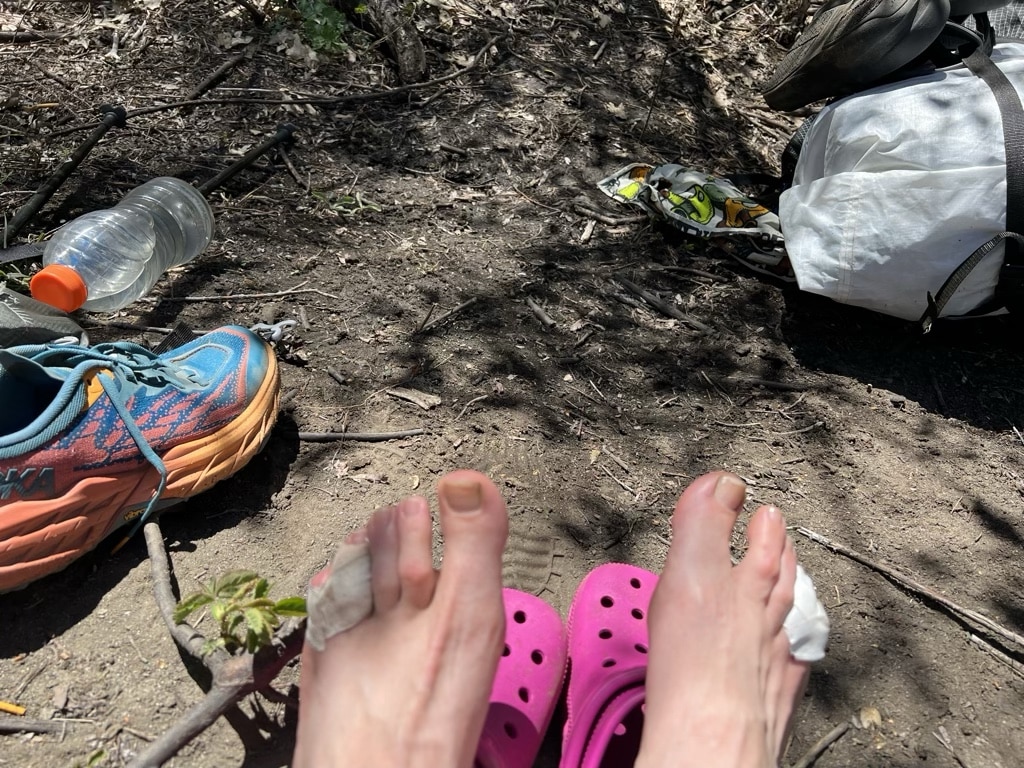
So began my exploration of blister care and prevention, largely aided by conversations with other hikers, trial and error, and supplies available at roadside markets.
Stage 1: Apply Moleskin
Stage 2: Apply Moleskin plus athletic tape, and change socks 3-4 times a day
Stage 3: Bought “New Skin” to apply plus moleskin, plus athletic tape, and change socks 3-4 times a day
Stage 4: Moleskin plus Leukotape (extra sticky and pliable tape very popular with hikers), plus bought Body Glide to apply around the perimeter of my foot and under my toes every time I changed my socks, 3-4 times a day
Stage 5 (the winner?): using as much sanitation as possible, pop newly formed blisters, cover those and any tender spots with Leukotape, apply body glide to the outside of tape and under toes, and change my socks 3-4 times a day.
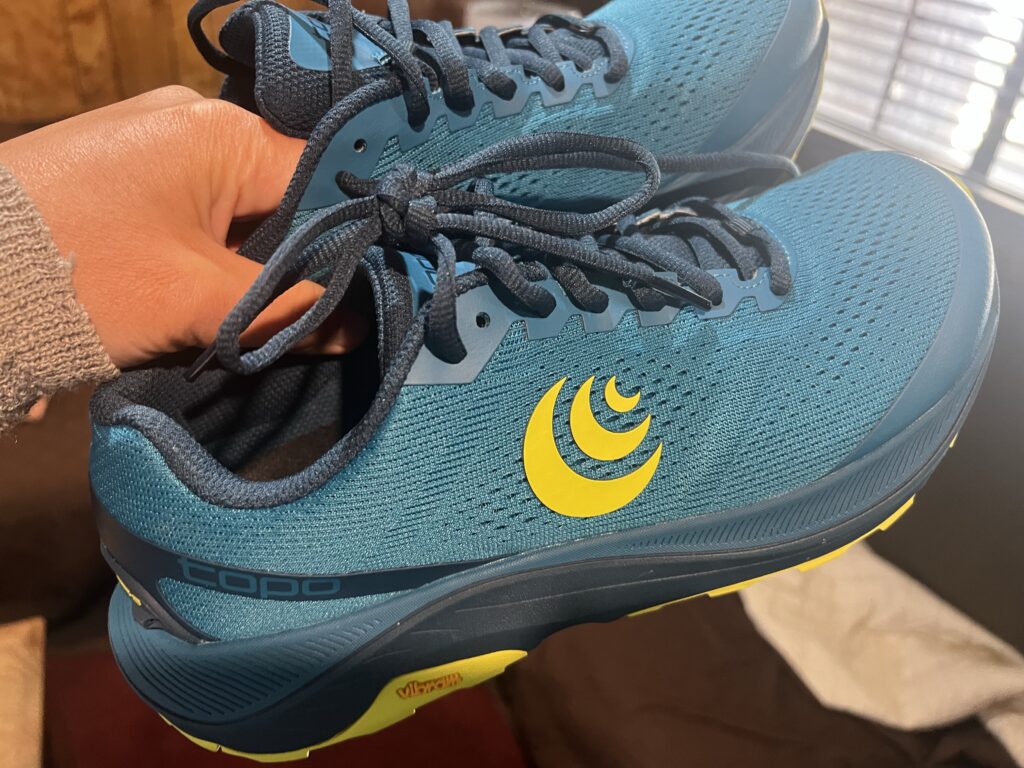
Most importantly, get better fitting shoes. I first swapped out the Hokas for a pair with a wider toe box, the Topo Intrepids I’d left at home. (Thanks Whitney for mailing these!) Now that we’re in Big Bear Lake I bought Topos a full size larger which I have learned is common for the majority of hikers. The very friendly staff at Big Bear Sporting Goods helped fit me into a men’s 9 (upsized from my women’s 9.5) and shared that they see hikers during PCT season multiple times a day with the same issue.
Other foot care habits that have made a big difference include ankle stretching, using a my small ball to roll out the bottoms of my feet, and sleeping without socks when it’s warm enough.
I’m happy to report that now on Day 21 I am blister-free and cautiously feeling prepared to keep it that way, but also humble enough to know that my foot care learning journey will probably last as long as this hike.
Jeremy, on the other hand, bought the first pair of shoes he tried on at REI (Brooks Cascadia Trail Runners) is wearing the Darn Tough socks I bought him on sale, and hasn’t had a single issue. So sometimes it really just depends on your feet and a bit of luck.
Get the data serious foragers use to find more mushrooms
Free members get soil conditions, the past week of rain, snow, smoke and historical burns. Pro unlocks the layers that help you narrow down exactly where to look.
- Newest burn years, managed burns & burn severity
- Tree species maps (22 species) & timber harvests
- Town & pass fruiting calendars with current conditions
- Offline map downloads in the iOS & Android apps
- 14- and 30-day rainfall windows
- Soil temperature & moisture at full zoom