
Western Hemlock Tsuga heterophylla
Western hemlock is very shade tolerant, and it is generally the climax tree of moist low- to mid-elevation forests, alone or with other shade-tolerant trees (USFS Fire Effects Information System). In the western Cascades Douglas fir is the early-successional tree and hemlock tends to take over as stands age. For mushroom hunters, hemlock and Douglas fir are the two main host forests of the Pacific golden chanterelle (Siegel & Schwarz, Mushrooms of Cascadia).
Identify western hemlock by its drooping leader tip — the very top of the tree bends over in a distinctive curve. The needles are flat and short, with noticeably different lengths on the same twig. Cones are small. The bark is thin even on large trees, and on old trunks has furrows between wide, flat ridges (FEIS).
Western hemlock is dominant or codominant on moist low- to mid-elevation sites, including the lower western Cascades. Its seedlings tolerate deep shade, so it can regenerate under the canopy of an older forest (FEIS).
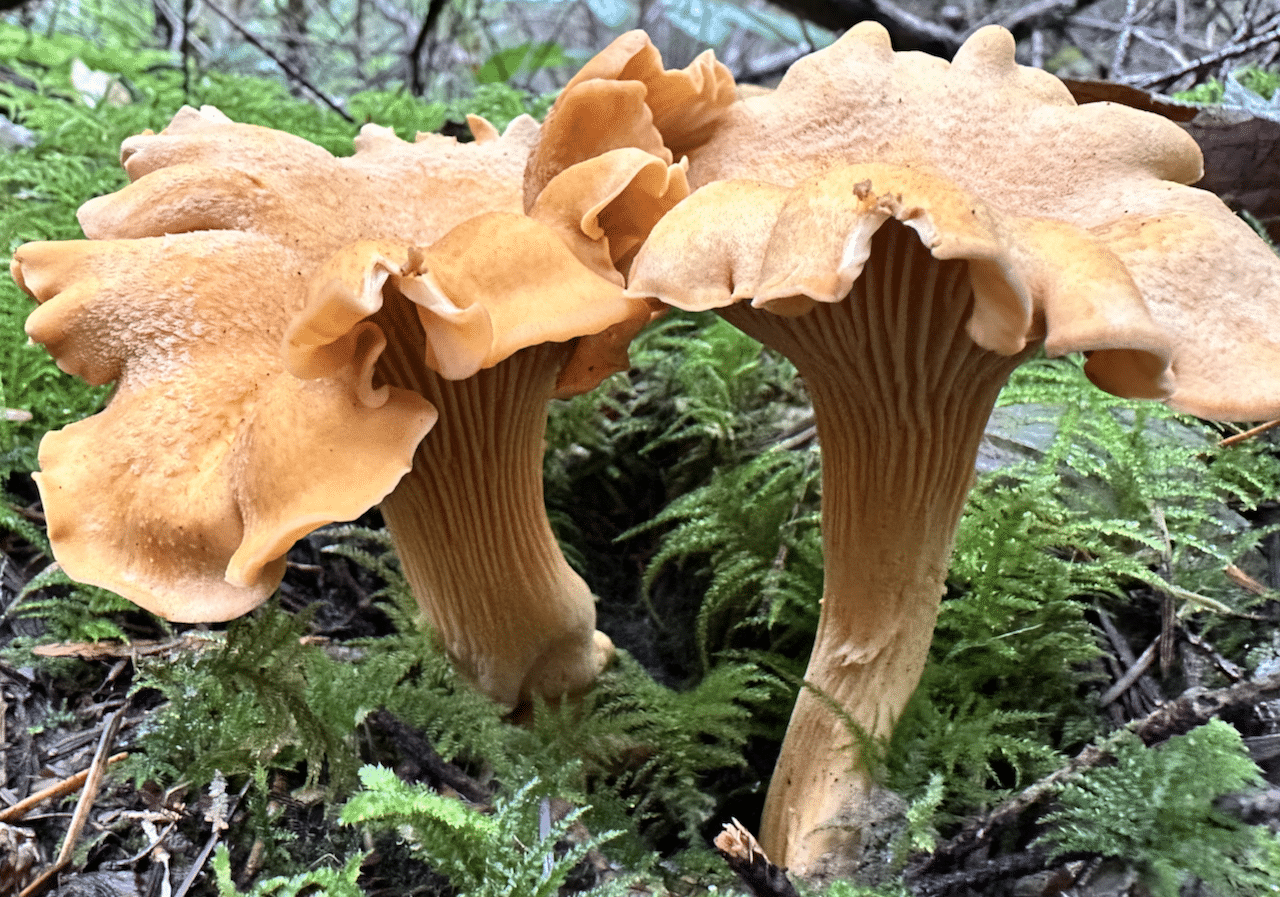
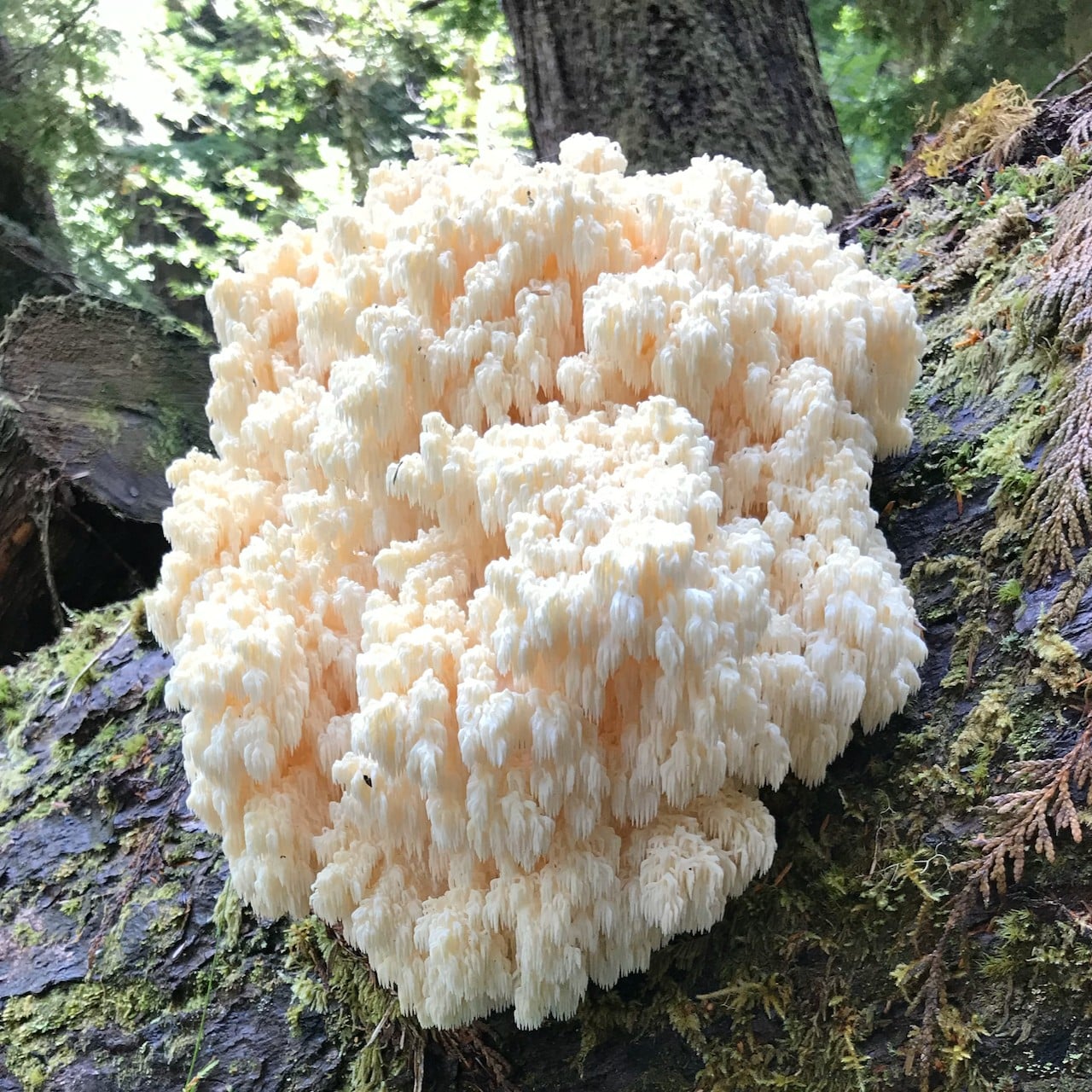
The admirable bolete fruits mainly from well-decayed hemlock logs and stumps, and sometimes from the ground under hemlock. Siegel & Schwarz also name hemlock forests for yellowfoot and for the bellybutton hedgehog (Hydnum umbilicatum).
Associated Mushrooms
Mushrooms recorded in western hemlock forests, from ground-dwelling mycorrhizal partners to wood-decay species.
Find Hemlock Forests on Forayz
Overlay soil moisture and precipitation data to find the wet, mossy hemlock stands that produce the best late-season foraging. Free environmental layers included.
Also on iOS: ForayzU
Practice identifying Pacific Northwest trees and mushrooms with spaced-repetition flashcards — including a dedicated tree identification deck.
Distribution in Washington & Oregon
Photos: Western Hemlock — Andrew (CC0) · Yellowfoot Chanterelle — Deniz Wilson (CC0) · Bellybutton Hedgehog — © Eva Skific, CC BY-SA.
Sources: Mushrooms of Cascadia (Siegel & Schwarz, 2024); MycoMatch (© Ian Gibson), a compilation of published descriptions through which most other field-guide authors named here are quoted.