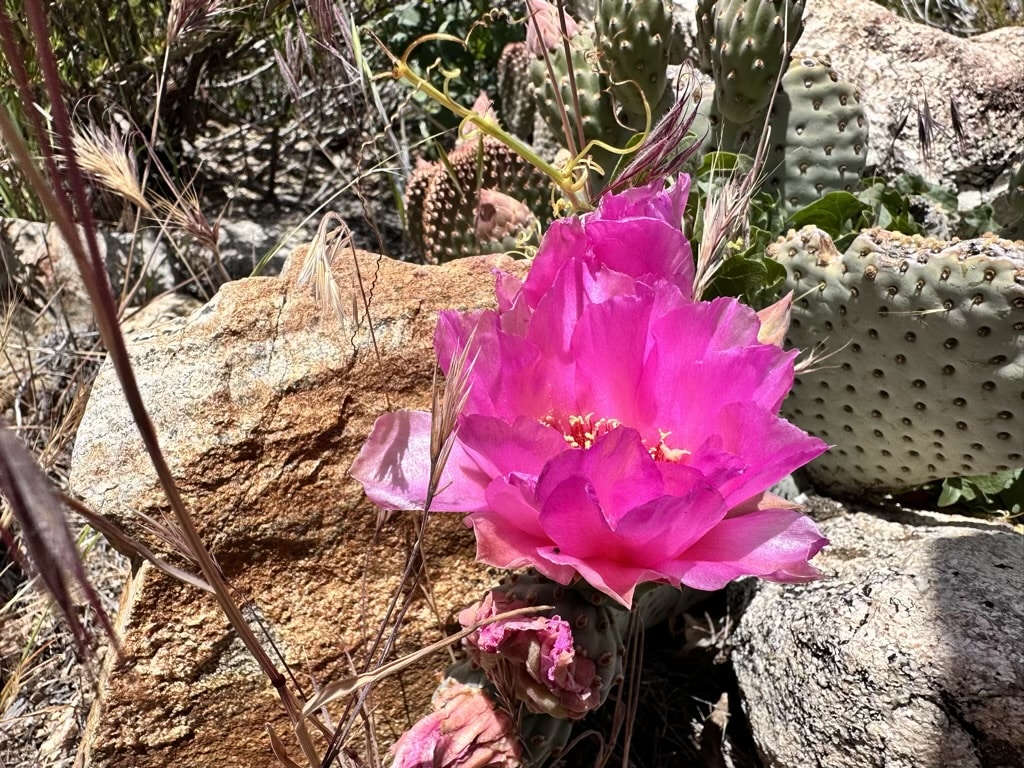
For the past week Kristi and I have seen over a hundred of these beautiful cacti in full bloom.
The Beavertail prickly pear cactus, scientifically known as Opuntia basilaris, is a species of cactus native to the southwestern United States and northern Mexico. It is a member of the Opuntia genus, which includes various species of prickly pears. The name “Beavertail” comes from the shape of its flattened pads, which resemble the tail of a beaver.
Here are some key characteristics and features of the Beavertail prickly pear cactus:
1. Appearance: The cactus typically has flat, oval-shaped pads that grow in clumps. The pads are bluish-green to gray-green in color and have a velvety or powdery coating of tiny spines known as glochids. The glochids are barbed and detach easily, so caution is required when handling the plant. The pads can grow up to 20 centimeters (8 inches) long and 10 centimeters (4 inches) wide.
2. Flowers: In the spring, the Beavertail cactus produces vibrant, showy flowers. The flowers are usually pink, magenta, or purple, although they can also be white or yellow in some varieties. They have numerous petals and a bright yellow center. The flowers typically open during the day and close at night.
3. Fruit: After flowering, the cactus develops edible fruits known as tunas. These fruits are oval-shaped and range in color from green to reddish-purple. They are covered in glochids, so caution must be taken when harvesting them. The tunas are sweet and juicy, and they contain numerous small seeds.
4. Habitat: Beavertail prickly pear cacti are adapted to arid and semi-arid regions. They can be found in various habitats, including desert slopes, rocky hillsides, and dry grasslands. They are well-suited to surviving in harsh conditions with low water availability and high temperatures.
5. Ecological Importance: The cactus pads provide food and shelter for various wildlife species. Desert-dwelling animals, such as desert tortoises, rabbits, and rodents, consume the pads as a source of hydration. The flowers attract pollinators like bees, butterflies, and hummingbirds. The fruits are also consumed by birds and mammals, which aid in seed dispersal.
6. Cultivation: Beavertail prickly pear cacti are popular among cactus enthusiasts and are often cultivated as ornamental plants. They can be grown in gardens or containers, provided they receive sufficient sunlight and well-drained soil. However, it’s essential to handle them carefully due to their spines.
It’s worth noting that while the Beavertail prickly pear cactus has some culinary uses and cultural significance, it is always advisable to seek proper guidance before consuming any part of the plant, as certain preparation methods may be necessary to remove the glochids and make it safe for consumption.
Overall, the Beavertail prickly pear cactus is a fascinating and resilient plant that thrives in arid environments, showcasing beautiful flowers and providing essential resources for desert wildlife.
Get the data serious foragers use to find more mushrooms
Free members get soil temps, precipitation, and ecoregion data. Pro unlocks the layers that help you narrow down exactly where to look.
- Historical burn perimeters — find morel habitat fast
- Timber harvest boundaries across OR & WA
- Detailed foraging area summaries with conditions
- Offline maps in the Forayz iOS app