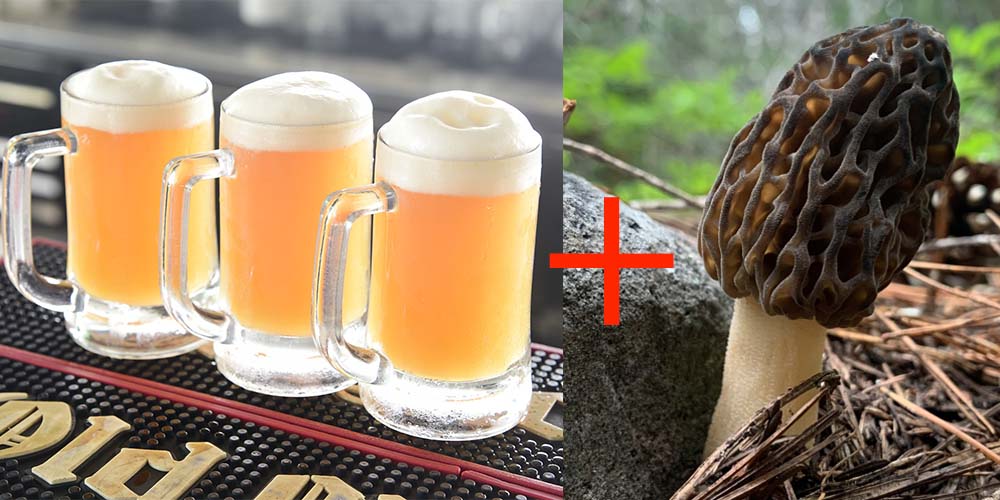
Are Morels Toxic When Consumed with Alcohol? What the evidence says about morels, wine, and adverse reactions
This is one of the most common questions we hear during morel season. You’ve got a bag of fresh morels and a bottle of wine — should you be worried? The short answer: most people can safely eat properly cooked morels with alcohol without any issues.
But the longer answer involves some real nuance. A small number of people do report adverse reactions when combining morels and alcohol, and morels themselves can cause problems even without alcohol if undercooked or if the individual is sensitive. Here’s what we actually know.
The Short Version
For most people, no. Morels and alcohol are safe together when morels are thoroughly cooked. Most morel-related illness comes from eating them raw or undercooked, or from a separate reaction to eating a large meal of them — not from alcohol.
A small number of documented cases do show a coprine-like reaction (flushing, palpitations, GI upset) after eating morels with alcohol, and the mechanism isn’t understood. If you haven’t eaten morels before, start with a small amount and wait 24 hours before eating more.
If you’re experiencing symptoms after eating mushrooms: Call Poison Control at 1-800-222-1222 immediately. See our poisonous mushrooms guide for emergency steps.
Morel Toxicity Without Alcohol
Before getting to alcohol, it helps to separate morel reactions into categories. Raw or undercooked morels can cause gastrointestinal illness — cramps, vomiting, and diarrhea — in some people, even without alcohol. Serious illness from true morels is rare, but it does happen. A 2021 literature review (Piqueras, Fungi) described two earlier deaths after morel meals in which investigators doubted the morels were the cause: one batch was likely contaminated in transit, the other badly deteriorated and moldy. In 2023, an outbreak linked to a restaurant in Bozeman, Montana, made 51 people ill, and two of them died; both had chronic underlying medical conditions, testing did not identify a toxin, and raw morels were the most strongly associated with illness (CDC, MMWR, 2024). A 2025 review of the published case reports found that the first reports of critical illness and death after eating true morels appeared in 2024; those cases began with severe, early vomiting and diarrhea, sometimes with shock (Simon et al., Clinical Toxicology, 2025). Separately, people have died after mistaking true morels for the toxic false morel Gyromitra esculenta — see the caution below.
The toxin responsible for raw-morel illness hasn’t been clearly identified. Older sources call it a heat-labile hemolysin, but a 2021 review of the case literature (Piqueras) found little direct evidence for hemolysis specifically — reported cases describe digestive and circulatory symptoms, not blood-cell breakdown. Whatever it is, it breaks down with thorough cooking. This is why you should never eat raw morels. (Hydrazine compounds are the toxin in Gyromitra, not in true morels — don’t confuse the two.)
Cook morels thoroughly
Thorough cooking significantly reduces the chance of adverse reactions. Slice morels in half to check for insects, cook them thoroughly at high heat, and never eat them raw.
The Morel Neurologic Syndrome
A separate, better-documented reaction is a temporary neurologic syndrome that has nothing to do with alcohol. A French poison-center review of 129 cases collected over 30 years (Saviuc et al., Clinical Toxicology, 2010) found two patterns after eating morels: a gastrointestinal syndrome (median onset around 5 hours) and a distinct neurologic syndrome (median onset around 12 hours) — dizziness, unsteadiness, tremor, and sometimes vision changes, with or without GI symptoms. A German case series (Pfab et al., Clinical Toxicology, 2008) described six people with similar cerebellar-type symptoms 6–12 hours after eating cooked morels.
What sets this syndrome apart
Cases reviewed in the 2021 literature survey (Piqueras) share a pattern: a large quantity eaten (often more than 300 grams), usually fresh rather than dried morels, and symptoms resolving within days. Piqueras’s summary is explicit that alcohol does not appear to play a role in this syndrome — it’s a different reaction from both the raw-morel GI illness above and the alcohol-associated reports below.
Morel Toxicity With Alcohol
There are a small number of documented cases of adverse reactions specifically tied to morels plus alcohol. The symptoms — GI distress, facial flushing, palpitations, a sensation of lip swelling, low blood pressure — resemble coprine toxicity, the mechanism behind the well-known “inky cap + alcohol” interaction. But the evidence is thin, and no toxin responsible has been identified:
- A 2021 literature review (Piqueras, Fungi) describes a 2012 case in Catalonia, Spain: of fifteen diners who shared a dish of morels at a restaurant, the six who also drank wine developed cutaneous flushing, a sensation of lip swelling, palpitations, and in some cases vomiting and low blood pressure; the nine who hadn’t had wine had no reaction.
- NAMA’s mushroom poisoning case registry recorded a similar pattern in 2020 (Pennsylvania): the same person had no reaction eating a meal of morels, then developed chills, flushing, dizziness, cramps, and vomiting the next time the same morels were eaten alongside alcohol (Beug, McIlvainea, 2021).
Michael Beug, longtime chair of NAMA’s toxicology committee, is blunt about how rare this is: “For the hundreds of people who have eaten morels and consumed alcohol with the meal when I have been present, there has not been a single adverse reaction.” His review of the registry found that every reported morel-and-alcohol reaction involved individual sensitivity, not a general toxicity of morels combined with alcohol (Beug, McIlvainea, 2021).
Learn Morel Identification
Proper identification is the first step to safe foraging. Our free online morel course covers species ID, lookalikes, and preparation.
The Coprine Connection
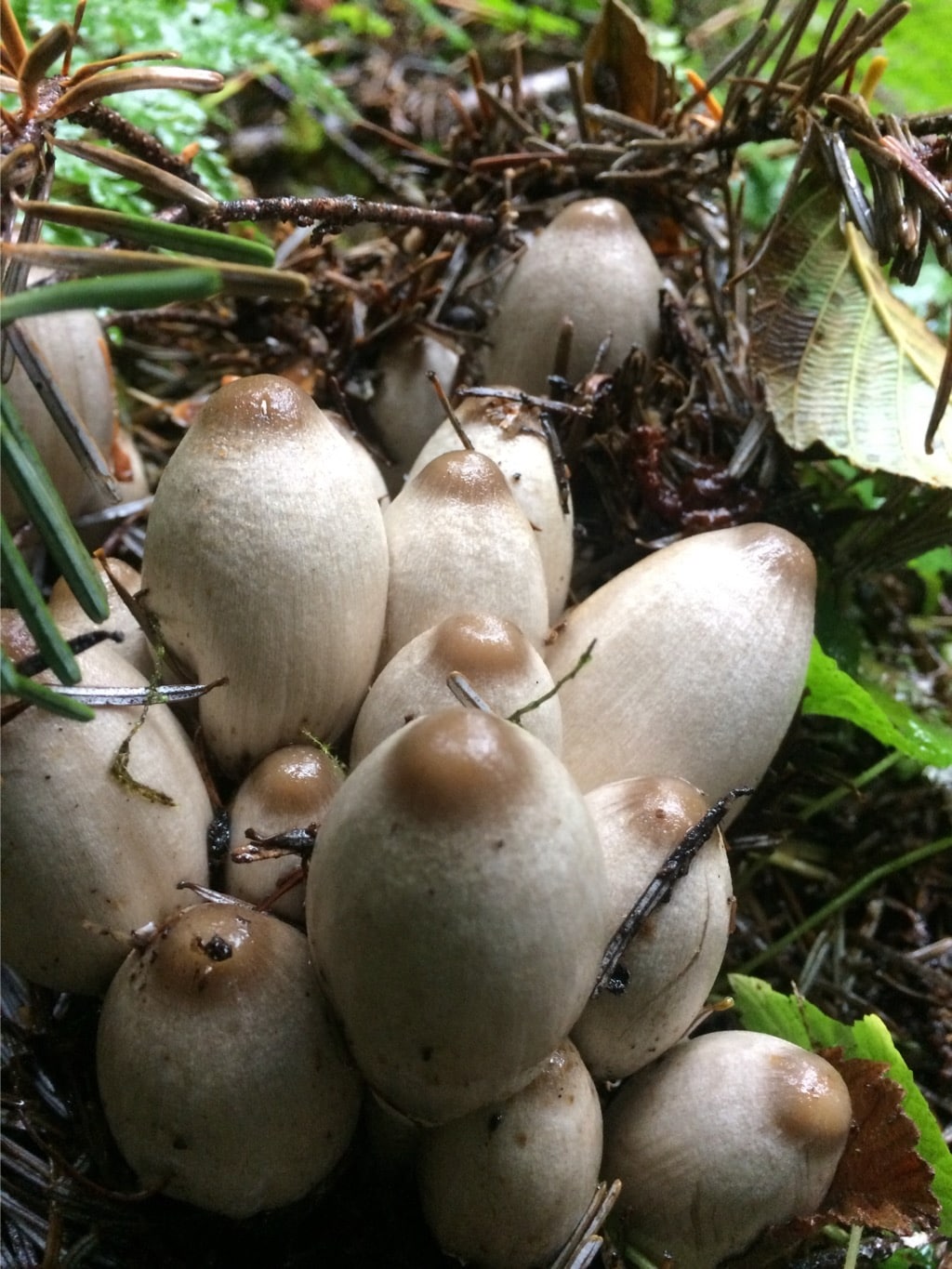
Some mushrooms are definitely toxic with alcohol. Species in the Coprinopsis genus (section Atramentariae) contain coprine, a compound that blocks the enzyme aldehyde dehydrogenase. When alcohol is consumed, toxic acetaldehyde builds up in the body, causing flushing, nausea, vomiting, and rapid heartbeat — essentially the same mechanism as the drug Antabuse.
The best-known example is the tippler’s bane, Coprinopsis atramentaria (see our ink cap guide). The reaction can occur even if alcohol is consumed up to 3 days after eating the mushroom.
Morels do not contain coprine, and no toxin explaining a morel-and-alcohol reaction has been identified. In the handful of documented cases above, symptoms resembled coprine toxicity, but whether morels contain some related compound, or these were unrelated individual sensitivities, remains unclear.
Edibility Is a Spectrum
“Edible” Mushrooms That Cause Reactions
No mushroom is universally safe for everyone. Even common grocery store species cause problems for some people:
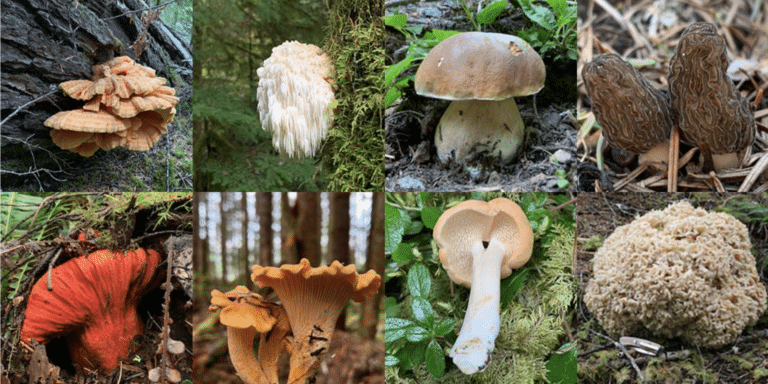
- Chicken of the Woods (Laetiporus) — GI upset in some people, from both the conifer and hardwood species, and allergic reactions have been reported. Never eat it raw. One death has been reported (Benjamin).
- Button Mushrooms (Agaricus bisporus) — Allergy-like symptoms in some individuals
- Shiitake (Lentinula edodes) — GI distress; raw/undercooked shiitake can cause flagellate dermatitis
- Chanterelles (Cantharellus spp.) — GI upset in some people
- Porcini (Boletus edulis) — Occasional GI reactions
The most dangerous morel lookalike
The biggest risk during morel season isn’t alcohol — it’s misidentifying Gyromitra esculenta (brain mushroom) as a morel. Gyromitra contains gyromitrin, which can cause fatal liver failure. True morels have a honeycomb-patterned cap; Gyromitra has a brain-like, folded cap. Learn the difference before you forage. See our morel toxicity guide for details.
How to Minimize Risk
- Cook morels thoroughly. Slice in half to check for insects, and never eat them raw.
- Start small. If you’ve never eaten morels, try a small amount and wait 24 hours before eating more. This reveals personal sensitivities at a low dose.
- Know your species. Gather many before eating any — familiarize yourself with morels and their lookalikes well before trusting your identification.
- Forage with intention. Choose target species and learn them deeply rather than trying to identify everything you find. This reduces the risk of accidentally collecting something toxic.
- Ask questions. If someone else foraged the morels, ask how they identified them and what lookalikes they ruled out. It’s a good way to learn — and to gauge the forager’s confidence.
- Keep perspective. Serious mushroom poisonings are rare. An 18-year study of US poison-center data found about 40 serious poisonings a year, causing about 3 deaths (Brandenburg & Ward) — far fewer than annual US lightning deaths.
Find Morel Habitat on the Map
Forayz shows burn perimeters, soil temperature, and snow cover — the data that matters for timing your morel hunts in the PNW.
References
- Simon, M.W., Kuai, D., Yeh, M., & Yip, L. (2025). “A narrative review of toxicity after exposure to true morel (Morchella genus) and false morel (Gyromitra genus) mushroom ingestions.” Clinical Toxicology, 63(9), 609–618. PubMed
- Demorest, H., et al. (2024). “Outbreak Linked to Morel Mushroom Exposure — Montana, 2023.” MMWR Morb Mortal Wkly Rep, 73, 219–224. CDC
- Piqueras, J. (2021). “Morel Mushroom Toxicity: An Update.” Fungi, 14(2), 42–52. PDF
- Saviuc, P., Harry, P., Pulce, C., Garnier, R., & Cochet, A. (2010). “Can morels (Morchella sp.) induce a toxic neurological syndrome?” Clinical Toxicology, 48(4), 365–372.
- Pfab, R., Haberl, B., Kleber, J.J., & Zilker, T. (2008). “Case report: cerebellar effects after consumption of edible morels (Morchella conica, Morchella esculenta).” Clinical Toxicology, 46(3), 259–260.
- Beug, M.W. (2021). “Summary of the Poisoning Reports in the NAMA Mushroom Poisoning Case Registry: 2018 through 2020.” McIlvainea, 30. PDF
- Brandenburg, W.E. & Ward, K.J. (2018). “Mushroom poisoning epidemiology in the United States.” Mycologia, 110(4), 637–641. PubMed
Is This a Morel?
66 photos — true morels vs. look-alikes. Test your ID skills before you hit the field.
Sources: Mushrooms of Cascadia (Siegel & Schwarz, 2024); MycoMatch (© Ian Gibson), a compilation of published descriptions through which most other field-guide authors named here are quoted.
Get the data serious foragers use to find more mushrooms
Free members get soil conditions, the past week of rain, snow, smoke and historical burns. Pro unlocks the layers that help you narrow down exactly where to look.
- Newest burn years, managed burns & burn severity
- Tree species maps (22 species) & timber harvests
- Town and mountain pass fruiting calendars with current conditions
- Offline map downloads in the iOS & Android apps
- 14- and 30-day rainfall windows
- Soil temperature & moisture at full zoom