
Popular Edible Mushrooms in the Pacific Northwest 13 species every PNW forager should know
These are the mushrooms you’ll hear about most often in Washington, Oregon, and British Columbia. Some — like chanterelles and morels — are household names. Others, like hedgehogs and black trumpets, are less famous but equally rewarding once you learn where to look.
Each species links to a detailed identification page. If you’re new to foraging, start with the beginner-friendly species below and work your way through the list as you gain confidence. Always confirm identification before eating anything wild — and review our guide to poisonous mushrooms so you know what to avoid.
Find These Mushrooms with Forayz
Use soil temperature, moisture, precipitation, and ecoregion data to locate productive foraging habitat. Free environmental layers for all users.
Start Here: Beginner-Friendly Species
These four species are common, relatively easy to identify, and widely considered among the best wild mushrooms in the world. They’re the best starting point for new foragers in the PNW.
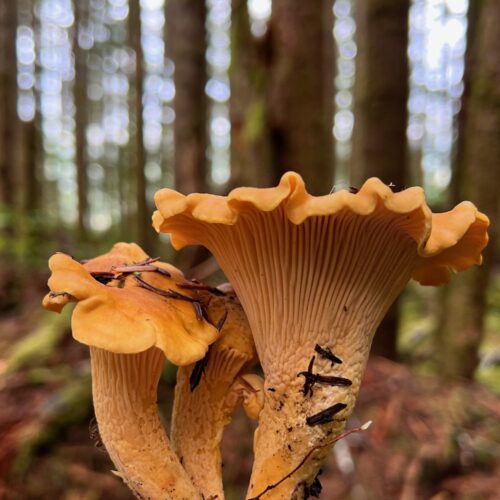
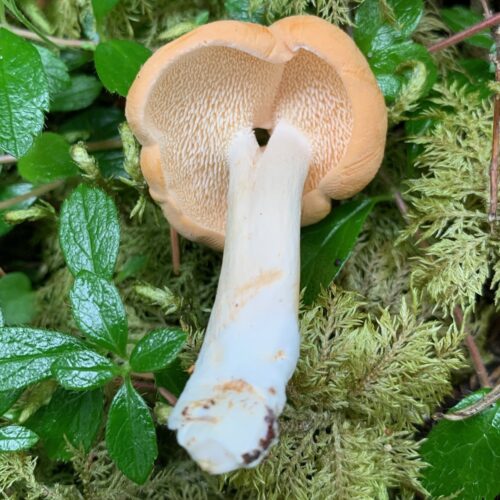
Prized Finds
These species are less common or take more experience to locate, but they’re highly sought-after for their flavor and culinary versatility.
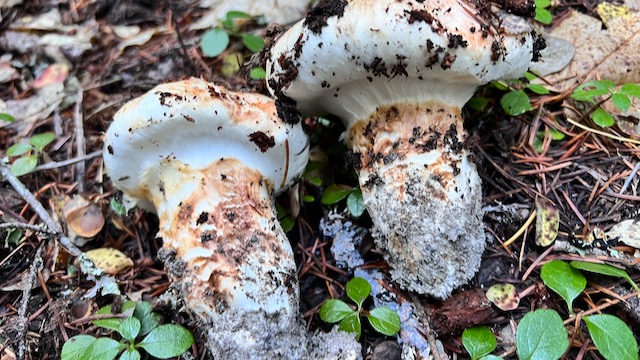

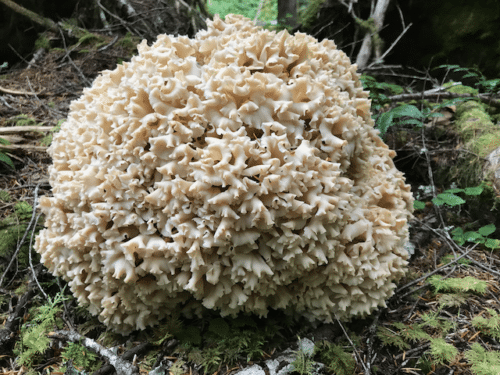

Mycorrhizal vs. Saprotrophic — Why It Matters
Mycorrhizal species (chanterelles, boletes, matsutake, hedgehogs) form partnerships with living tree roots. You’ll find them near specific tree species — learning which trees to look for is half the battle.
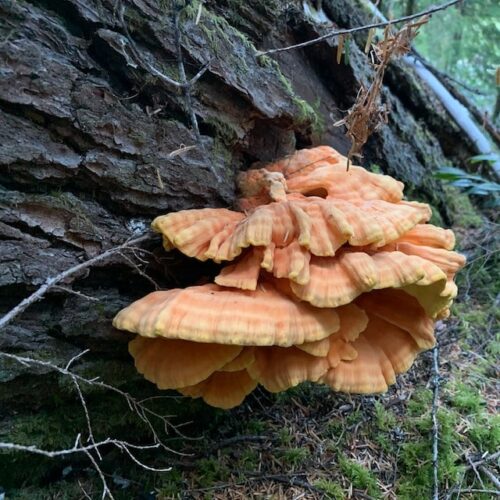
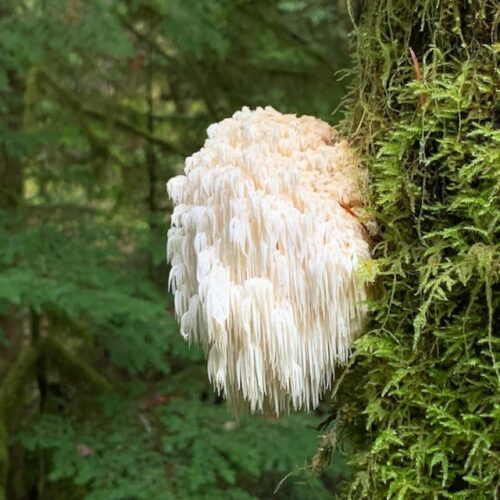
Saprotrophic species (chicken of the woods, bear’s head, oyster) decompose dead wood. They grow on logs and stumps regardless of what’s nearby. Once you learn the right habitat, these are often the easiest to relocate year after year.
Explore Ecoregions & Habitat Data
Forayz maps ecoregions, soil data, and precipitation patterns across the PNW — helping you match species to their preferred habitat. Burn maps and offline access with Pro.
Reliable & Abundant
These species may not get the same fame as chanterelles or morels, but they’re dependable producers that fill the basket throughout the season — and beyond.


Quick Reference: Season & Habitat
Use this table to plan your foraging trips by season. Most species overlap in fall, but spring and winter have their own specialists.
| Species | Peak Season | Ecology | Where to Look |
|---|---|---|---|
| Chanterelle | Sep–Dec | Mycorrhizal | Moss under Douglas fir, hemlock |
| Morel | Apr–Jun | Varies | Burn scars, cottonwoods, gardens |
| King Bolete | Aug–Nov | Mycorrhizal | Spruce, fir forests at elevation |
| Hedgehog | Oct–Dec | Mycorrhizal | Mossy conifer forests |
| Matsutake | Sep–Nov | Mycorrhizal | Sandy soil under shore pine, spruce |
| Lobster | Aug–Oct | Parasitic | Mixed conifer forests |
| Cauliflower | Sep–Nov | Parasitic | Base of living conifers |
| Black Trumpet | Oct–Jan | Mycorrhizal | Leaf litter in mixed forests |
| Chicken of the Woods | Jul–Oct | Saprotrophic | Dead or dying conifers, hardwoods |
| Bear’s Head | Sep–Nov | Saprotrophic | Dead conifer logs |
| Wood Blewit | Oct–Dec | Saprotrophic | Leaf litter, compost, garden edges |
| Yellowfoot | Oct–Jan | Mycorrhizal | Mossy conifer forests |
| Oyster | Oct–Mar | Saprotrophic | Dead alder, hardwood logs |
Before You Go Foraging
The PNW is also home to seriously toxic species, including death caps and destroying angels. A few essentials:
- Take a mushroom identification class or learn from experienced foragers before eating anything wild
- Always cook wild mushrooms — many edible species cause stomach upset when raw
- Start with one species at a time and learn it well
- Check Forayz for habitat and environmental data before planning a trip
For a deeper dive into each species, habitat ecology, and seasonal timing, see our comprehensive edible mushrooms guide.
Is This a Morel?
66 photos — true morels vs. look-alikes. Test your ID skills before you hit the field.